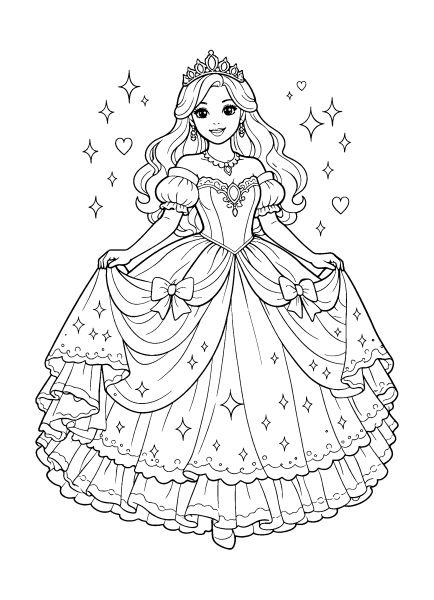
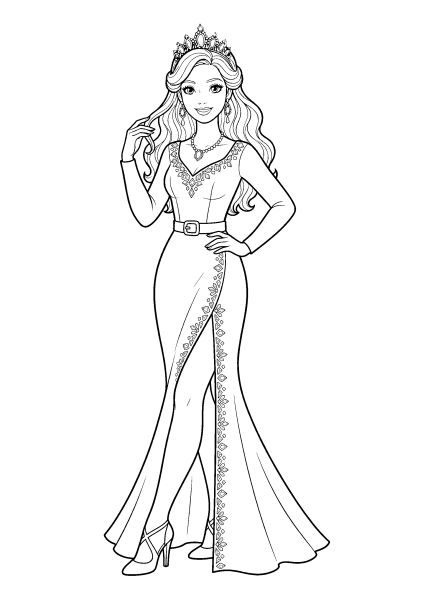
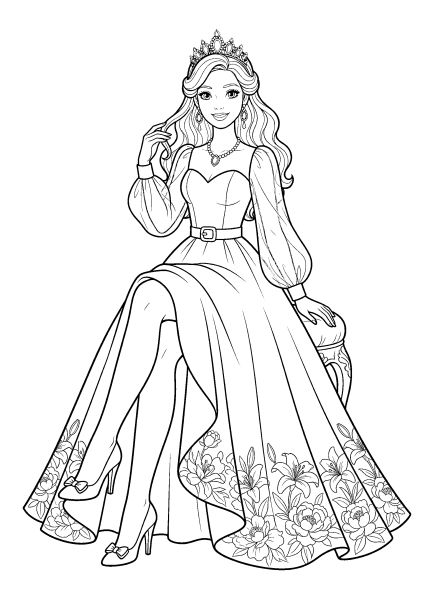
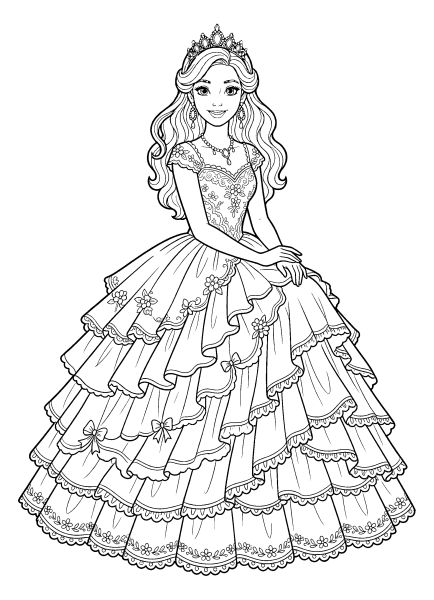
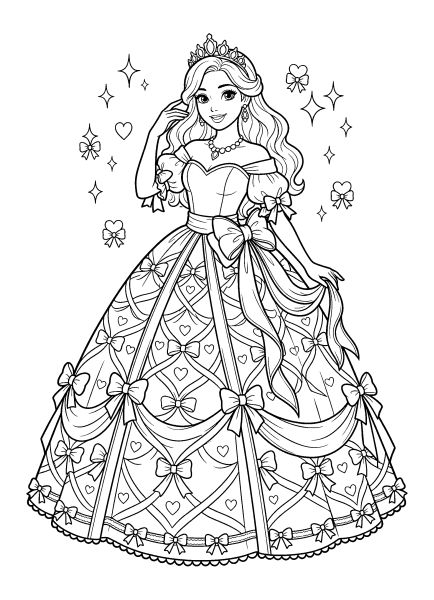
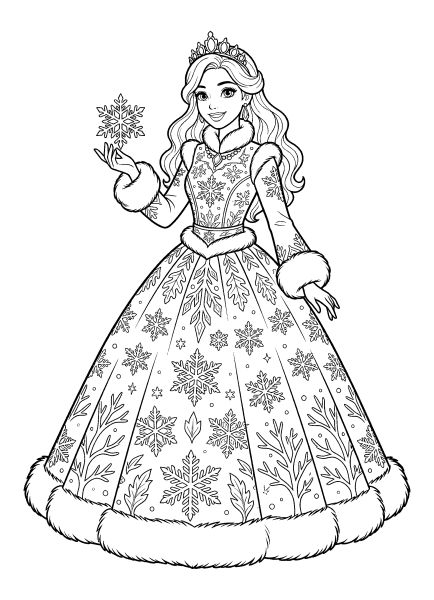
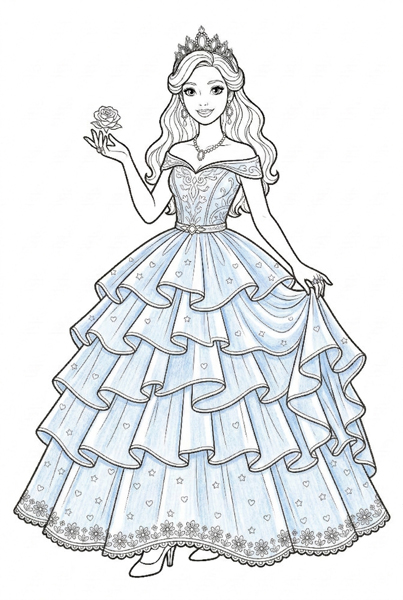
Princess Dress Coloring Pages

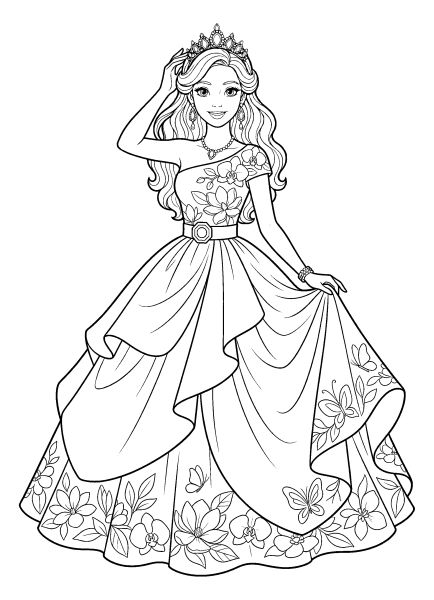
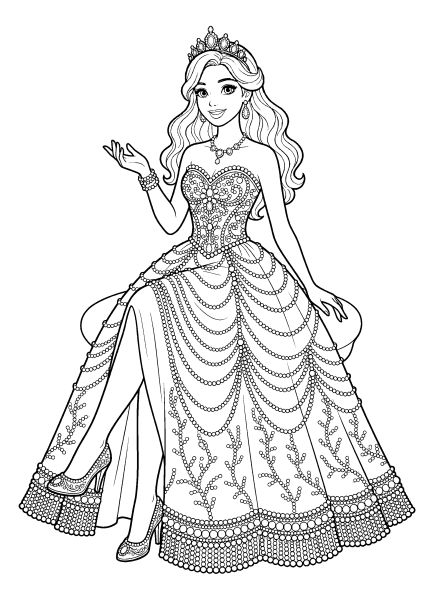
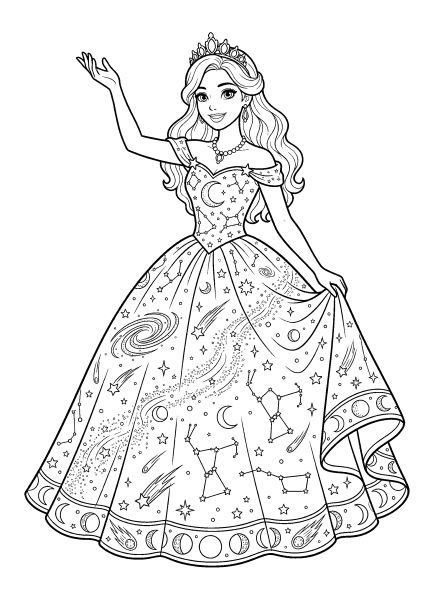
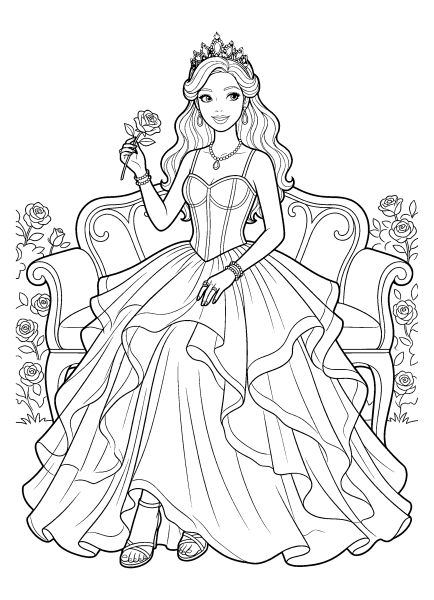
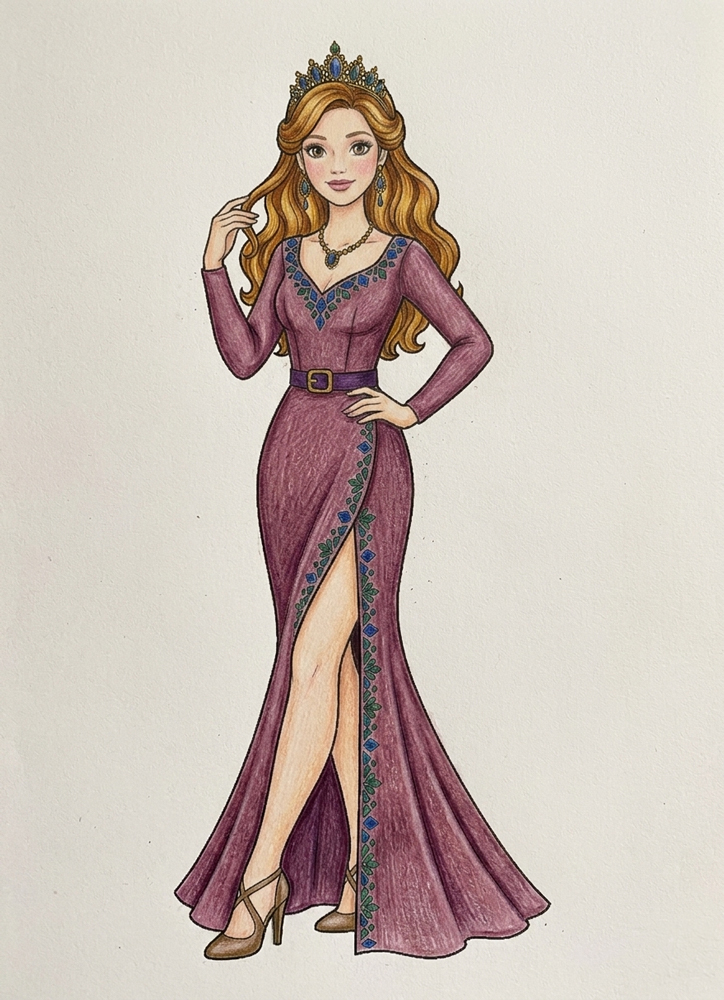
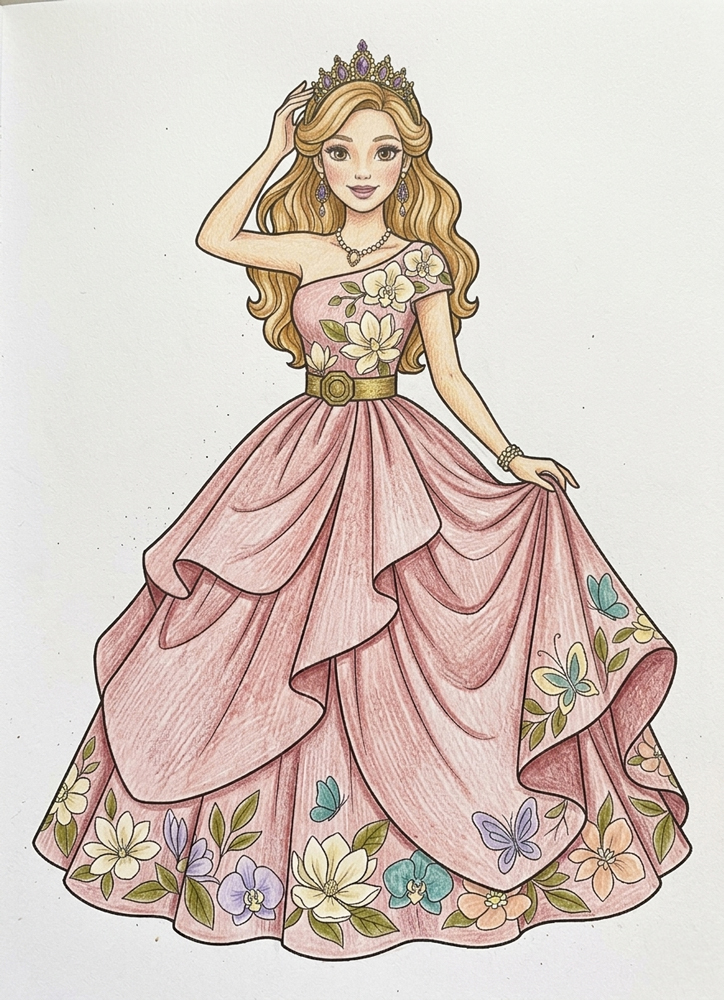
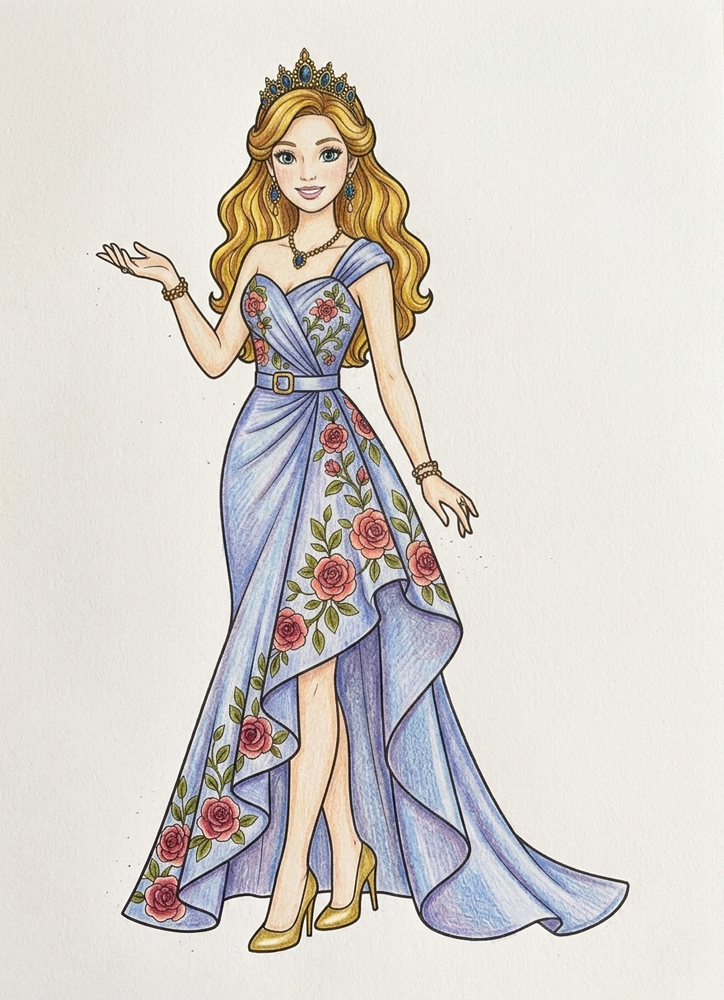
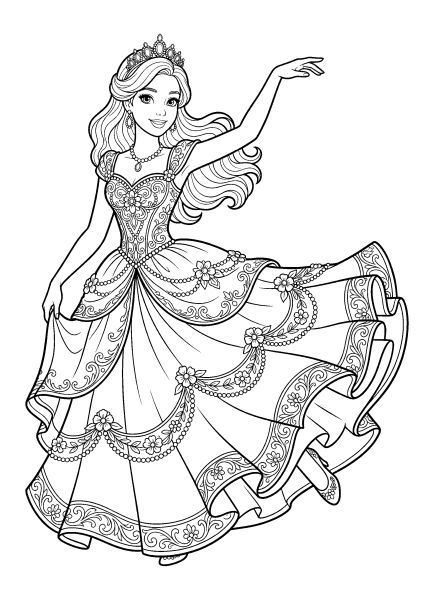
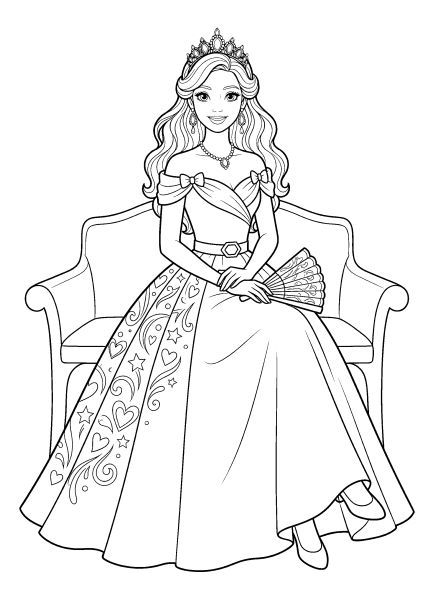
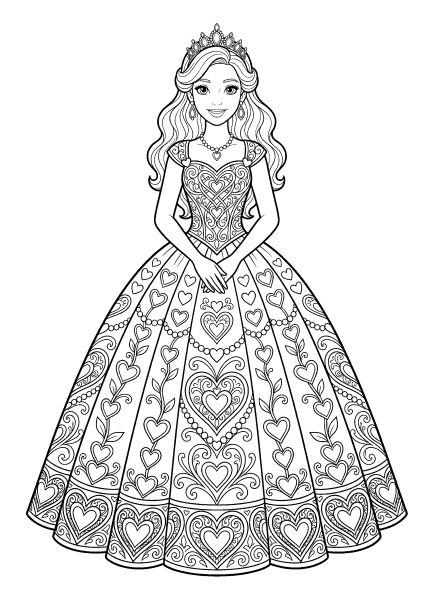
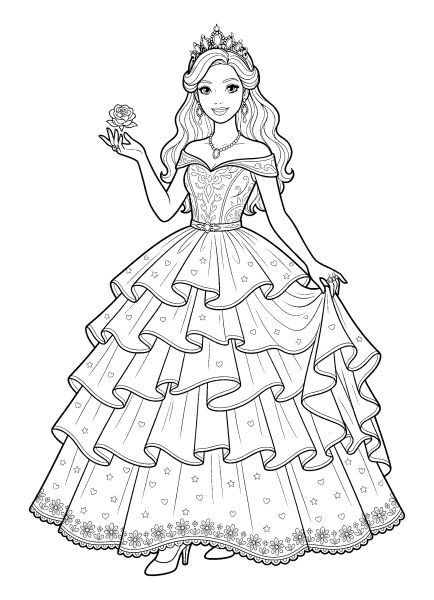
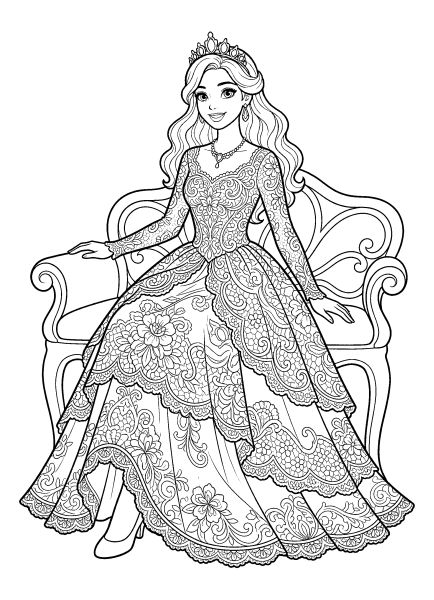
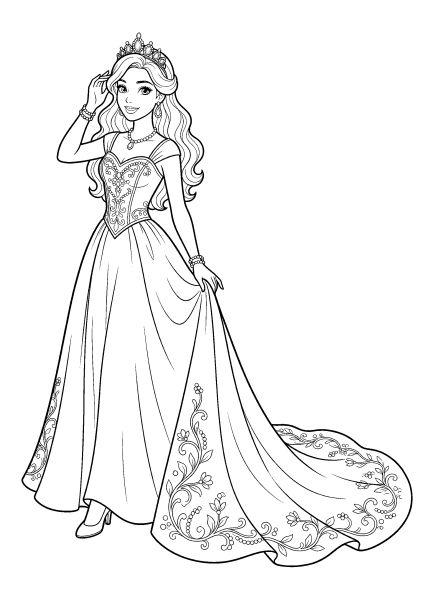
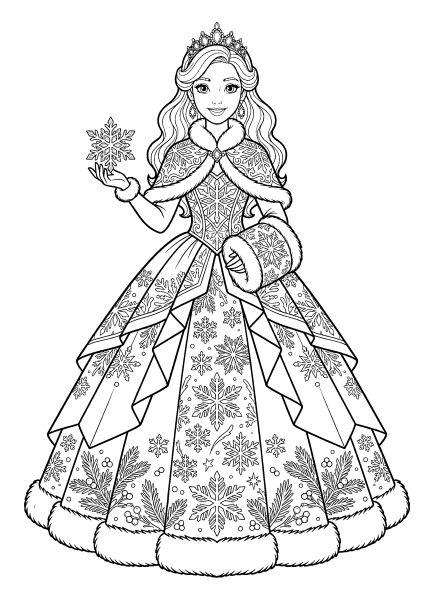
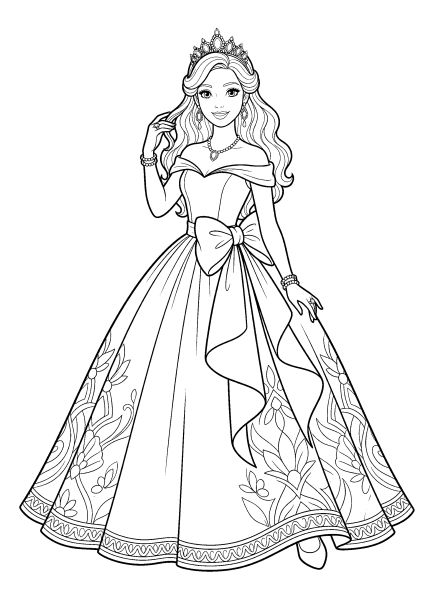
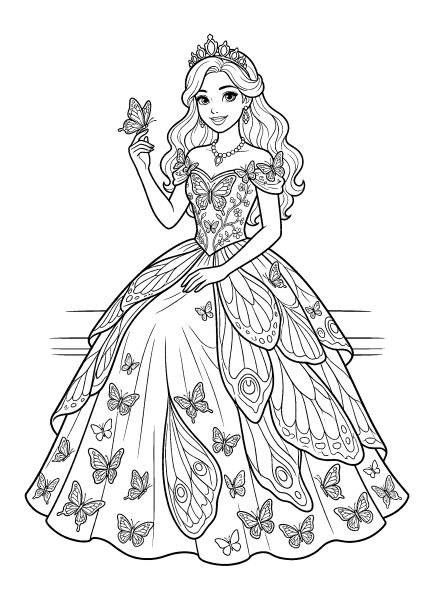
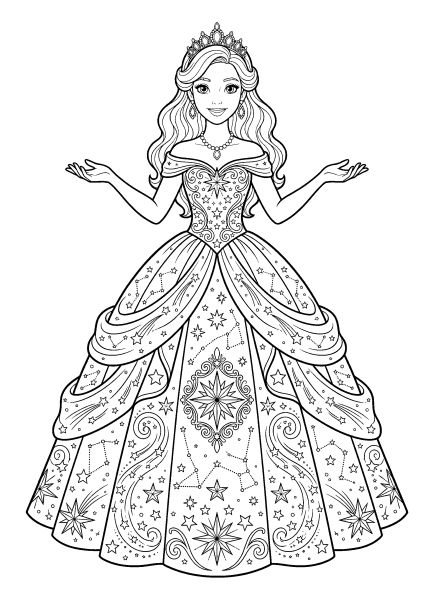
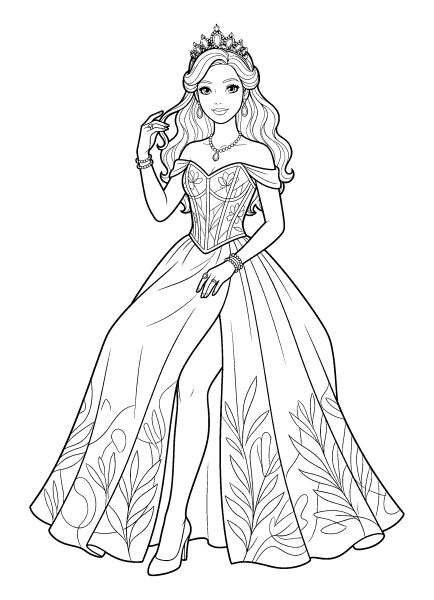
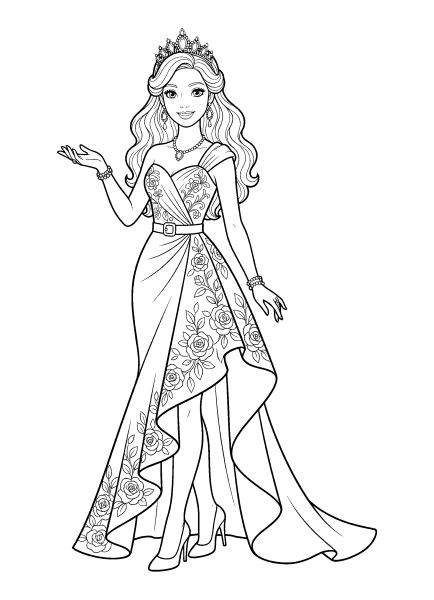
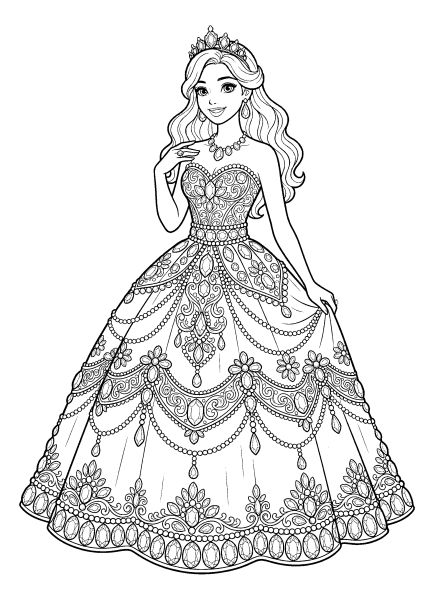
Princess dress illustrations focus on elegance, volume, and decorative detail. Unlike general princess coloring pages that emphasize castles or fantasy scenes, this theme highlights the gown itself as the main visual element. The dress becomes the story.

These designs celebrate layered skirts, embroidered hems, flowing sleeves, and structured bodices. The mood is refined rather than playful. Each illustration presents fashion as a central artistic feature, inspired by royal ceremonies, ballroom gowns, and classic fairytale silhouettes.

The emphasis is on shape, texture, and ornament rather than background storytelling.

Understanding the Visual Language of the Theme

Princess dress coloring pages are built around vertical balance and fabric movement. Most compositions follow a clear structure:

• a centered full-body pose
• a symmetrical or near-symmetrical silhouette
• layered skirt construction
• decorative borders along hems and bodices

The dresses use repetition as rhythm. Ruffles, floral patterns, lace edges, and bead-like chains create visual texture. The linework is clean and controlled, allowing fabric folds to guide shading naturally.

The upper part of the dress usually contains structured elements such as corsets, belts, or embroidered panels. The lower part introduces volume through layered skirts and curved lines. This contrast between structure and flow is central to the theme.

Detail density increases toward the hemline in many designs, which creates a natural gradient of visual weight from top to bottom.

Coloring Techniques / Approach for This Theme

To make the folds of a princess dress look dimensional, you do not need advanced artistic skills. The effect can be achieved with three simple, repeatable steps: base color, shadows in the recesses, and soft transitions.

The most important rule is to decide in advance where the light comes from, for example from the top left, and keep that direction consistent throughout the entire dress.

Step 1. Base Layer

Choose the main color of the dress and apply the lightest version of that color across all fabric areas. Do not press hard with the pencil. Two light layers are better than one heavy layer.

Leave the areas that “catch the light” lighter from the start:

• tops of folds
• outer edges of ruffles
• raised parts of the skirt
• upper curves of layered fabric

These lighter areas will become highlights. They are what make the fabric look alive and reflective.

Step 2. Shadows in the Folds

Add a darker shade of the same color only in the recessed areas. Look for places where the fabric moves inward or where one layer overlaps another:

• under the belt and bodice
• beneath the arms
• inside ruffles
• along seams
• under hem folds
• in waist gathers
• near the floor where the skirt curves inward

Apply the darker tone as a narrow strip along the inner edge of each fold. Keep the area next to it lighter.

Do not darken large portions of the dress. Shadows should stay controlled and mostly inside the folds. This precision keeps the gown elegant instead of heavy.

Step 3. Blending and Final Depth

To prevent the dress from looking striped, soften the transition between shadow and base color. Return to the lighter shade and gently blend over the edge of the shadow, pulling the darker tone into the lighter area with small, soft strokes.

If additional depth is needed, introduce the darkest tone very sparingly and only in the deepest points:

• under overlapping layers
• at the base of ruffles
• in the tightest folds

At the end, check the highlights again. The tops of folds should remain the lightest areas on the dress.

If desired, add a few tiny highlight touches with a white gel pen or white pencil on the brightest points, but keep them minimal.

If you remember one formula, let it be this:
light base layer over the entire dress → darker tone only in the recesses → soften transitions again with the lighter shade.

This approach works on almost any princess gown and gives convincing volume even for beginners.
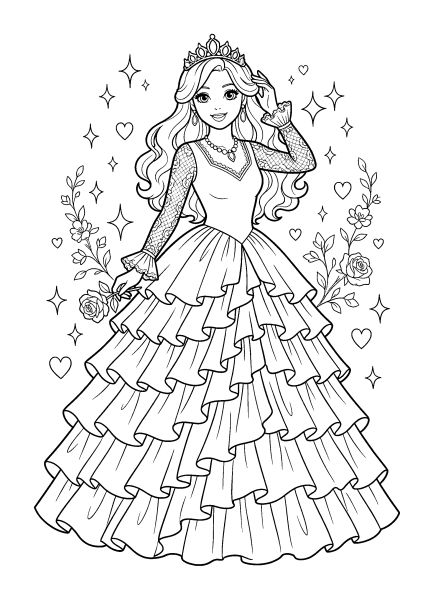
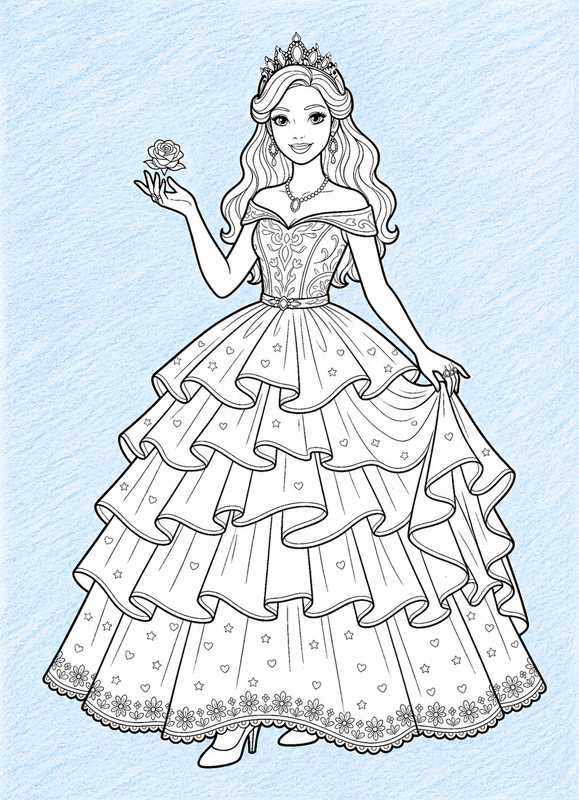
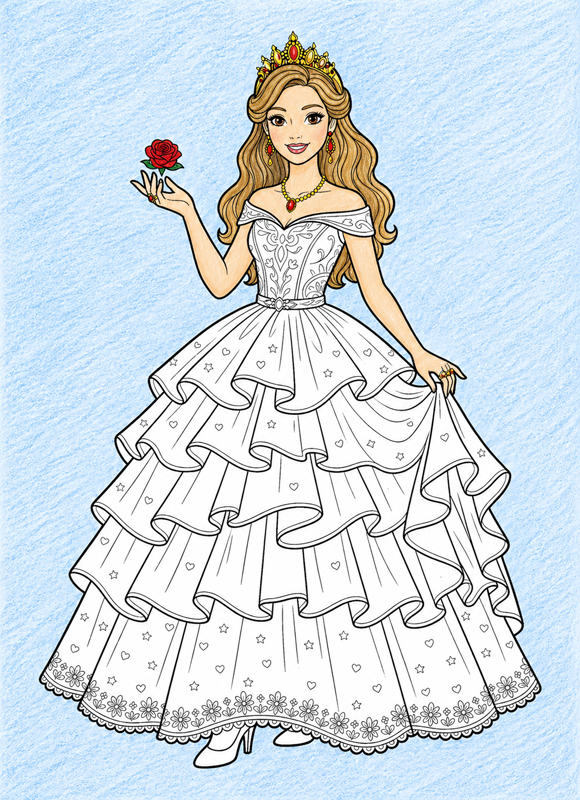
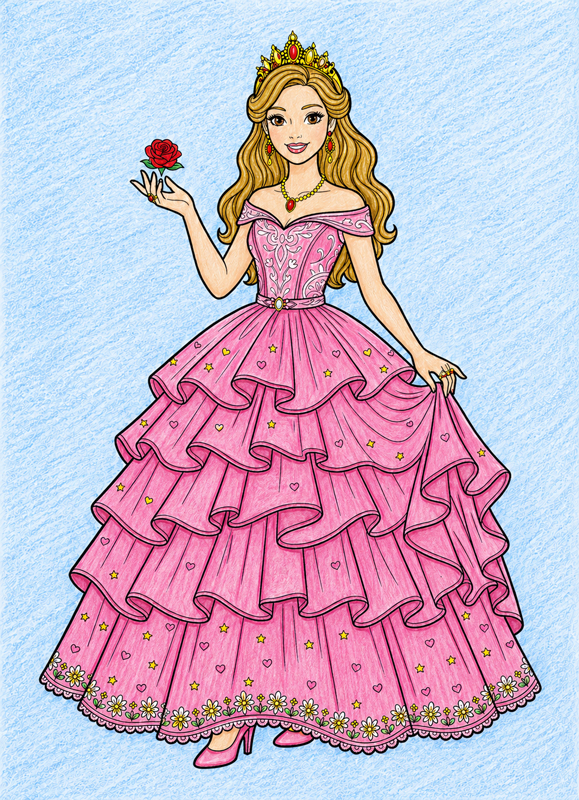
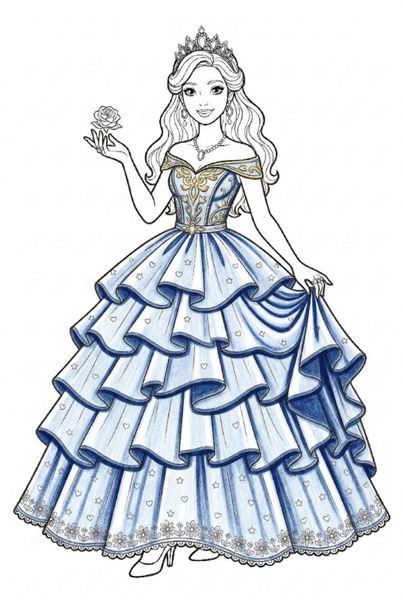
The text below provides a step-by-step coloring guide specifically for this exact illustration. It explains how to apply color, shading, and highlights to achieve volume and elegance in this particular princess dress design.

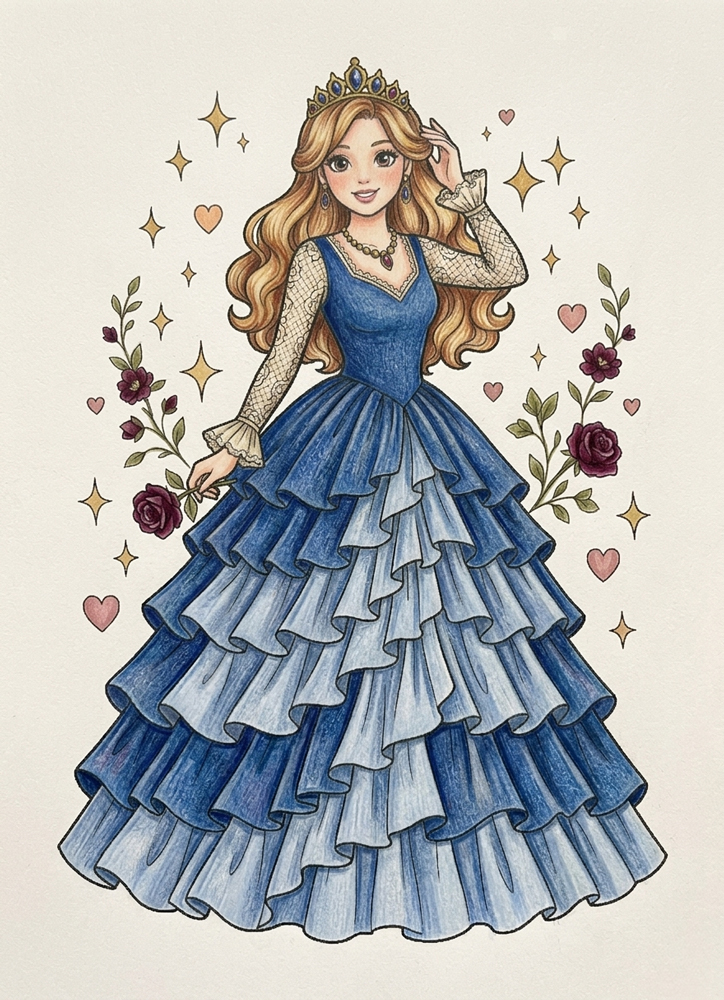
001

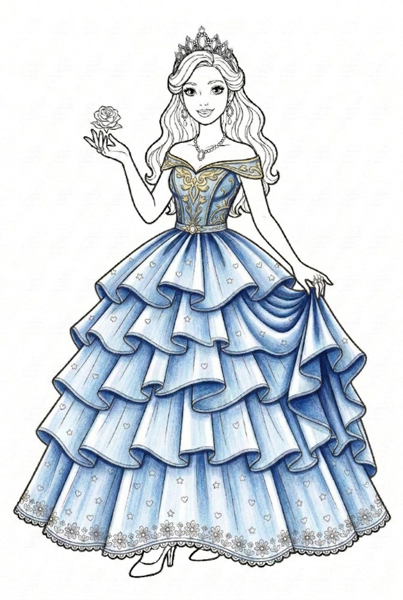
Step 1. Dress: Base Color and Highlights

Choose the main color of the dress and apply the lightest shade evenly over the entire gown in a thin, smooth layer. Immediately leave highlights uncolored: the tops of the vertical folds on the lower skirt, the front edges of the ruffles, the upper parts of each tier, and the raised areas on the bodice. At this stage, the dress should look light and clean, without strong shadows.
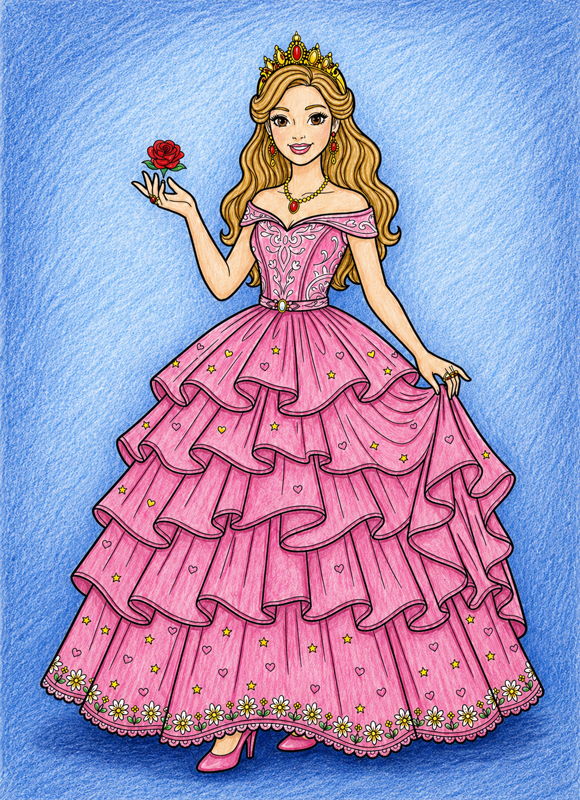
002

Step 2. Dress: Shadows Under Ruffles and in Folds

Take a darker shade of the same color and add shadows only in the recessed areas. The most important shadows are under the overlapping tiers: draw a thin strip of shadow directly beneath each ruffle along its full length. On the lower skirt, darken the inner sides of the vertical folds with narrow strokes, keeping the “ridges” of the folds light. On the right side, where the fabric is gathered in the hand, make the shadows slightly stronger and closer together. On the bodice, add shading along the shaping seams, along the sides, and just under the top edge.
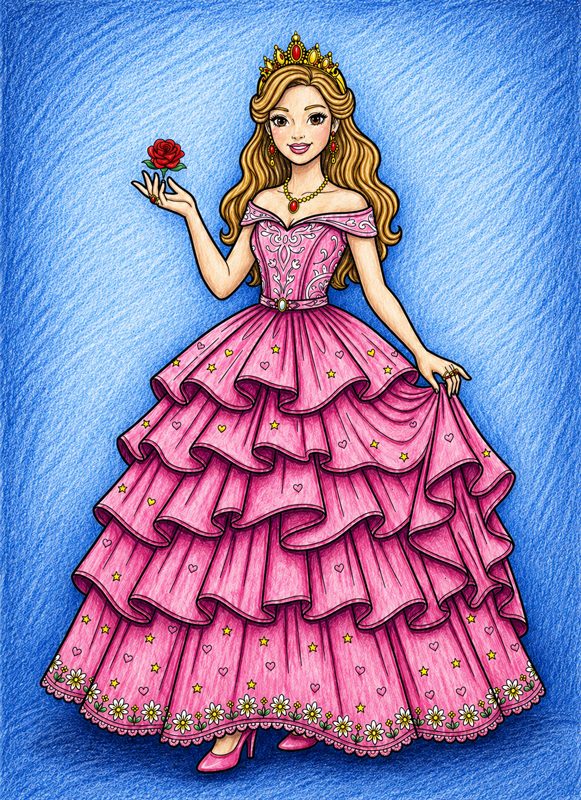
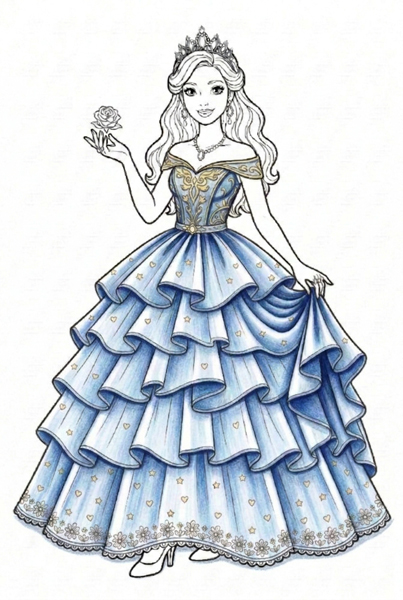
003 1

Step 3. Dress: Soft Transitions and Depth

Return to the lighter shade and soften the edges between shadow and base color so the fabric does not look striped. Use the darkest tone sparingly and only in the deepest areas: under the top overlaps of the ruffles, in the deepest folds at the waist, and in the gathered fabric on the right. Check that the edges of the ruffles and the tops of the folds remain the lightest parts of the dress.
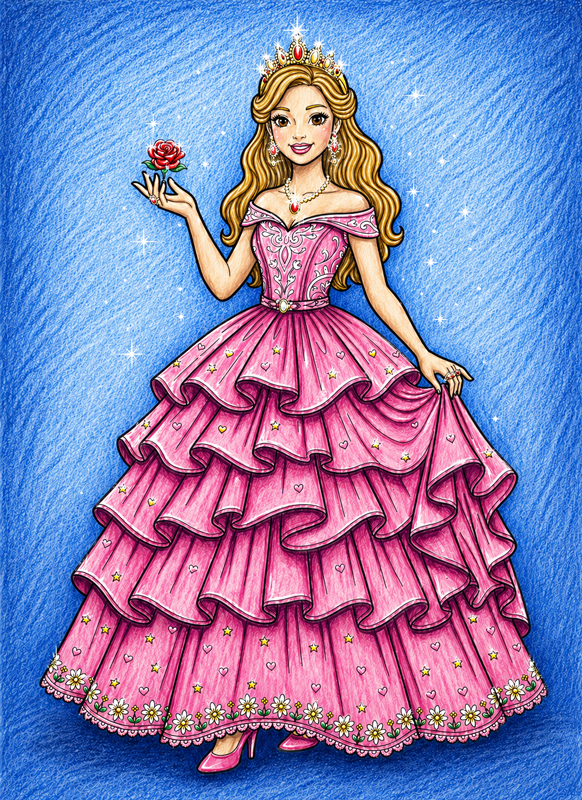
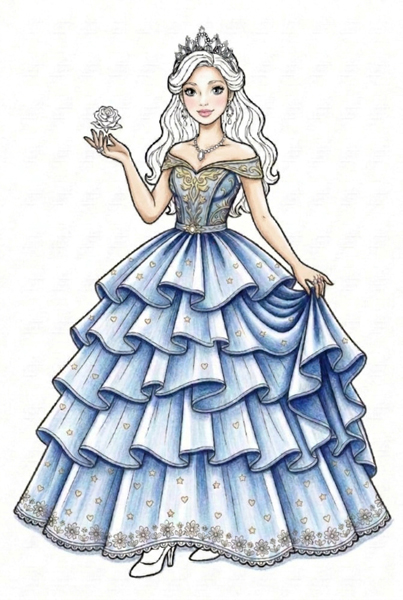
004

Step 4. Dress: Decoration and Hemline

Choose one consistent rule for the hearts and stars, for example all in one accent color or alternating between two close shades, so the decoration looks neat. Keep decorative elements lighter than the darkest fold shadows. Emphasize the lower floral border with a soft shadow just beneath the trim line and small darker touches between petals to give the hem volume. Color embroidery and fine patterns on the bodice and skirt hem in a golden tone, preserving thin white highlights on the most raised details.
005

Step 5. Skin and Face

Apply a light beige base layer to the face, neck, shoulders, and arms, keeping protruding areas lighter such as the forehead, cheekbones, bridge of the nose, and tops of the shoulders. Add soft shadows with warm light brown or warm gray only where volume or contact occurs: under the chin, along the sides of the neck, near the hairline, in the bend of the elbow, and under the hand resting on the skirt. Lightly tint the cheeks with pale pink. Color the lips a soft pink, slightly darker along the edges and lighter in the center. Leave small white highlights in the eyes.
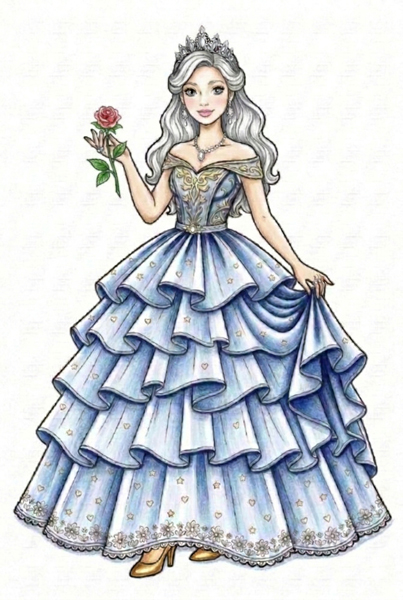
006

Step 6. Hair, Crown, Rose, and Shoes

Color the hair with a light base layer, leaving a narrow highlight strip on each larger strand. Use a darker shade in the deeper waves, under overlapping strands, and beneath the crown, then soften transitions with the lighter tone. For the crown and jewelry, create a metallic effect: start with a light gold base, deepen slightly underneath and in recessed areas, and leave highlights white. Color the rose so the edges of the petals are lighter and the base slightly darker; shade the leaves green with a subtle shadow along the veins. Color the shoes in a gold tone matching the embroidery on the dress: apply a light golden base, add a slightly darker gold near the heel and along the lower edge, and leave a small white highlight on the toe to give the shoes a polished metallic finish.

Artistic Composition and Detail Balance

These pages rely on vertical symmetry and controlled ornamentation. The gown occupies most of the page, so color balance must be intentional.

If the dress is heavily decorated, keep the color palette restrained. If the design is simpler, a slightly richer tone variation can be used within the folds.

Negative space around the figure enhances elegance. Leaving parts of the background white maintains a clean, fashion-focused presentation.

The key principle is clarity of silhouette. The outer contour of the gown should always remain visually readable.

Practical Application: How to Use

Princess dress coloring pages can be used for:

• fashion-inspired art sessions
• costume design exploration
• fairytale-themed classroom projects
• printable party activities
• creative wardrobe sketch practice

They are particularly suitable for children interested in clothing design, decorative patterns, and historical-style gowns.

These illustrations can also be used to experiment with monochromatic schemes or soft pastel gradients while practicing fabric rendering.

Target Audience: Who These Pages Are Best For

These princess dress coloring pages are best suited for:

• children who enjoy fashion and royal themes
• older kids practicing shading and fold rendering
• teens interested in gown design and decorative detail
• intermediate colorists who like structured compositions

The level of detail is moderate to high. The designs reward patience and careful layering rather than fast flat coloring.

Technical Standards and Download Information

All Princess Dress Coloring Pages are available as free printable PDF files.

Each file includes:

• clean black linework
• full-body centered compositions
• high-resolution formatting
• A4 and US Letter sizes

Download, print on quality paper, and explore elegant fabric shading with structured royal designs.

pinit fg en rect red 28

Scroll to Top