Triceratops Coloring Pages
🦕 Free Printable Triceratops Coloring Pages with Prehistoric Scenes
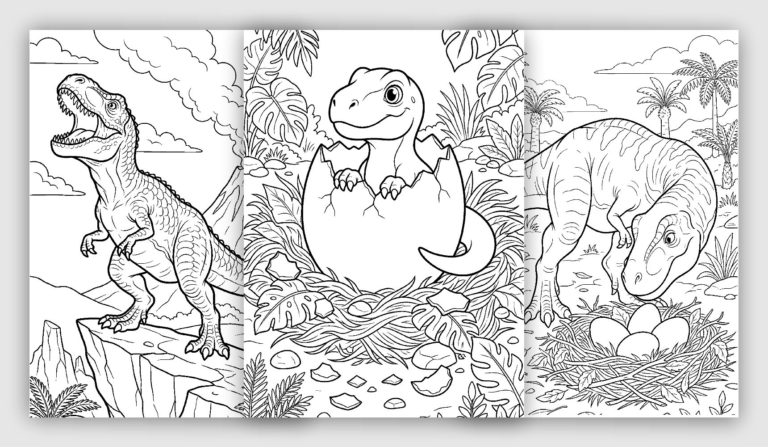
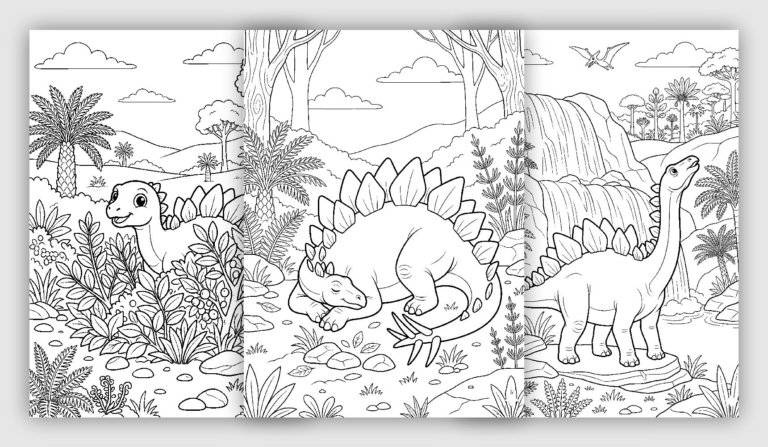
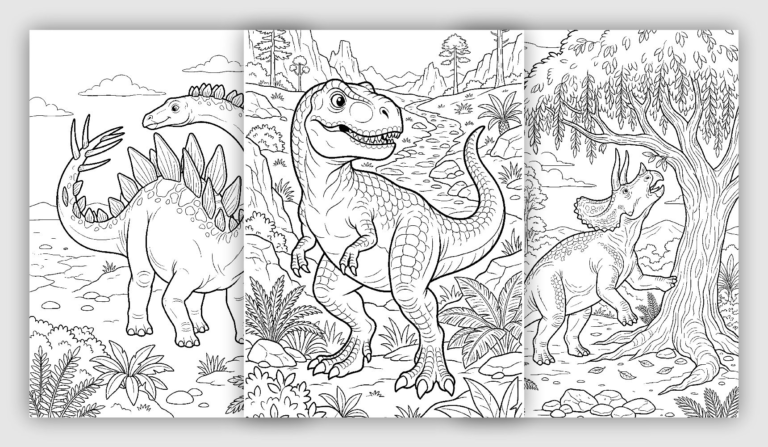
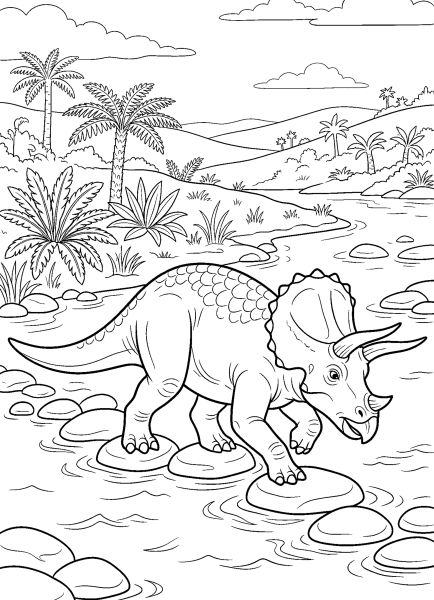
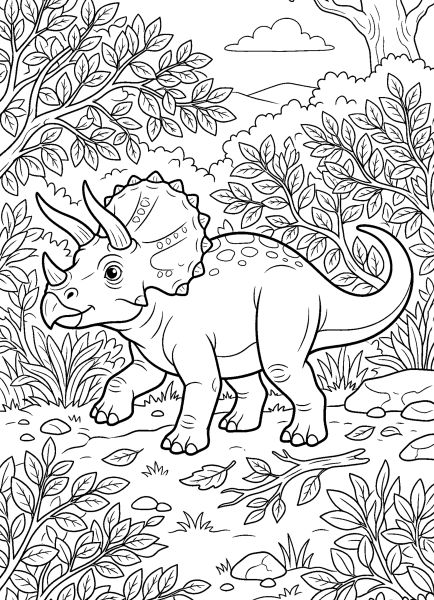
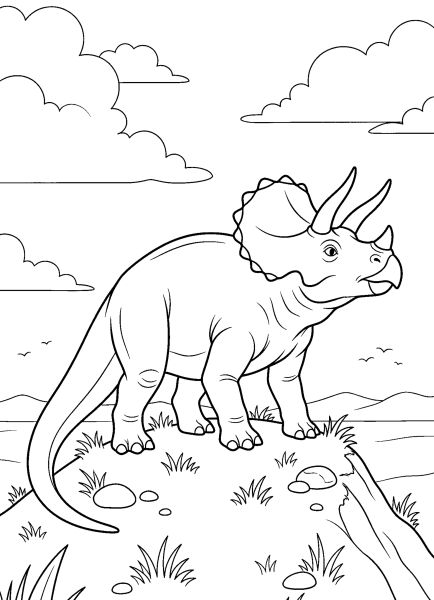
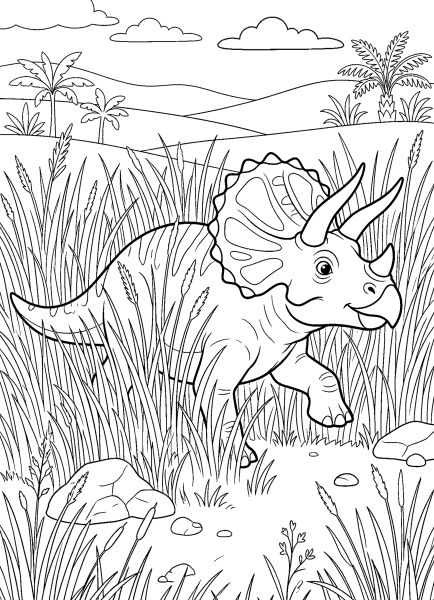
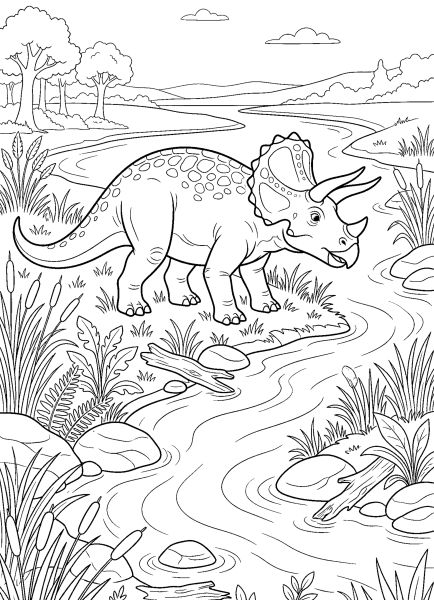
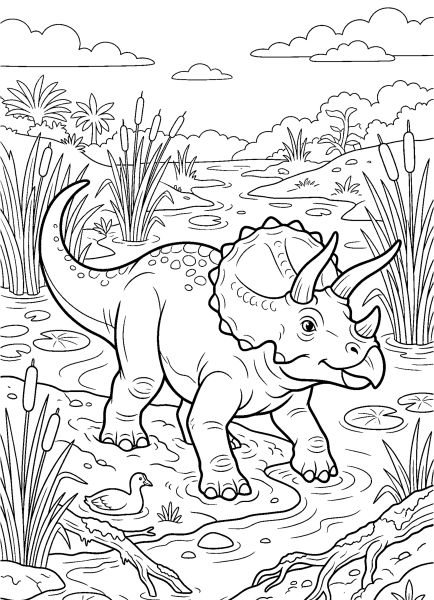
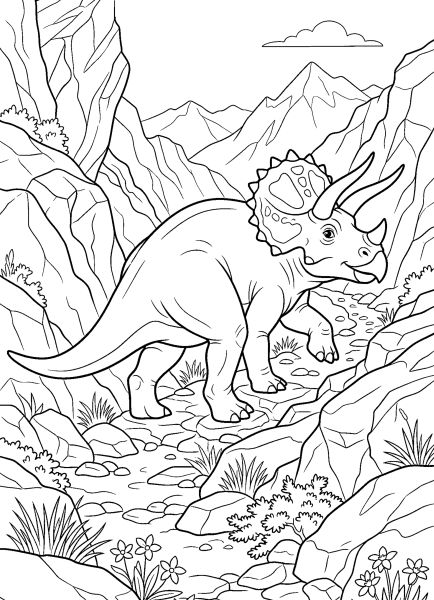
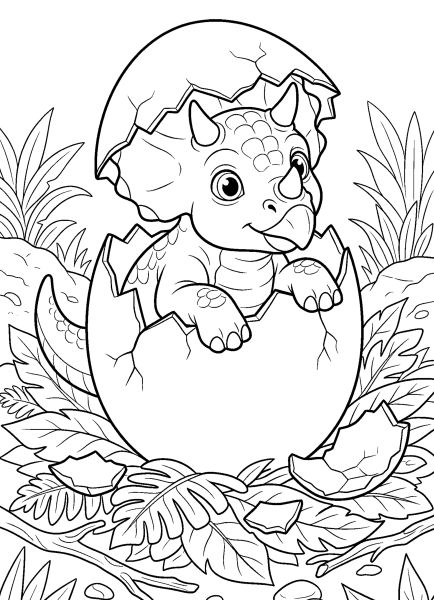
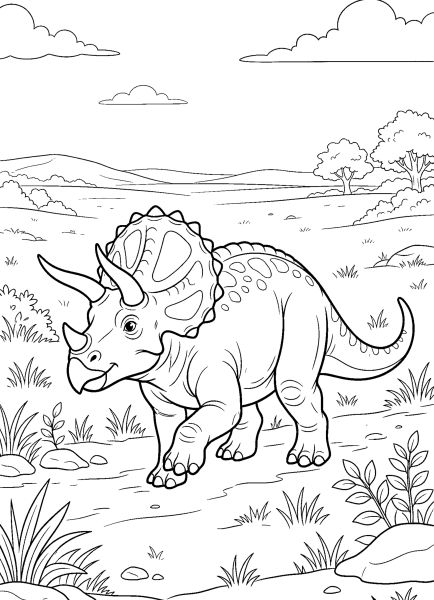
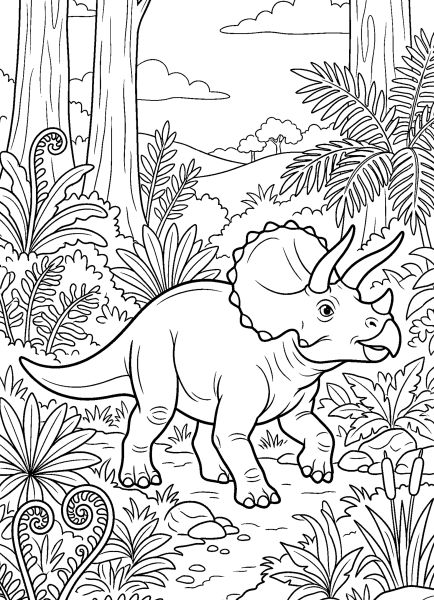
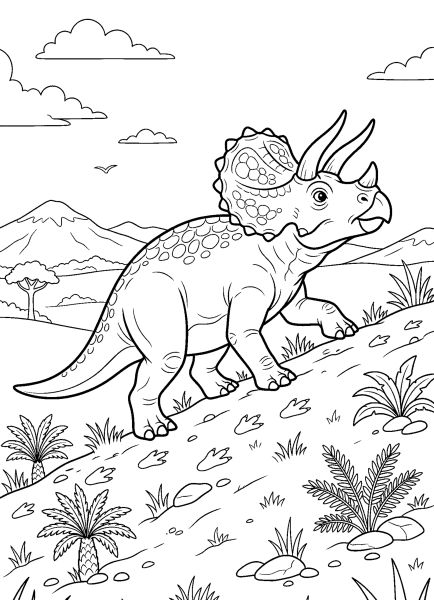
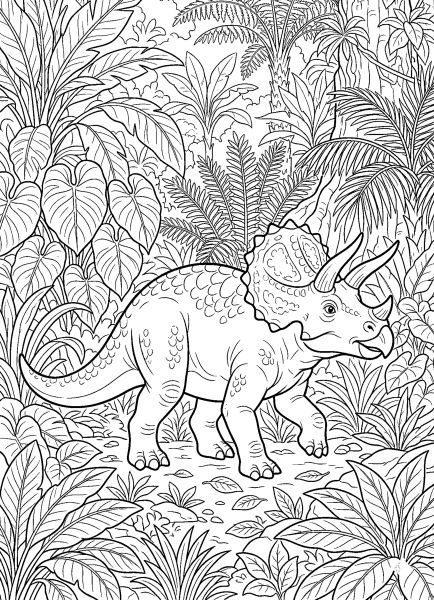
These free printable Triceratops coloring pages feature the three-horned dinosaur walking through prehistoric forests, drinking from streams, and exploring rocky landscapes. The black-and-white illustrations show its distinctive horns, broad neck frill, beak-like mouth, and sturdy four-legged body. You'll find friendly cartoon Triceratops pictures, more detailed dinosaurs with patterned skin, and a baby hatching from an egg. Each design is available as an individual A4 PDF to download and print.
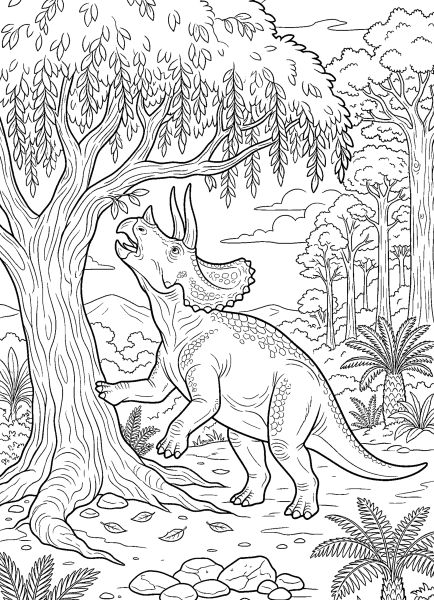
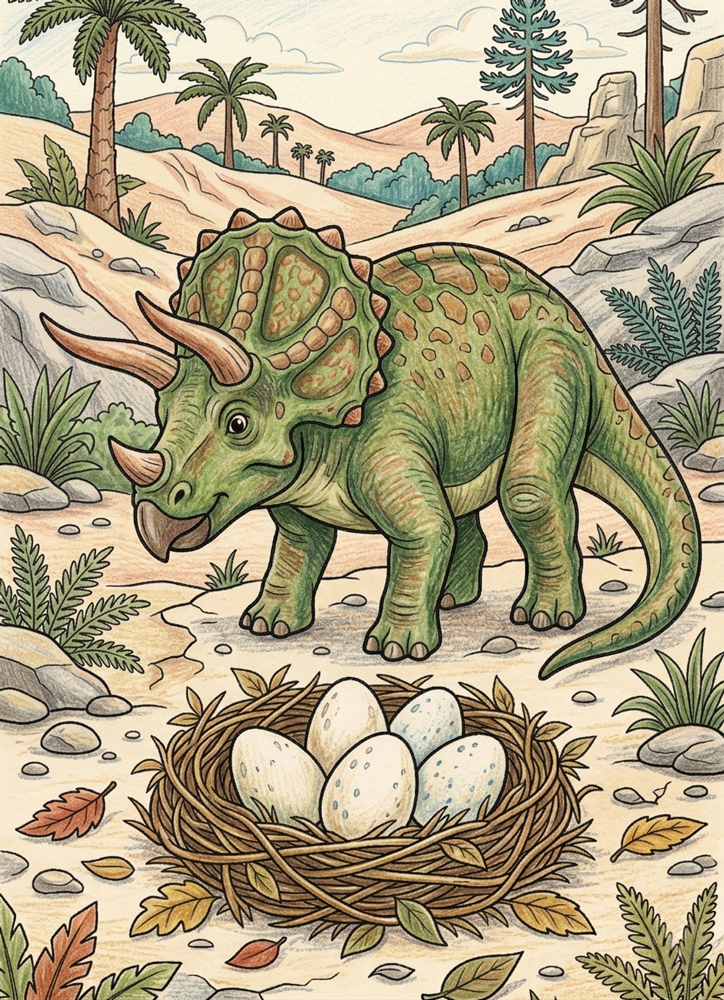
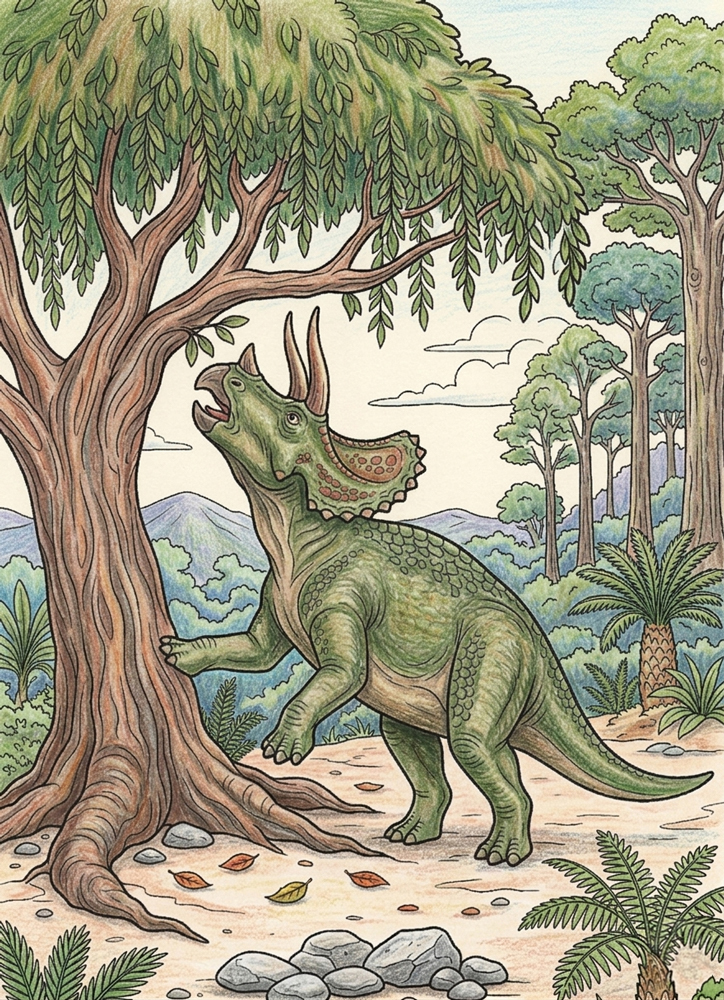
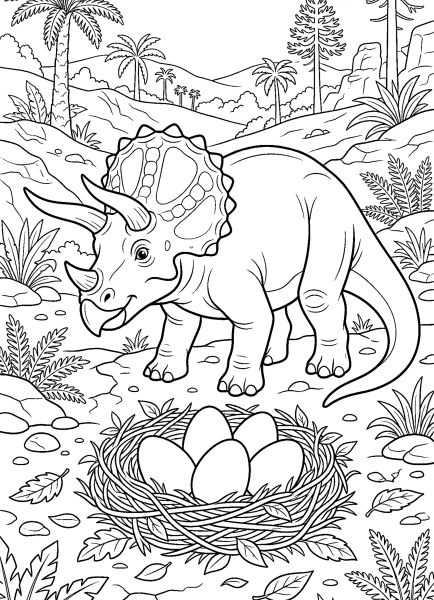
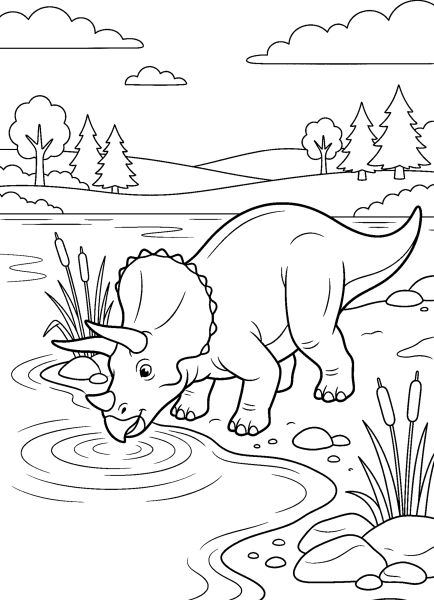
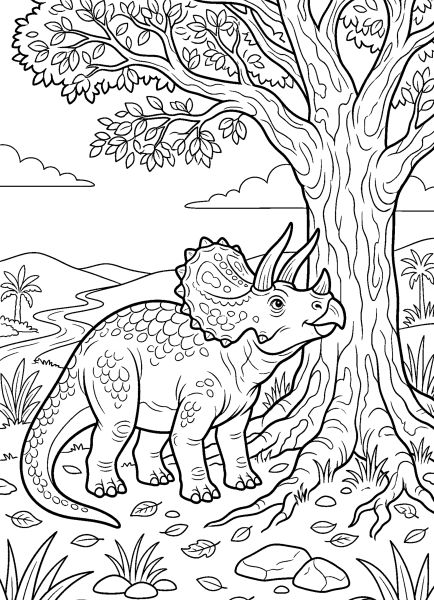
The dinosaurs appear in a variety of natural settings, from leafy woodland paths and tropical vegetation to open grasslands and dry, rocky terrain. One Triceratops lowers its beak into a stream, another stands beneath a large tree with hanging branches, and a young dinosaur emerges from a cracked eggshell. Other Triceratops coloring sheets feature a dinosaur beside a nest, one walking through tall grasses, and another making its way between steep mountain rocks. The drawings vary in background detail, giving children a choice between simpler compositions and more intricate prehistoric scenery.
🎨 Coloring Triceratops Horns, Frills, and Prehistoric Plants
Triceratops can be colored in earthy greens, warm browns, sandy yellows, or muted grays. Its actual colors are unknown, so there is room to experiment with patterns and contrasts. The large neck frill provides an interesting area for a different shade, especially in pictures where it has spots or decorative markings. Horns and the beak can be colored ivory, beige, or light gray, while darker tones along the back and legs can help define the dinosaur's sturdy shape.
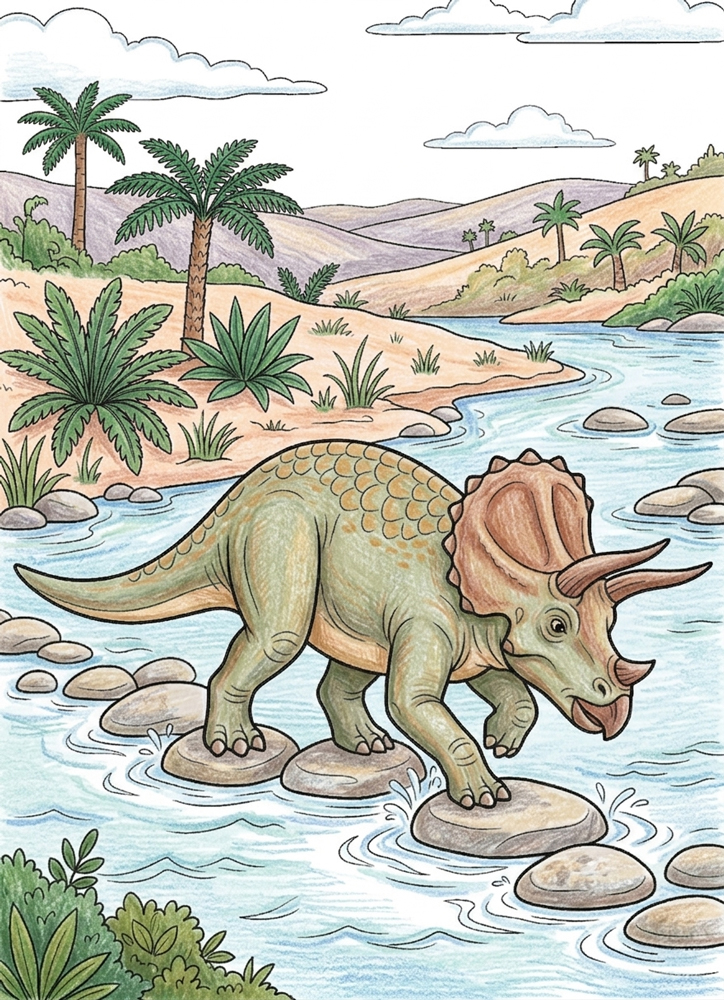
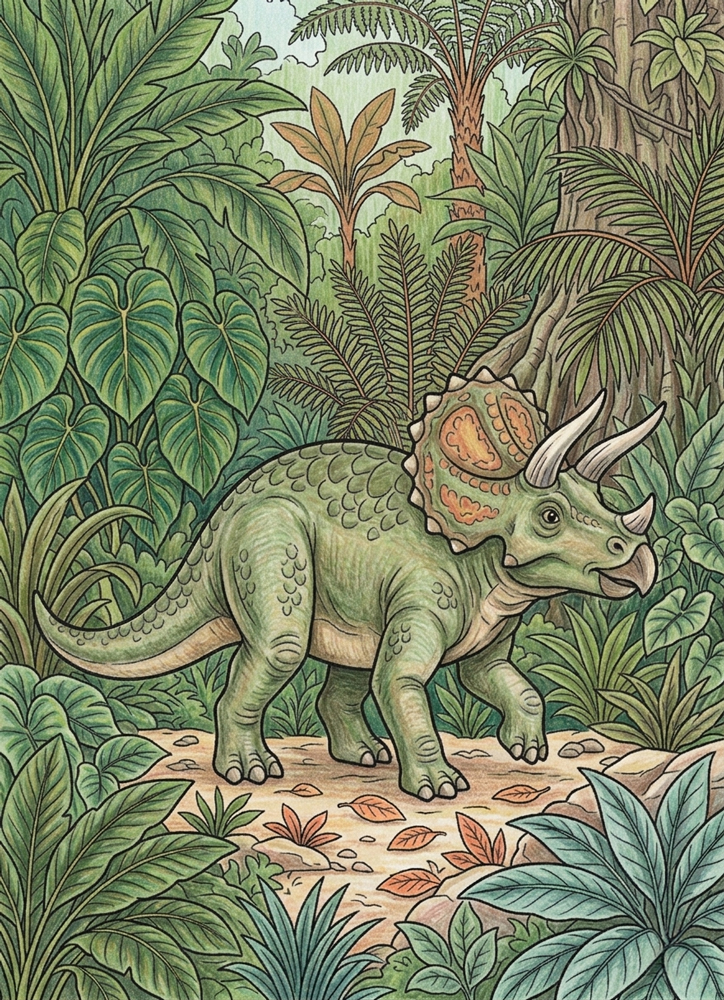
The colored examples are suggestions rather than a fixed appearance for Triceratops. A young dinosaur could have a bright green body and a lighter frill, while a more detailed forest scene might suit olive, brown, and gray tones. Ferns, broad leaves, and woodland plants can have several greens, and streams can be colored pale blue or turquoise. Rocky hills and dry landscapes offer opportunities for sandy browns and warm grays. You can also give the dinosaur an entirely imaginary pattern. Click on any image to enlarge and explore the details up close.
🎨 Coloring Triceratops Horns, Frills, and Prehistoric Plants
Triceratops can be colored in earthy greens, warm browns, sandy yellows, or muted grays. Its actual colors are unknown, so there is room to experiment with patterns and contrasts. The large neck frill provides an interesting area for a different shade, especially in pictures where it has spots or decorative markings. Horns and the beak can be colored ivory, beige, or light gray, while darker tones along the back and legs can help define the dinosaur's sturdy shape.
The colored examples are suggestions rather than a fixed appearance for Triceratops. A young dinosaur could have a bright green body and a lighter frill, while a more detailed forest scene might suit olive, brown, and gray tones. Ferns, broad leaves, and woodland plants can have several greens, and streams can be colored pale blue or turquoise. Rocky hills and dry landscapes offer opportunities for sandy browns and warm grays. You can also give the dinosaur an entirely imaginary pattern. Click on any image to enlarge and explore the details up close.
Example Coloring
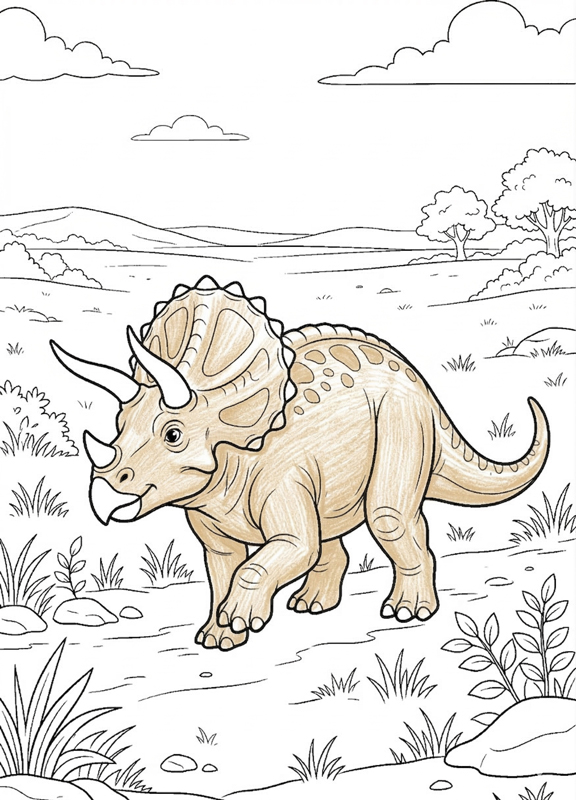
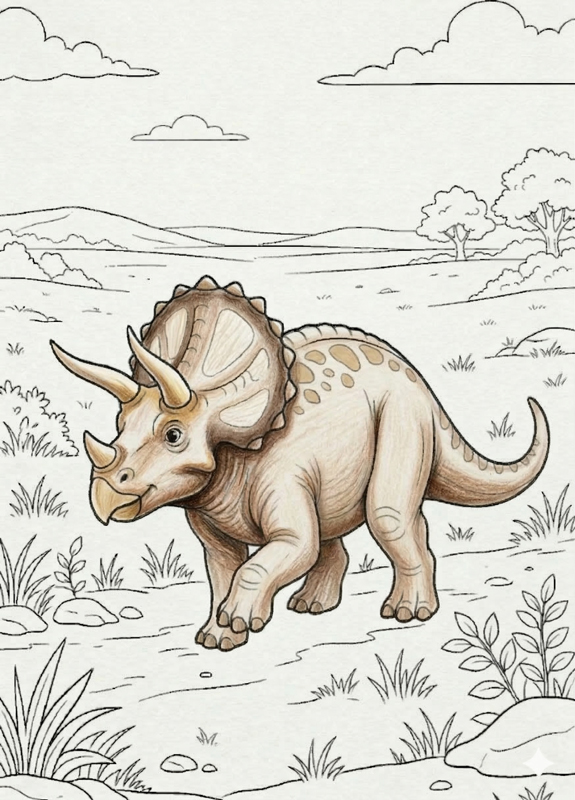
Step 1. Skin: One Light Base Layer
Choose the lightest shade of your selected color and apply it evenly across the entire body of the Triceratops using soft pressure. Do not darken anything at this stage. On raised areas such as the top of the head, the upper part of the frill, the back, and the top of the tail, press more lightly or leave small areas almost white. These will serve as highlights and help the skin look solid and dimensional.
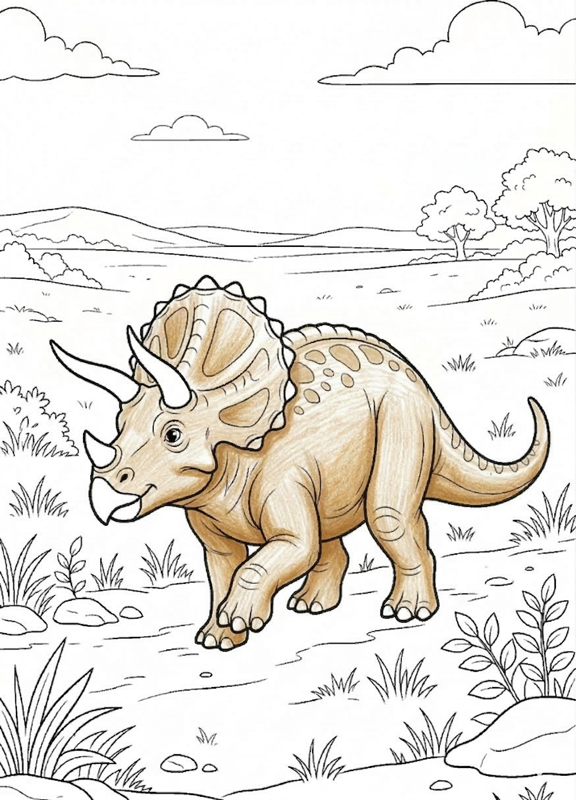
Step 2. Skin: Soft Shadows for a Leathery Texture
Take a shade 1–2 tones darker and add shadows only in recessed areas: under the lower jaw, beneath the neck, under the belly, inside leg bends, at the base of the frill, and where the frill connects to the head. Keep the shadows wide and soft without sharp lines. The goal is to create a thick, leathery feel rather than a sharp or scaly texture.
Step 3. Details: Folds, Horns, Beak, and Frill
Add a few short curved strokes in fold areas such as the neck, the base of the legs, and near the belly, following the natural curve of the body. Strengthen the deepest points carefully, such as under the jaw and in one or two folds. Color the horns and beak separately from the skin. Use a light beige or cream base layer, then add a slightly darker shade near the base and underneath to give them volume. Make the frill slightly more contrasting than the body. Darken gently along the edges and near the base, while keeping the center lighter for depth.
Step 4. Background: Ground, Rocks, Plants, and Sky
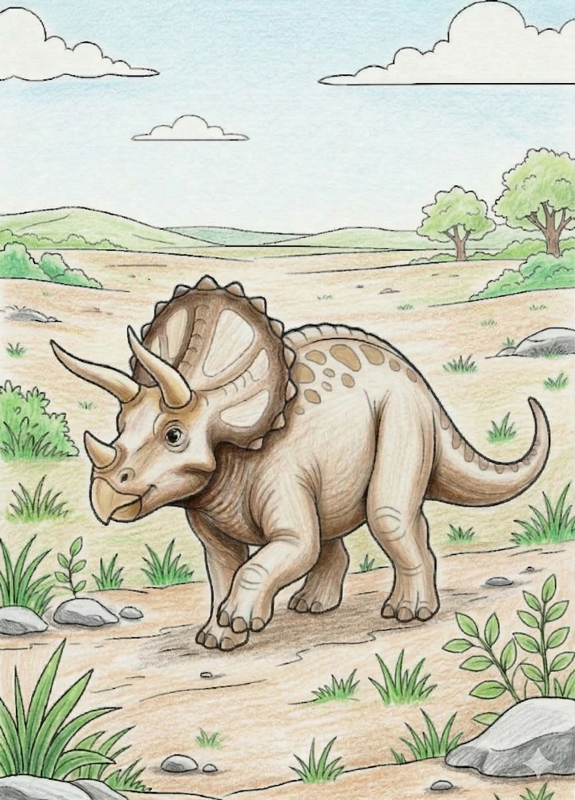
Color the ground in light brown or sandy tones. Rocks can be light gray with darker shading underneath. Use two greens for plants: lighter and softer for distant vegetation, slightly brighter for foreground leaves and grass. Leave the sky white or add a very light blue layer near the top. Keep the clouds white.
Step 5. Final Touches: Ground Shadow and Subtle Accents
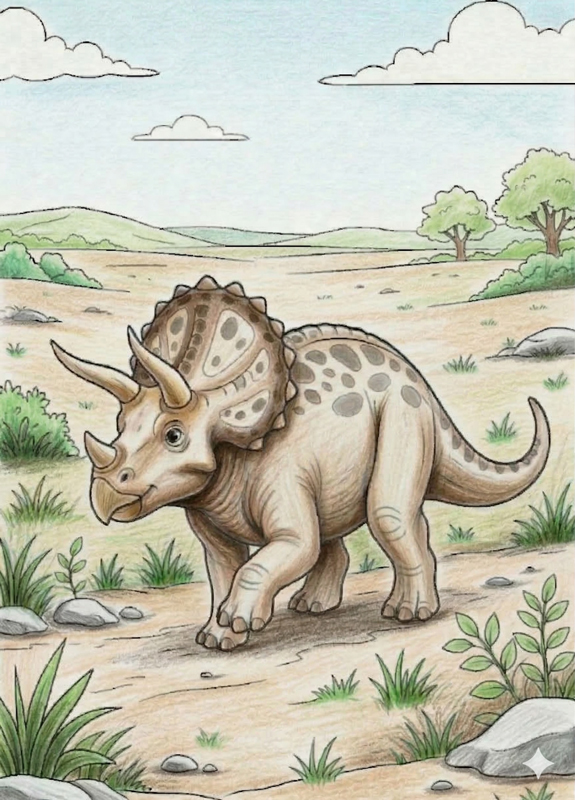
Add a soft shadow under the Triceratops and beneath nearby rocks using light gray or gray-brown to anchor the dinosaur visually. Slightly darken the grass near bushes and around the feet. If you add a pattern, keep it simple and large, such as a couple of broad stripes or soft spots along the back. The skin should remain leathery and calm rather than busy or overly patterned. Leave the sky white or apply a very light blue layer only at the top. Keep the clouds white.
🌿 Getting to Know the Three-Horned Triceratops
Triceratops is one of the most recognizable horned dinosaurs. Its name refers to the three horns on its head: two long horns above the eyes and a shorter one on the nose. Behind them is a broad bony frill that extends over the neck. These features distinguish Triceratops from Tyrannosaurus rex and many other prehistoric animals. Several illustrations show the dinosaur from a three-quarter angle, making the horns and frill especially noticeable, while side views reveal the full length of its body and tail.
The frill is an interesting feature to examine across the drawings. In some pictures, it has a relatively smooth outline; in others, its edge is scalloped and the surface is marked with spots or rounded patterns. These decorations are artistic interpretations rather than known skin markings. They give children an opportunity to use contrasting colors and notice how the same animal can look different without losing its recognizable features. The short beak-like mouth also appears clearly in the illustrations, reflecting the dinosaur's plant-eating adaptations.
Although Triceratops was a large herbivorous dinosaur, the collection presents it in active rather than static poses. Some individuals lower their heads toward water or the ground, while others lift a front foot as they walk along a path. Their heavy bodies rest on four strong legs, with long tails extending behind them. These different positions provide useful opportunities to examine the shape of a dinosaur that moved on all fours, unlike the two-legged T-rex.
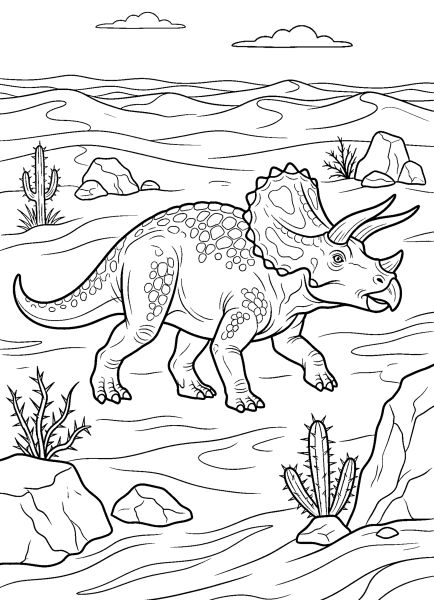
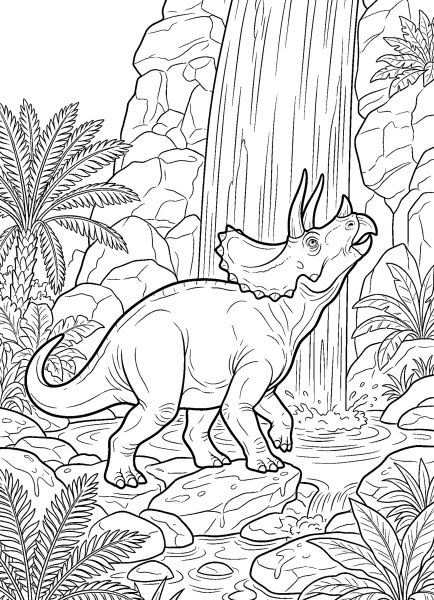
The backgrounds create distinct moods without changing the main subject. A Triceratops stands beneath a large tree in one illustration, while another moves through a dense forest filled with ferns and broad leaves. The rocky valley picture has steep mountains and scattered stones, and a dry landscape includes cactus-like plants. These are imaginative prehistoric settings, not exact reconstructions of the Late Cretaceous environment where Triceratops lived. The hatching scene is playful too: although dinosaurs reproduced by laying eggs, the appearance of Triceratops hatchlings is not known in this level of detail.
Children who prefer relatively easy Triceratops coloring pages can choose designs with a large central dinosaur and fewer background details. Crayons and markers work well for broad body shapes, while colored pencils are useful for smaller spots, horn outlines, fern leaves, stones, and tree bark. These printable dinosaur coloring sheets can support prehistoric animal activities, dinosaur-themed crafts, or quiet coloring at home. Each illustration is available as an individual printable A4 PDF. Print at 100% scale to preserve the original proportions and fine outlines.