Dragon Coloring Pages
🐉 Free Printable Dragon Coloring Pages
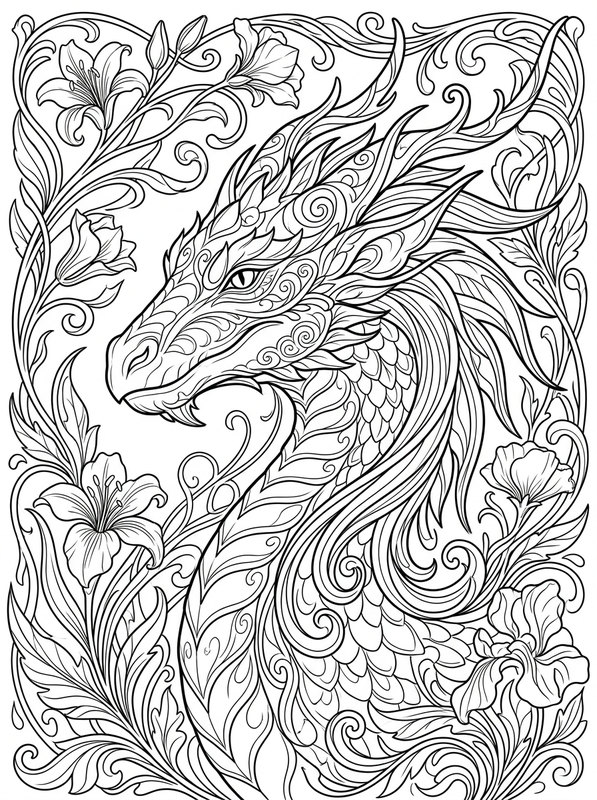
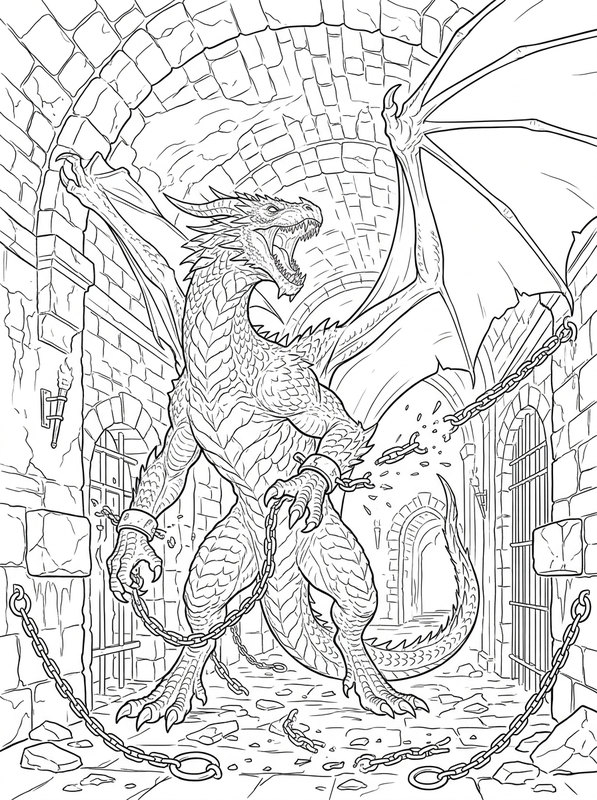
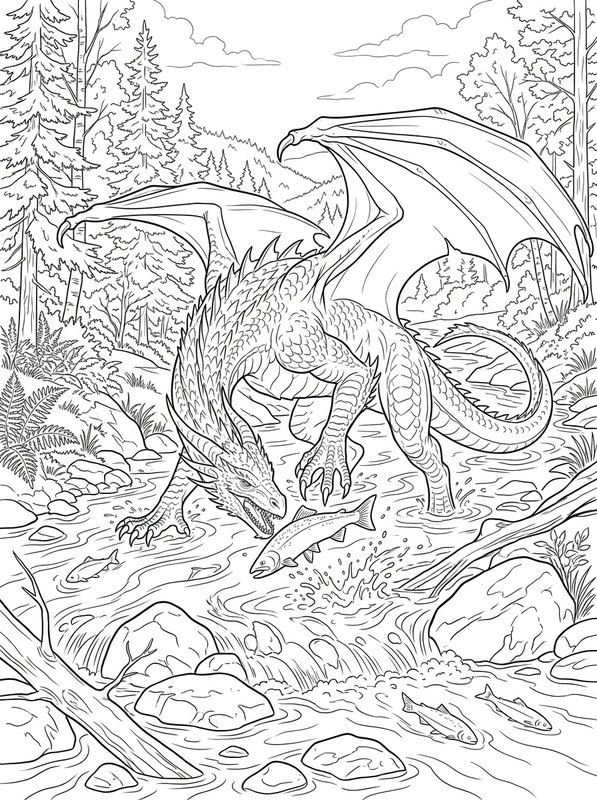
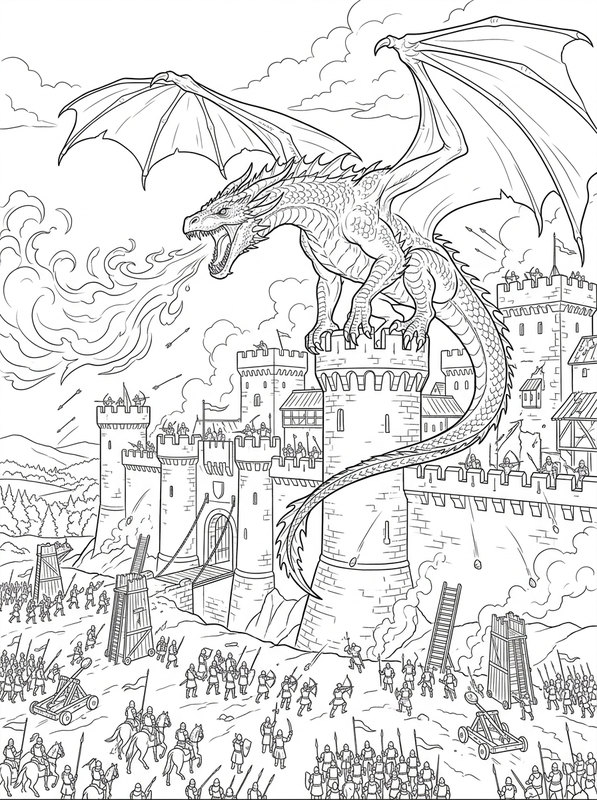
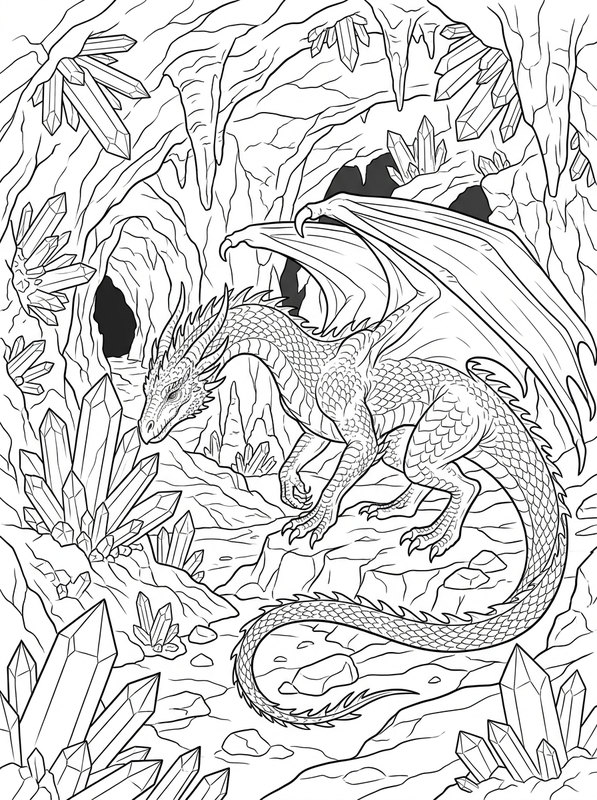
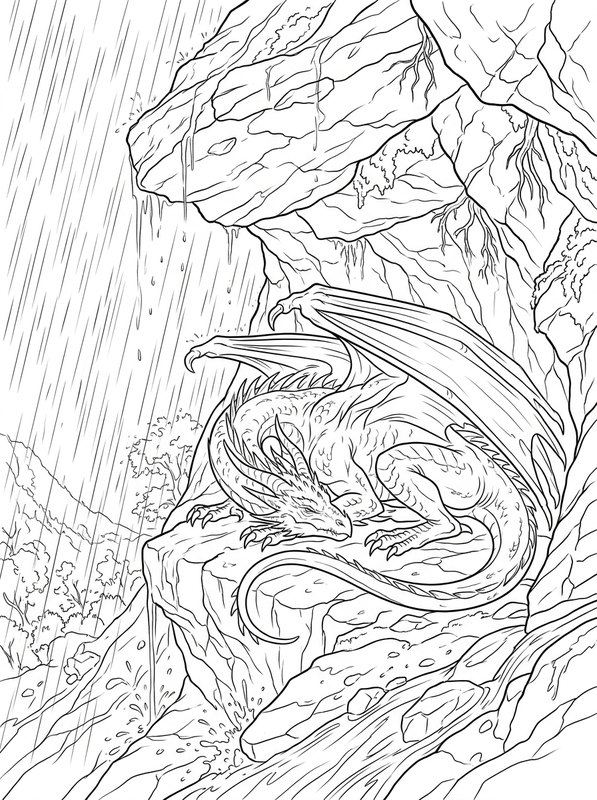
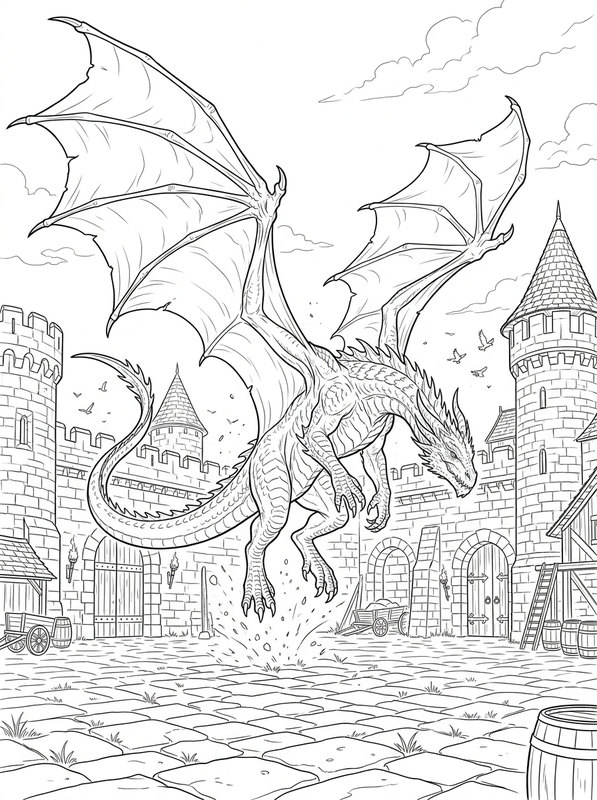
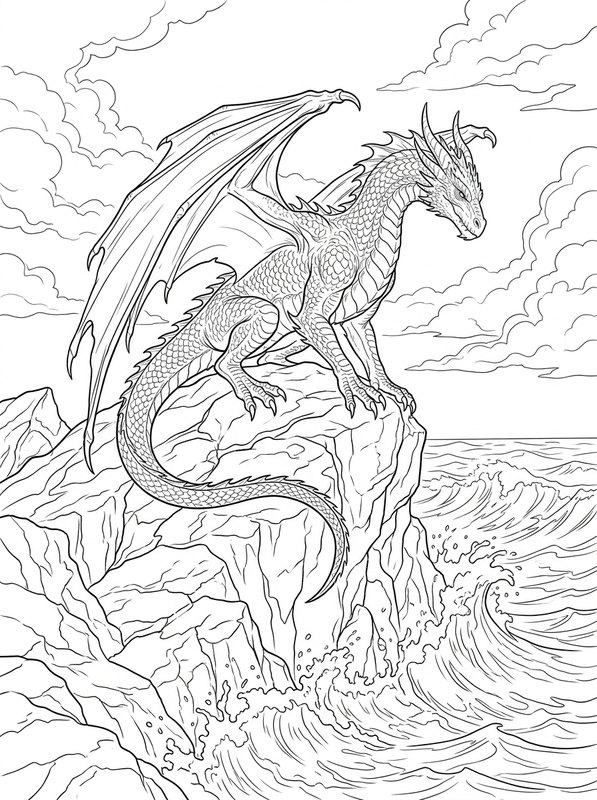
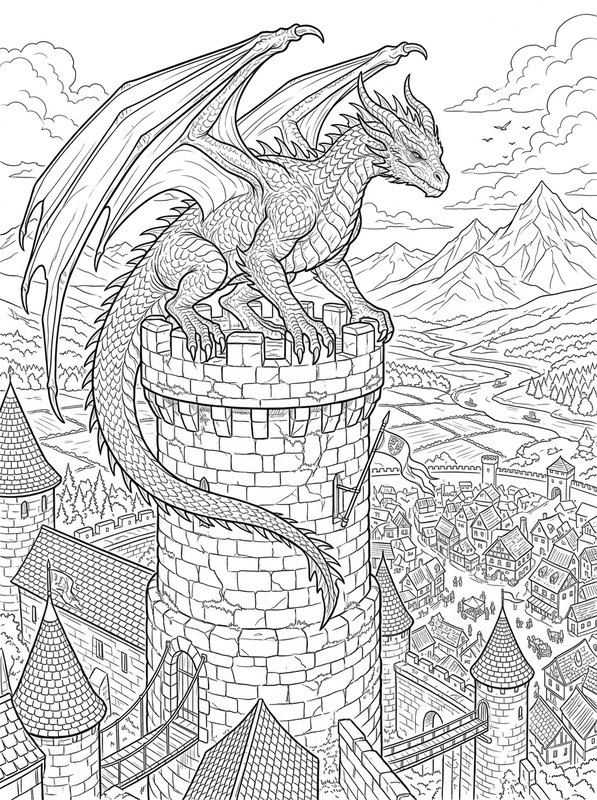
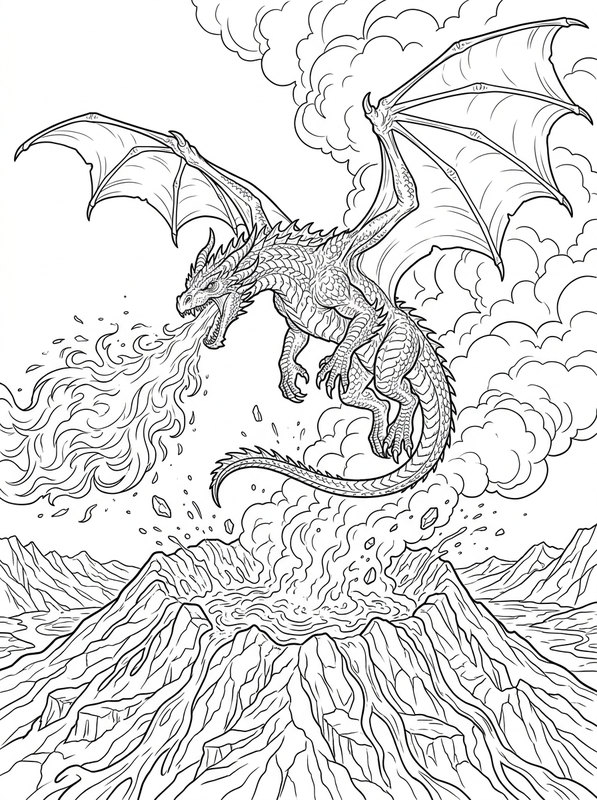
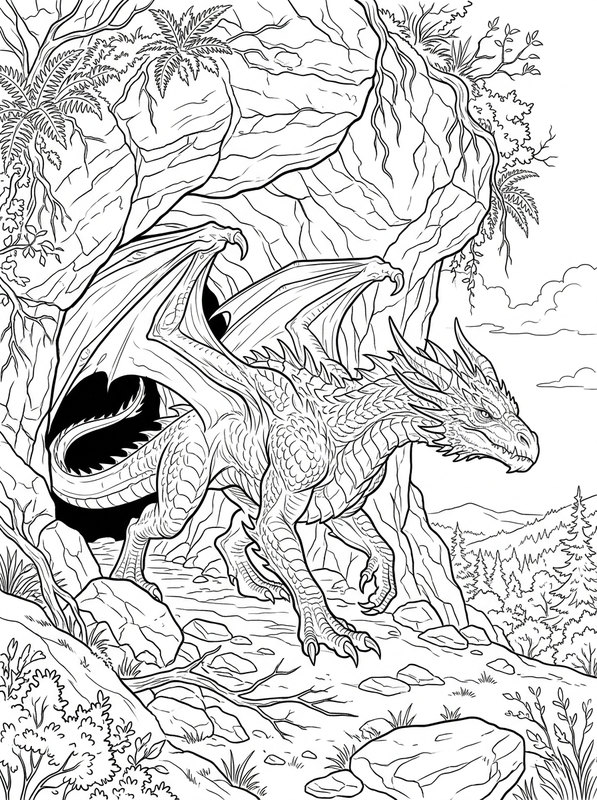
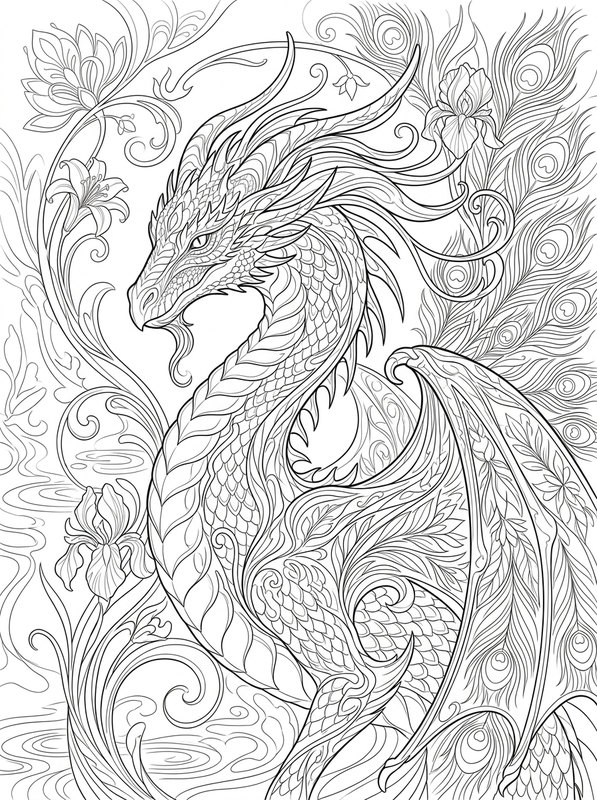
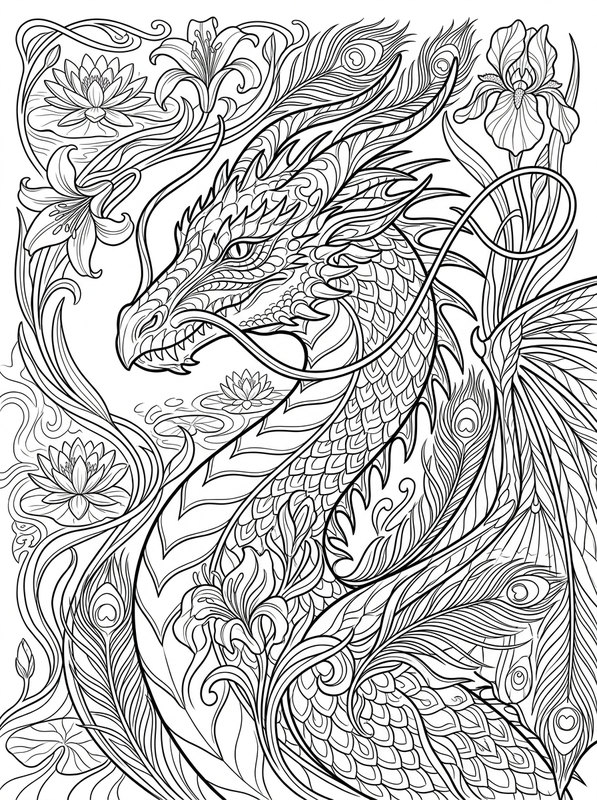
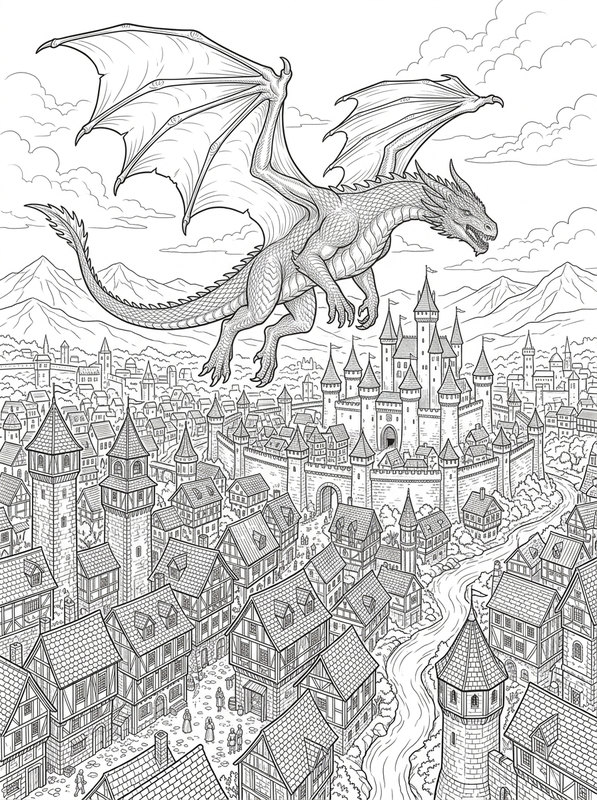
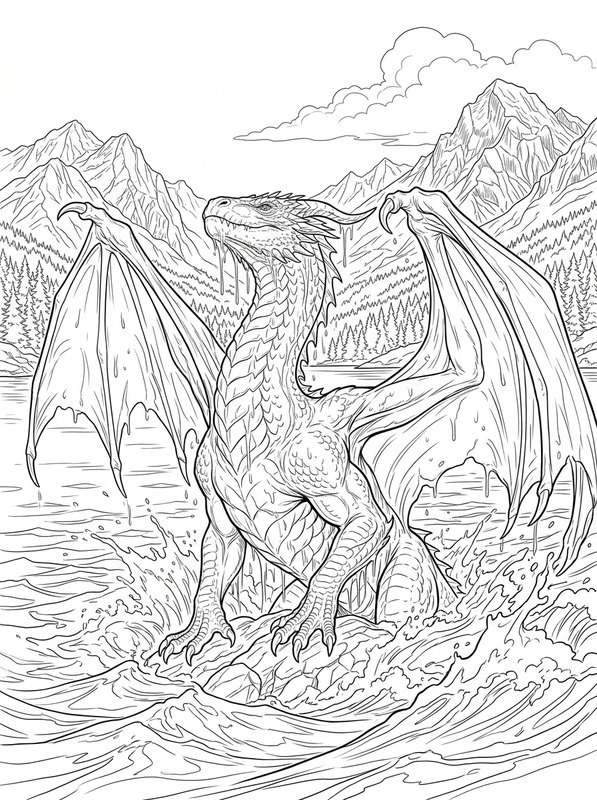
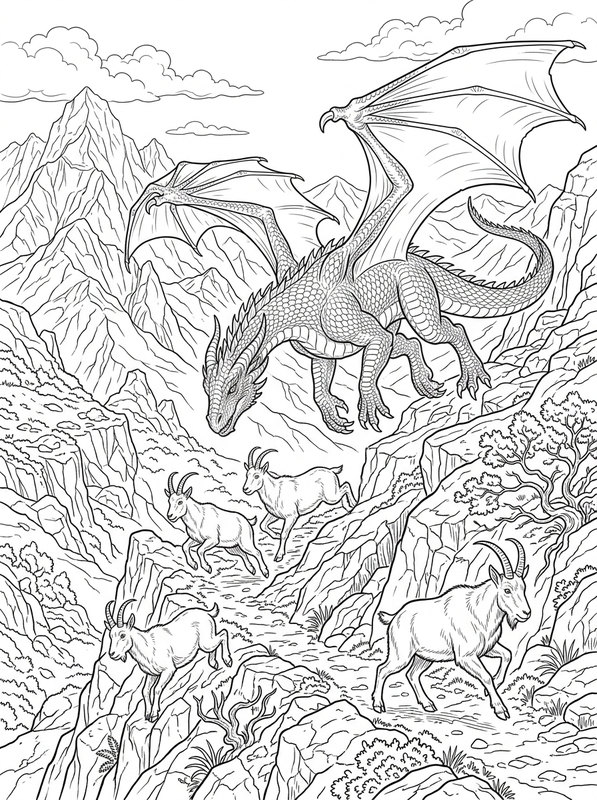
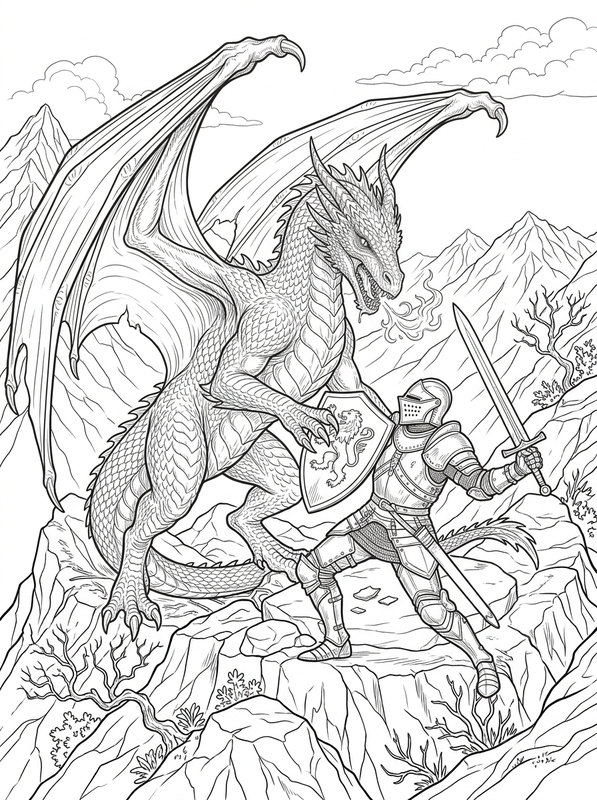
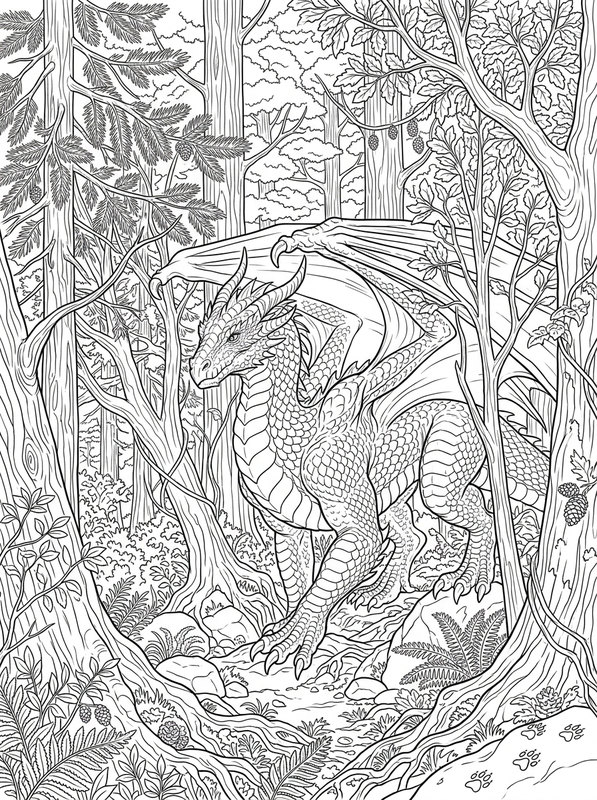
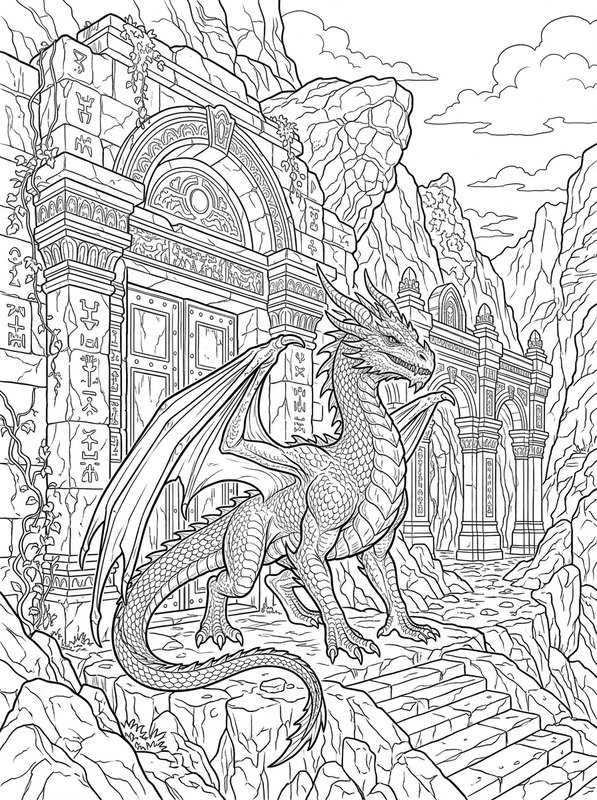
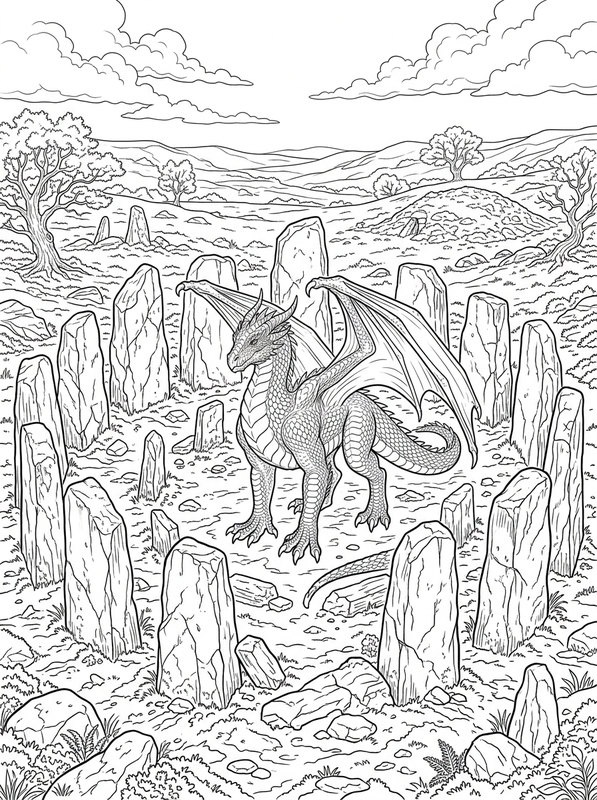
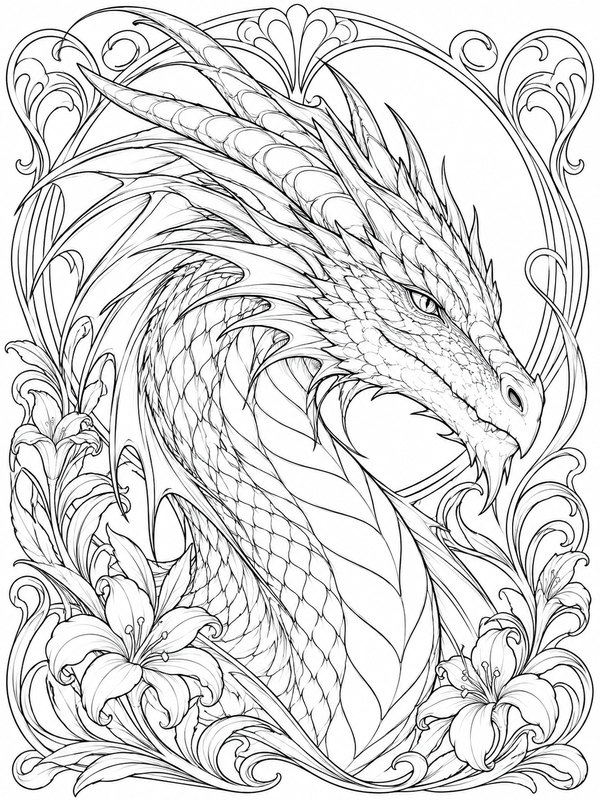
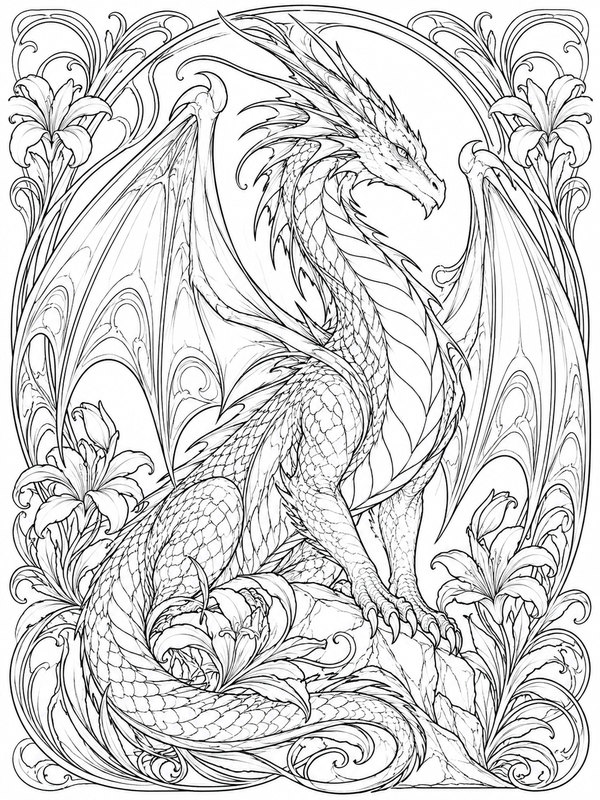
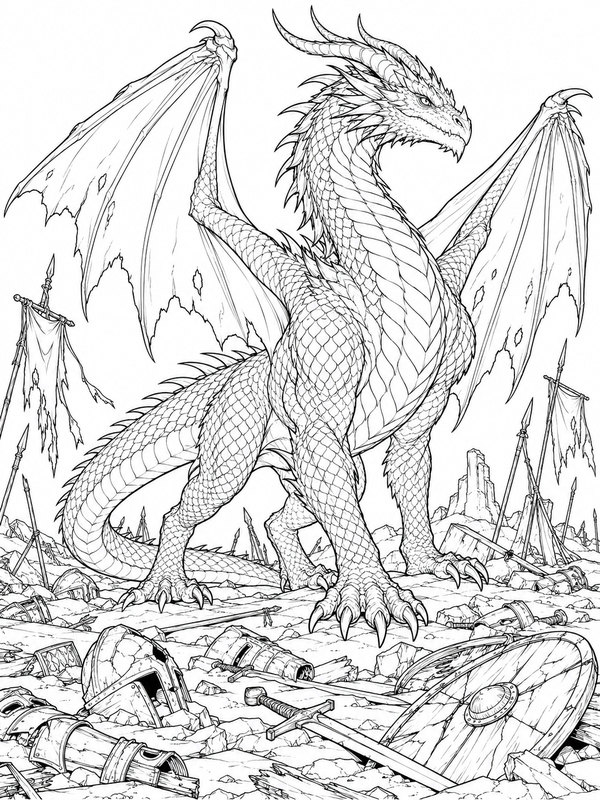
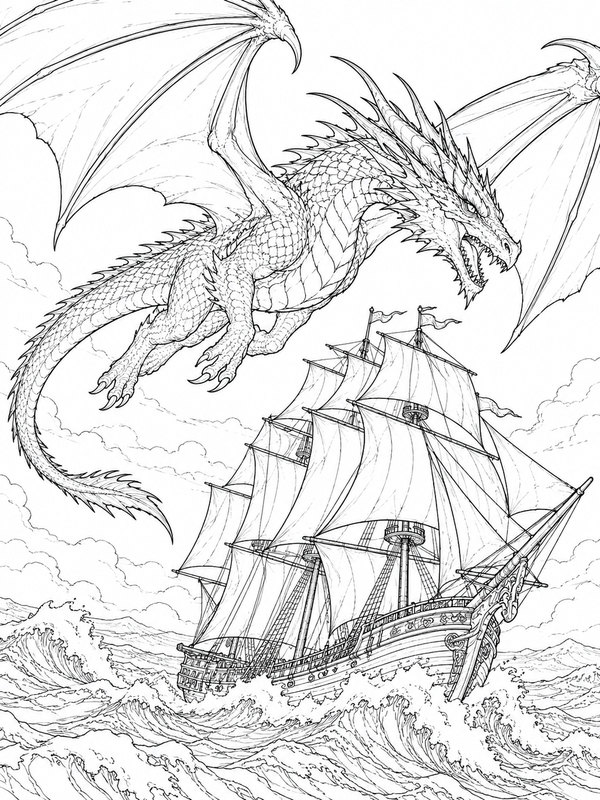
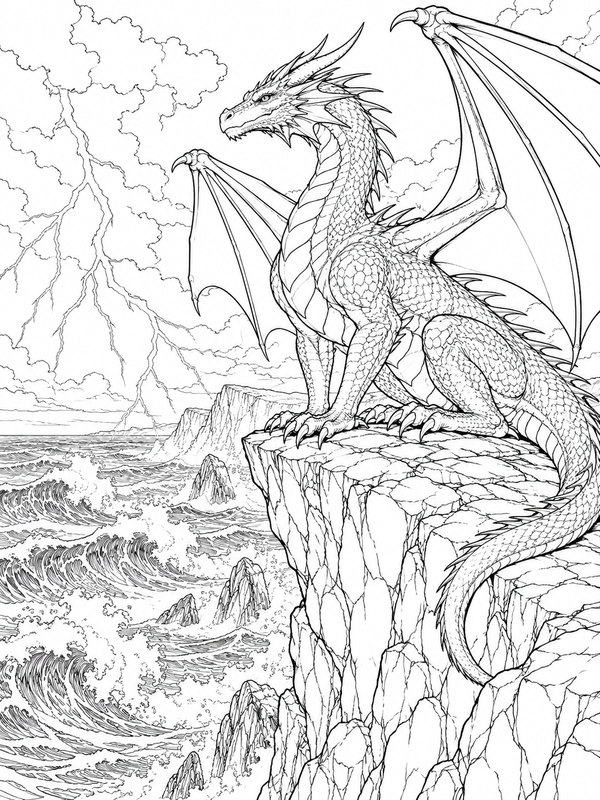
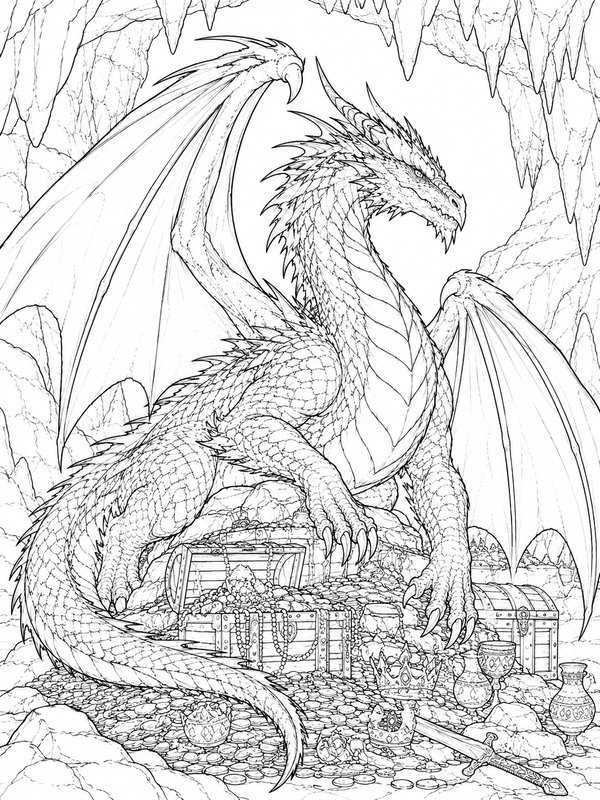
These free printable dragon coloring pages feature mythical creatures in medieval castles, mountain landscapes, ancient ruins, and underground caves. Each design is available as an individual A4 PDF. The drawings range from dramatic scenes of dragons flying, guarding treasure, and breathing fire to intricate dragon portraits surrounded by decorative patterns. Detailed scales, powerful wings, and varied fantasy settings provide plenty of opportunities for coloring.
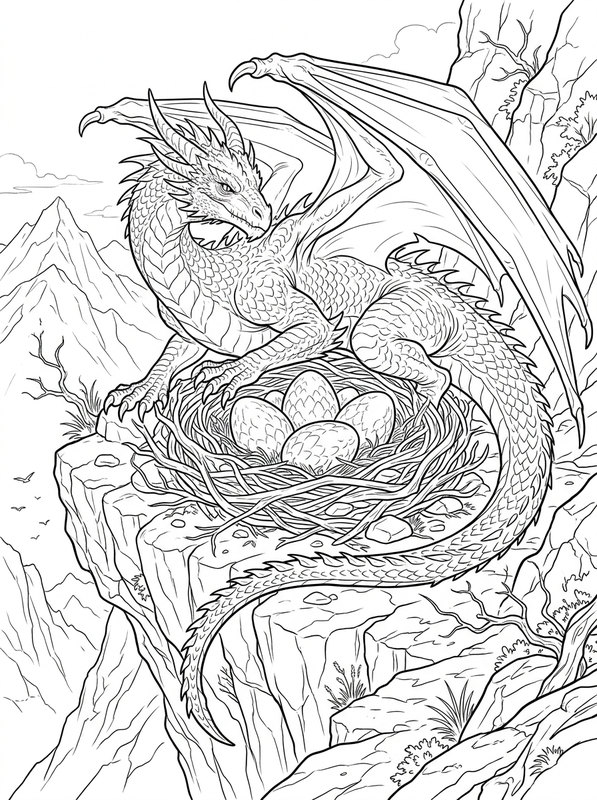
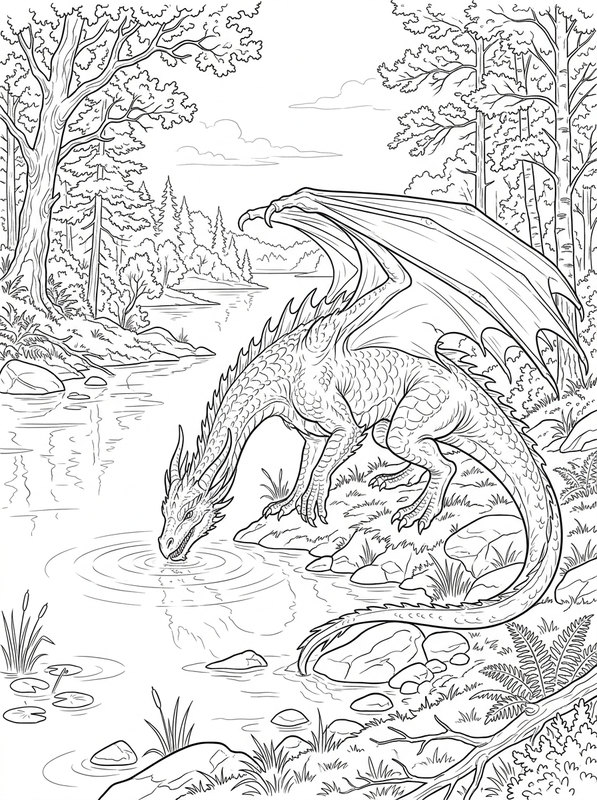
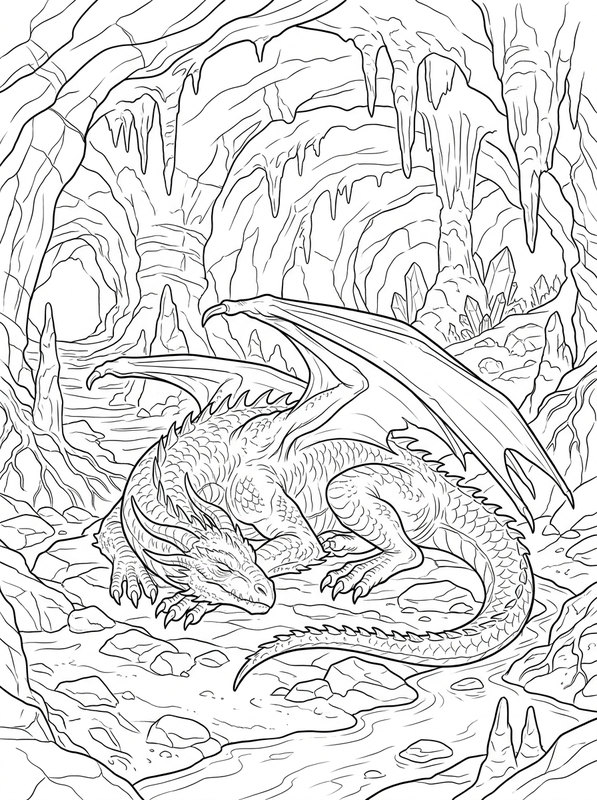
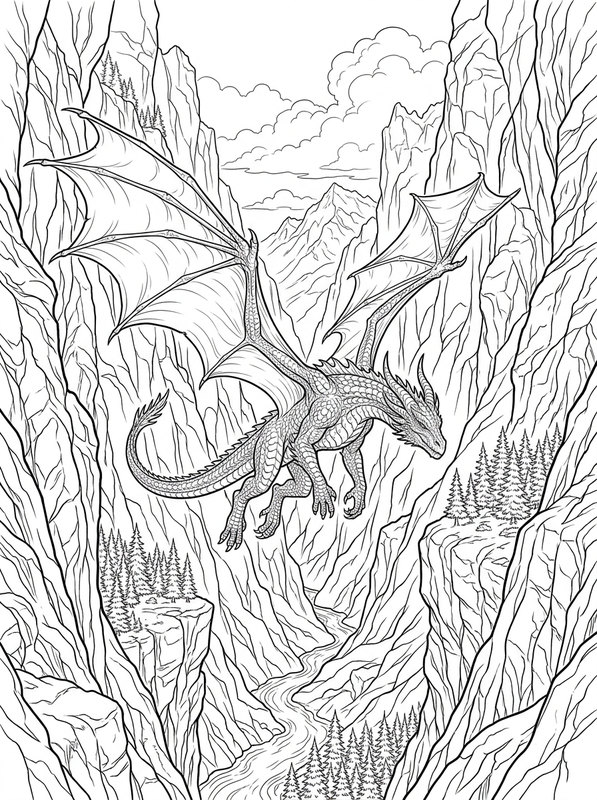
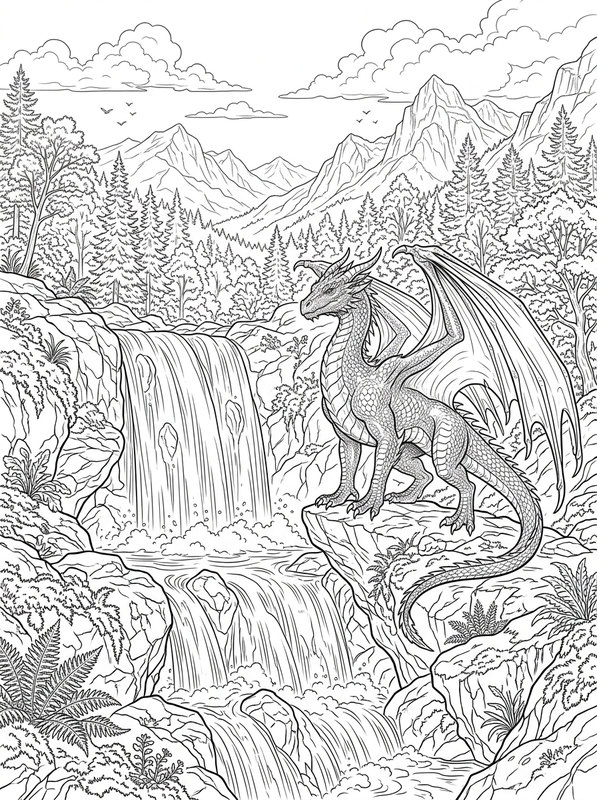
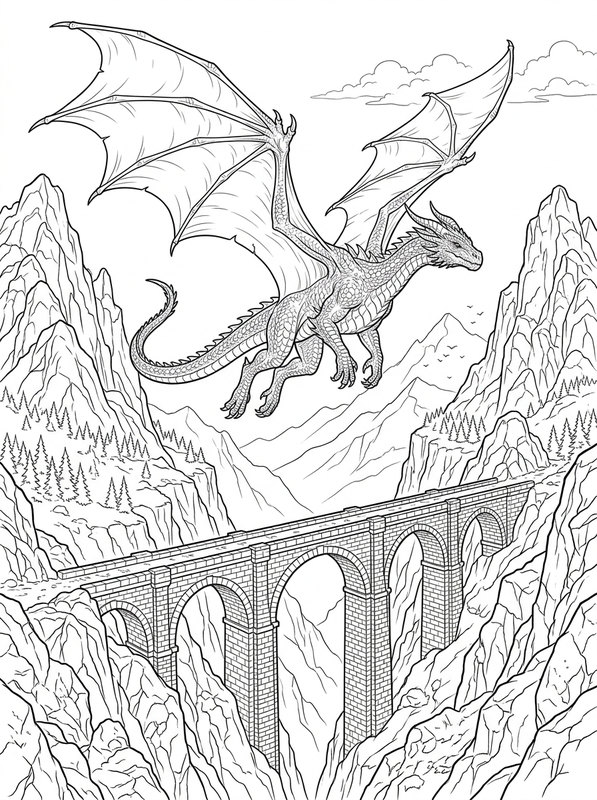
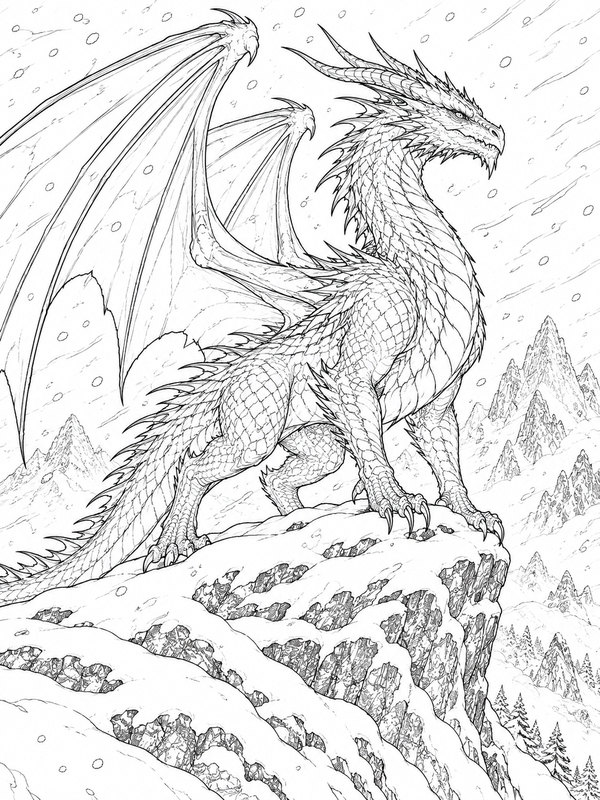
A dragon guards a nest of eggs on a mountain ledge, another confronts an armored knight, and a chained dragon stands inside a stone dungeon. Other pictures show dragons drinking from forest lakes, flying through narrow canyons, resting beside waterfalls, and hovering above sailing ships. There are also dragons among ancient standing stones, on snowy mountain peaks, and inside crystal-filled caves. The ornamental illustrations offer a different approach, featuring elaborate dragon heads and curved bodies framed by flowers and decorative foliage. For younger, friendlier cartoon characters, the separate Cute Dragon Coloring Pages collection focuses on little dragons in gentler settings.
Cute Dragon Coloring Pages
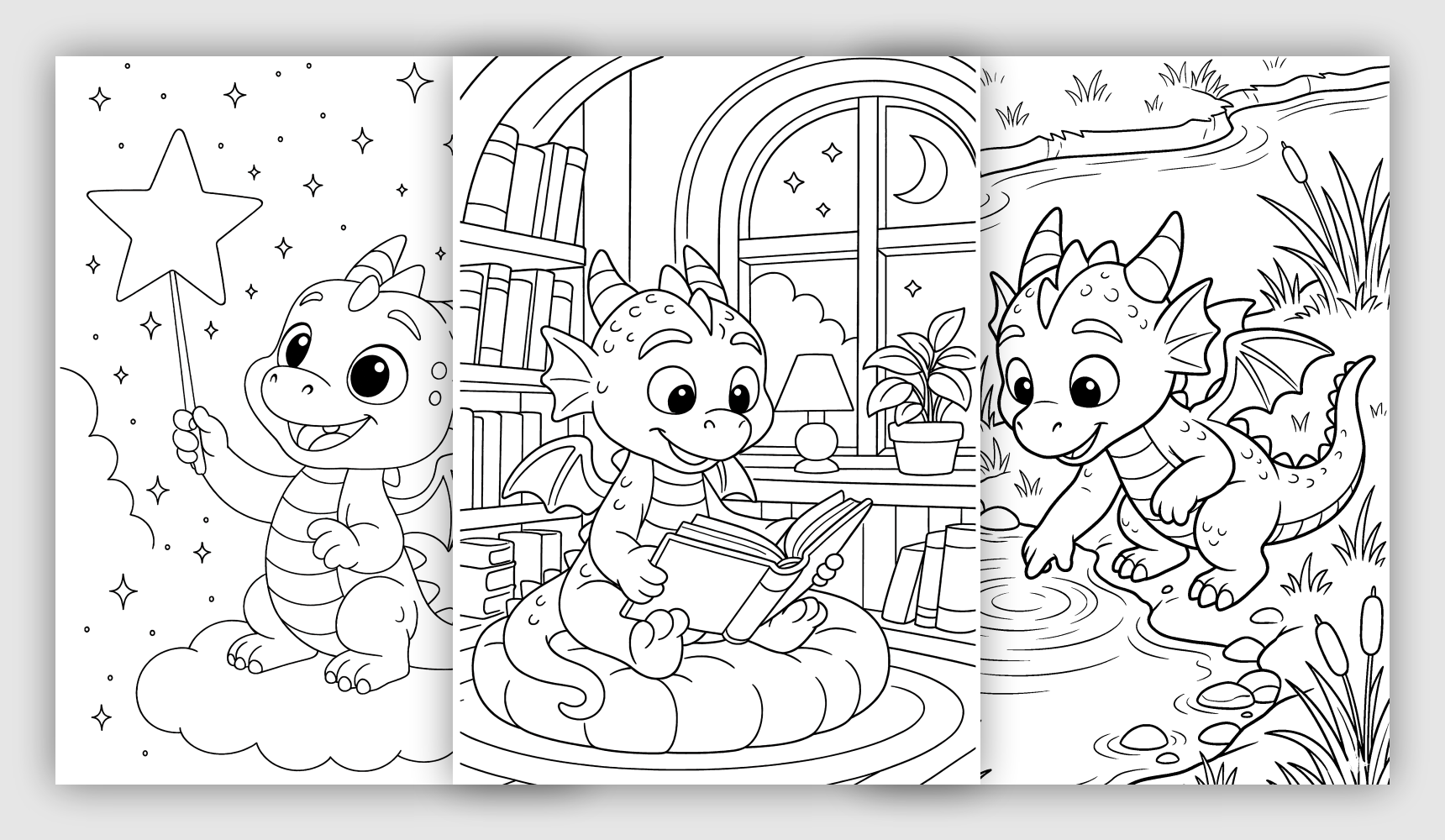
Little cartoon dragons read books, sleep on clouds, paint rainbows, and play among flowers. Their rounded faces, large eyes, and gentle expressions distinguish these pictures from the more detailed fantasy creatures, dramatic landscapes, and ornamental dragon designs on this page.
🎨 Ideas for Coloring Dragon Scales, Wings, and Fantasy Scenes
Dragon scales can be colored in traditional greens, dark reds, bronze, or charcoal gray, but there is no reason to limit them to natural-looking shades. Blue and violet can create a colder appearance, while copper, gold, and deep orange work well for dragons associated with fire. For more depth, apply a light base color across the body, then use a darker shade where individual scales overlap. The neck, chest, and belly can have a slightly different color from the back, making the creature's body structure easier to distinguish.
Large wings are especially interesting to color because their membranes and supporting bones form separate sections. Try using a lighter color inside the wing panels and a darker shade along the curved supports. This approach makes the wings easier to read, particularly when they overlap the body or surrounding scenery. Horns, claws, and pointed spines can use a contrasting neutral color such as ivory, slate gray, or dark brown. Colored pencils allow greater control around these narrow shapes, while markers work well for broader areas of the wings.
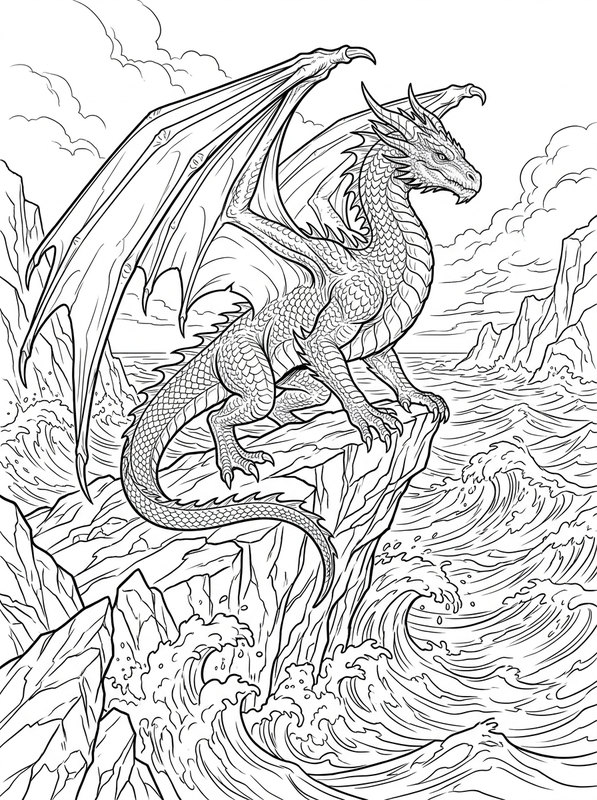
The different environments provide opportunities to experiment with lighting. Around a volcano or a dragon breathing fire, yellow and orange can suggest reflected light on nearby scales, while dark browns and grays help separate the flames from the rocky background. Snowy mountains require a different palette: leave some snow white and add pale blue shadows around exposed rock. In coastal and waterfall scenes, several shades of blue and green can distinguish water from the surrounding cliffs. Keeping the dragon a little lighter or darker than the background helps maintain a clear focal point.
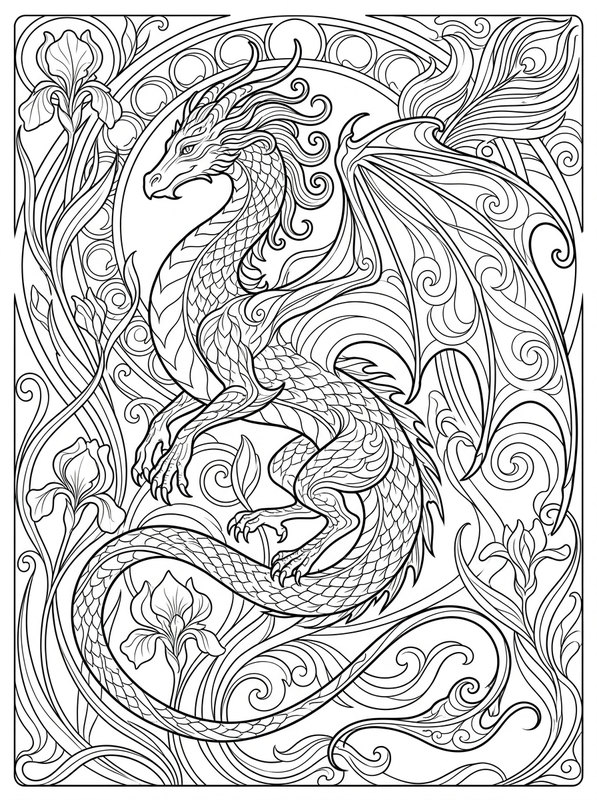
The ornamental dragon portraits call for a different coloring approach from the landscape scenes. Their overlapping scales, curling leaves, flowers, and decorative lines form dense patterns with relatively little empty space. A limited palette of three or four colors can help organize these shapes. For example, use emerald and dark green for the dragon, warm gold for selected details, and a contrasting color for the flowers. In the more elaborate designs, color the main dragon before choosing shades for the surrounding ornaments so the two remain visually distinct.
Tip: When coloring a detailed dragon portrait, use lighter pencil pressure on the first layer. This makes it easier to darken individual scales and preserve the fine black outlines.