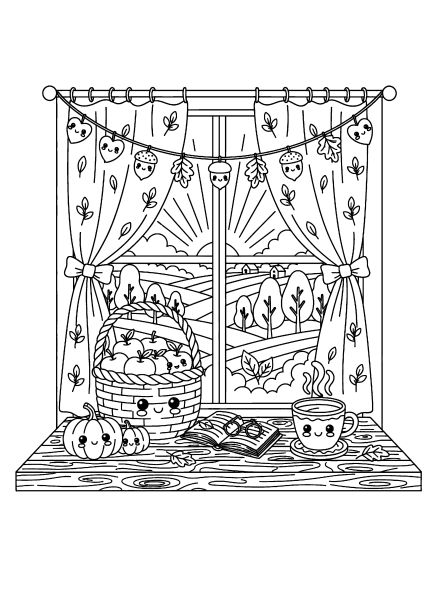
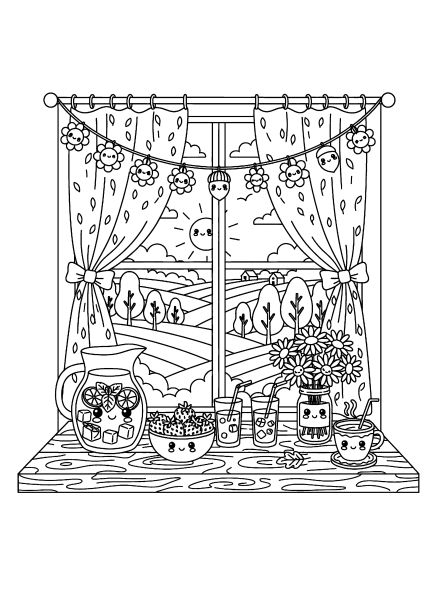
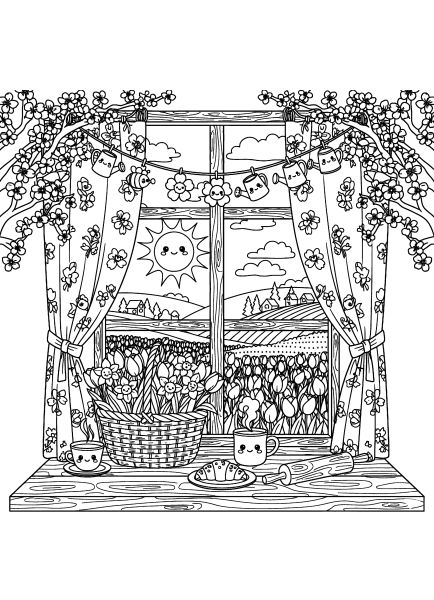
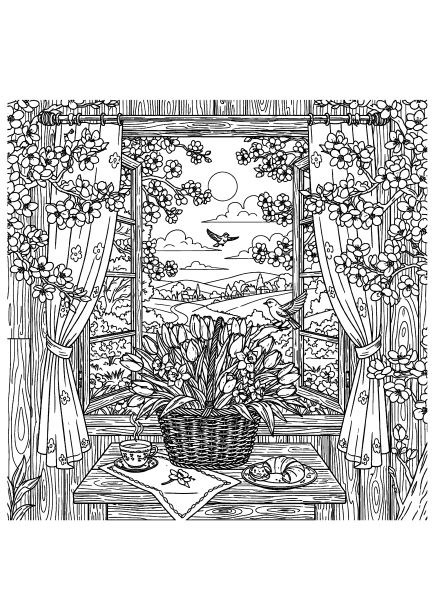
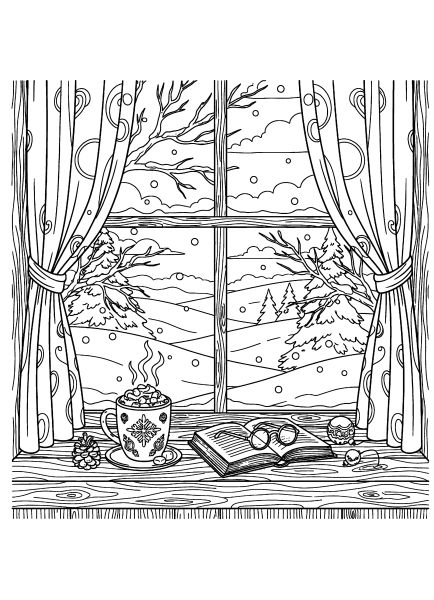
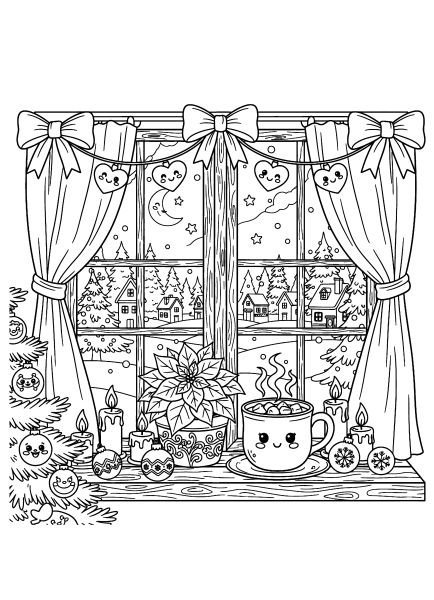
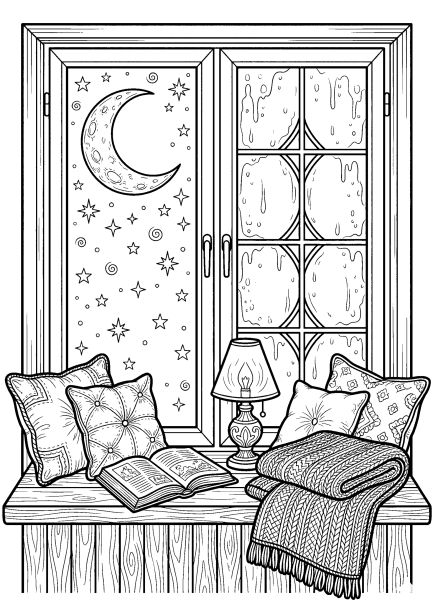
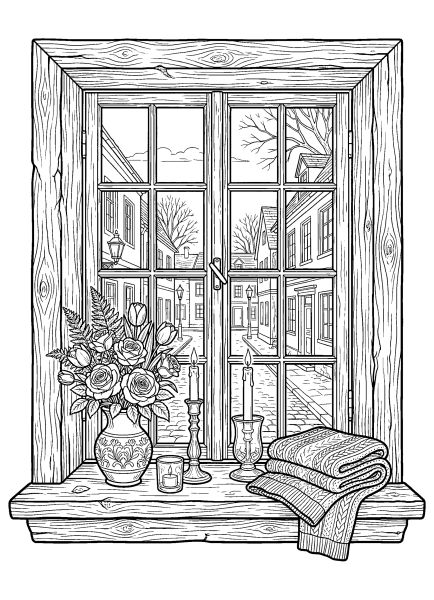
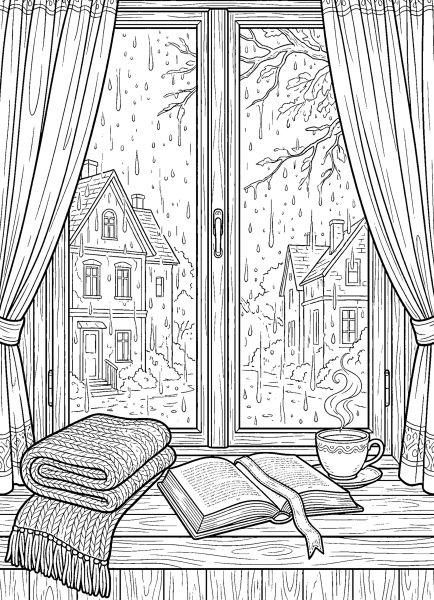
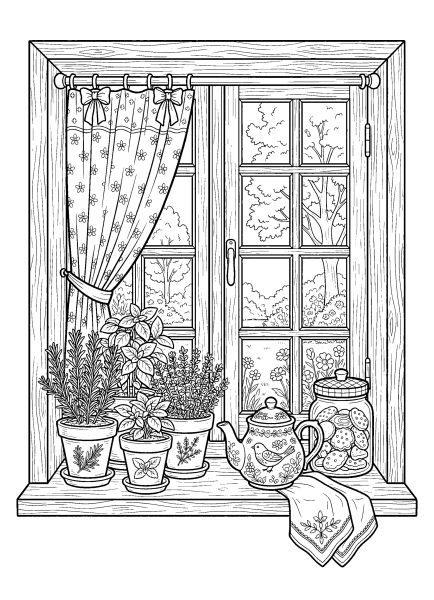
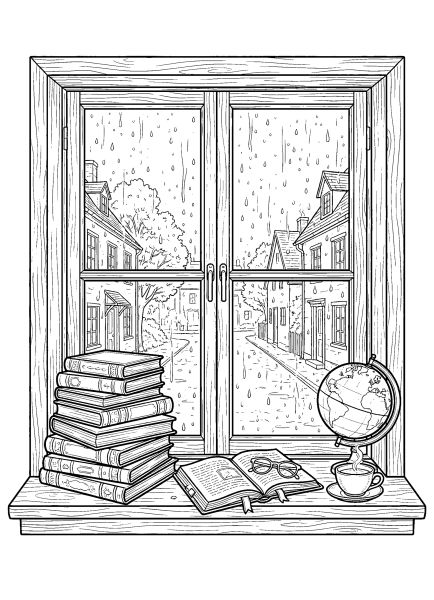
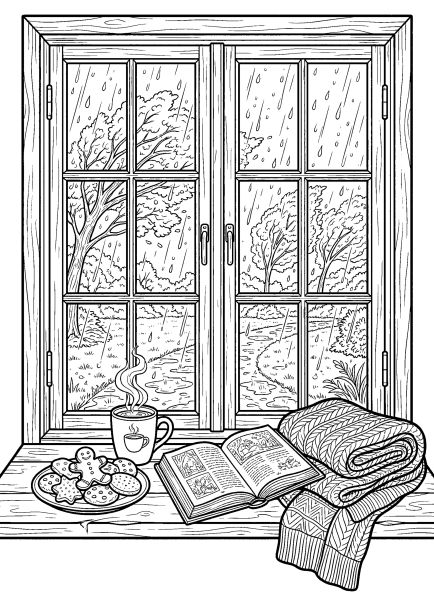
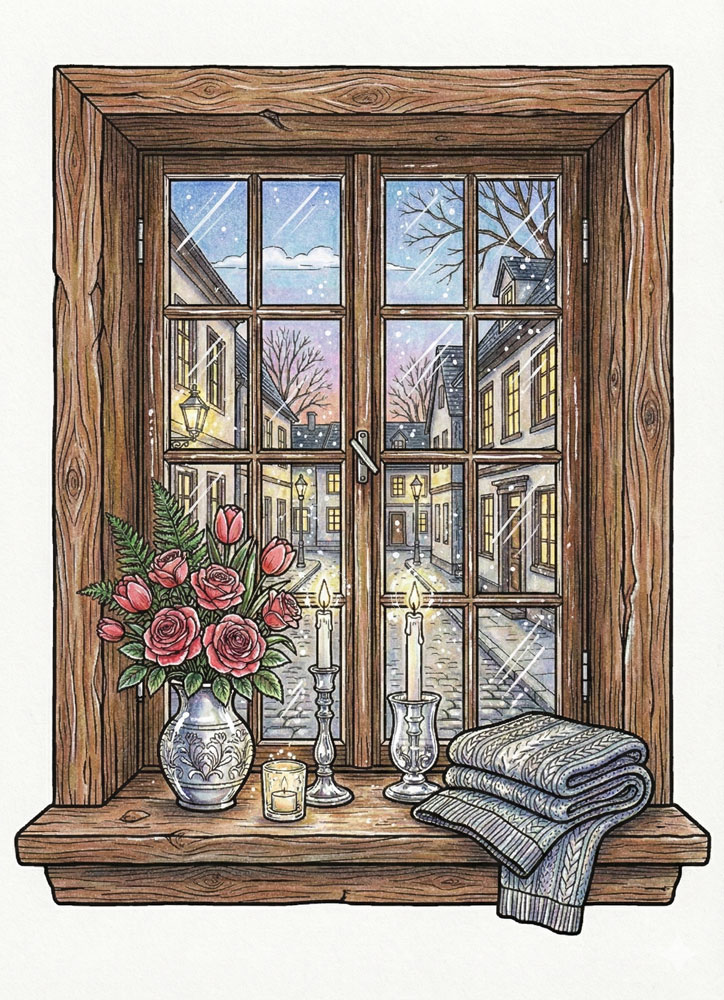
Cozy window coloring pages
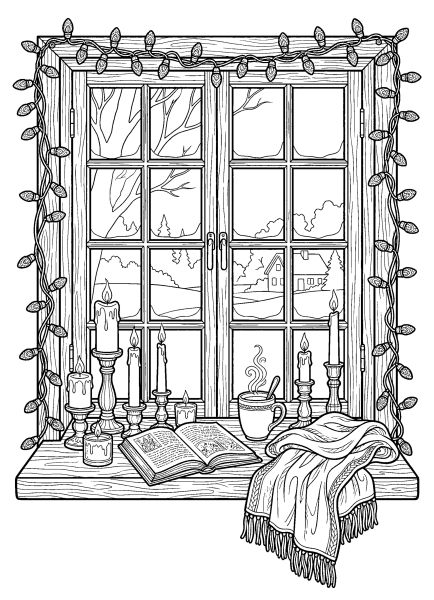
Cozy window scenes focus on the feeling of warmth, safety, and calm that comes from looking at the world through glass. A window becomes a quiet boundary between inside and outside, where light, weather, and small details create atmosphere rather than action.
These coloring pages are built around moments of stillness. The view beyond the window is secondary to the feeling it creates: evening light, soft reflections, and the sense that something peaceful is happening indoors.
Understanding the Visual Language of the Theme
The visual language of cozy window scenes is defined by contrast between interior calm and softened exterior views.
Key characteristics include:
clear window frames acting as visual anchors
layered scenes where inside and outside are visually separated
reduced contrast behind the glass
small reflective details that suggest light on smooth surfaces
The window itself is not just a shape. It controls how the scene is read by filtering light, muting colors, and framing the view beyond.
Coloring Techniques / Approach for This Theme
This theme works especially well when glass is treated as an active surface rather than an empty space. The following three approaches explore different ways to suggest glass, light, and depth.
The Magic White Pen (Mixed Media Highlights)
This is the simplest way to add a clear glass effect once the entire scene is fully colored. A white opaque tool is used to place sharp reflections on top of existing colors.
Thin white lines can be added along the corners or edges of window panes. A few tiny white dots help suggest sparkles or light reflections on the glass surface. The effect is strongest when used sparingly, allowing the color underneath to remain visible.
The Hazy Layer (The “Through the Glass” Effect)
Glass naturally softens and dulls what is seen behind it. This technique focuses on reducing contrast to show that the outside view is filtered through a surface.
With colored pencils, the landscape behind the window is colored normally first. Afterward, a white pencil is gently applied over the entire window area using medium pressure. In selected spots, sharper white lines can be added to imitate light reflections on the glass. This creates a soft, slightly cloudy layer that reads clearly as glass.
With markers, a very light gray or colorless blender marker can be passed lightly over the landscape colors to desaturate them. This keeps the scene visible while clearly separating it from the interior.
The Soft Gradient Frame (Depth and Thickness)
Glass often appears slightly heavier near the edges, where shadows and dust collect. This approach adds subtle depth without filling the window completely.
Using colored pencils, a pale blue, mint, or light gray is applied near the window frame and gently faded toward the center. The pressure remains light so the color disappears into the paper.
With markers, the lightest cool gray or pale blue tone is layered only in the corners and along the edges, creating a soft vignette. Leaving the center of the window white helps the glass feel clearer and more open.

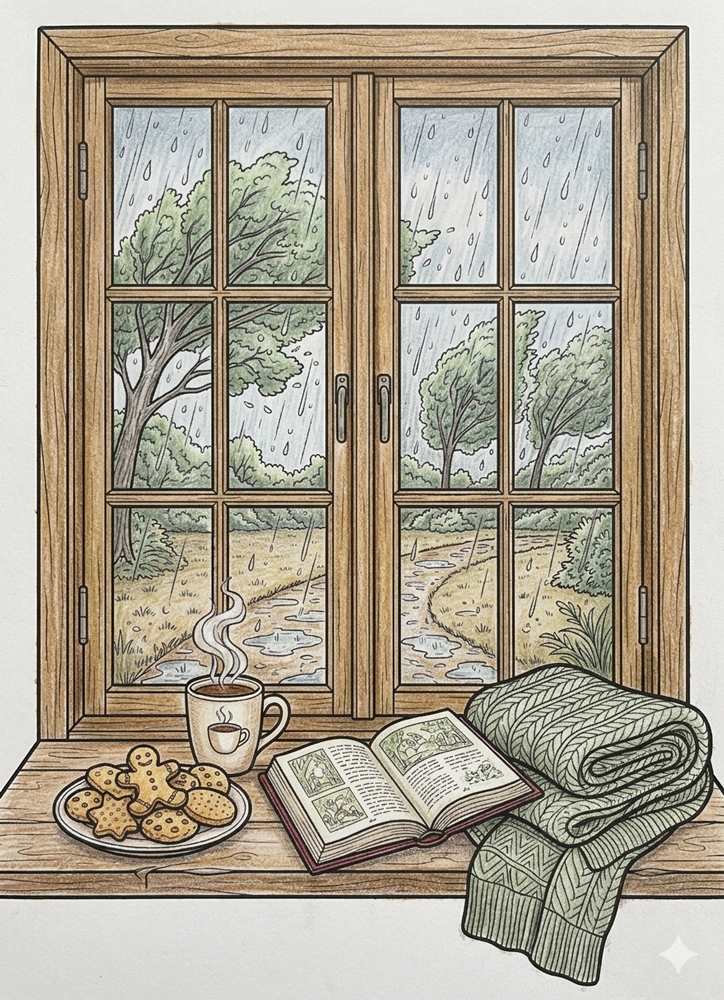
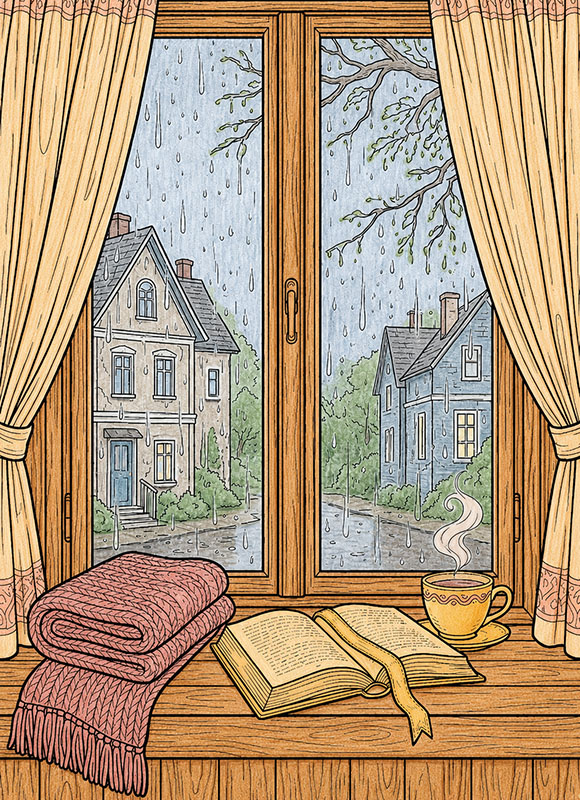
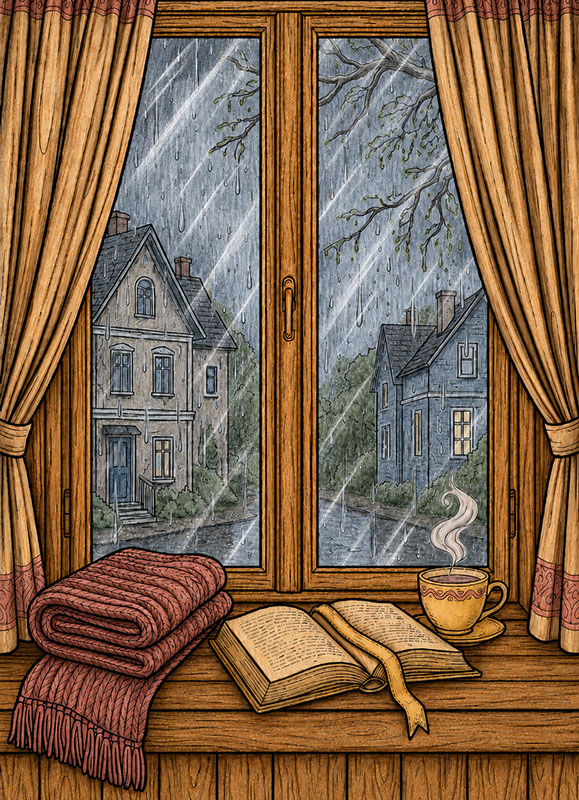
Example 1 The Magic White Pen
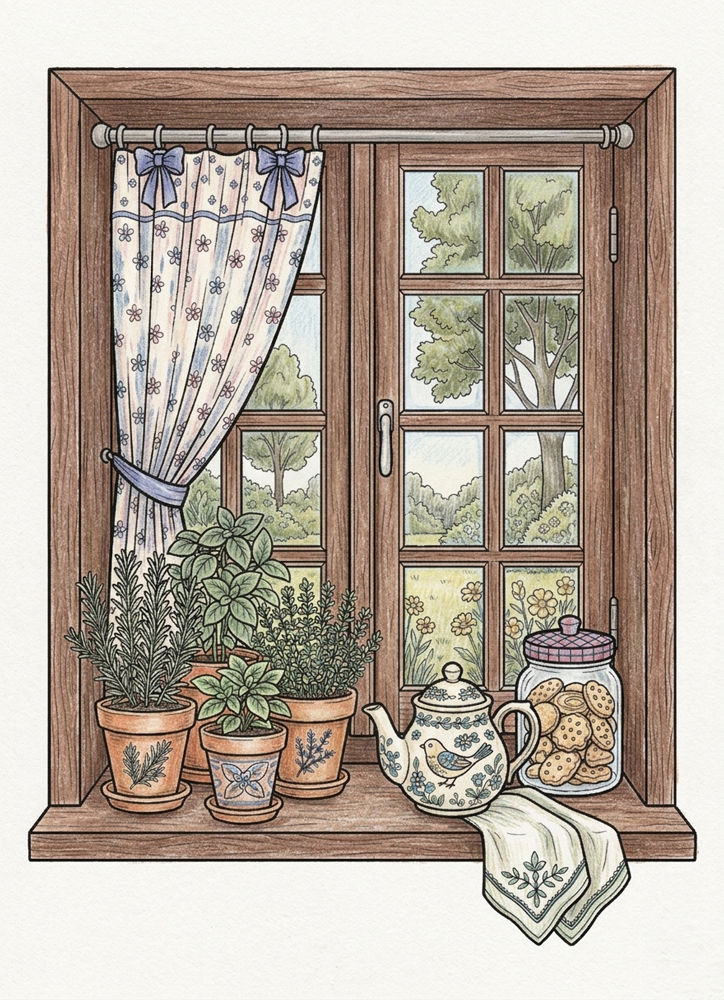
This example focuses on using white pen highlights to define the glass surface. Sharp white lines placed along the window edges and small dots on the panes create the impression of reflected light. The underlying colors remain untouched, allowing the glass to feel clear and crisp rather than cloudy. In this example, the scene is colored with colored pencils, but the same approach can also be used with markers before adding white pen accents.
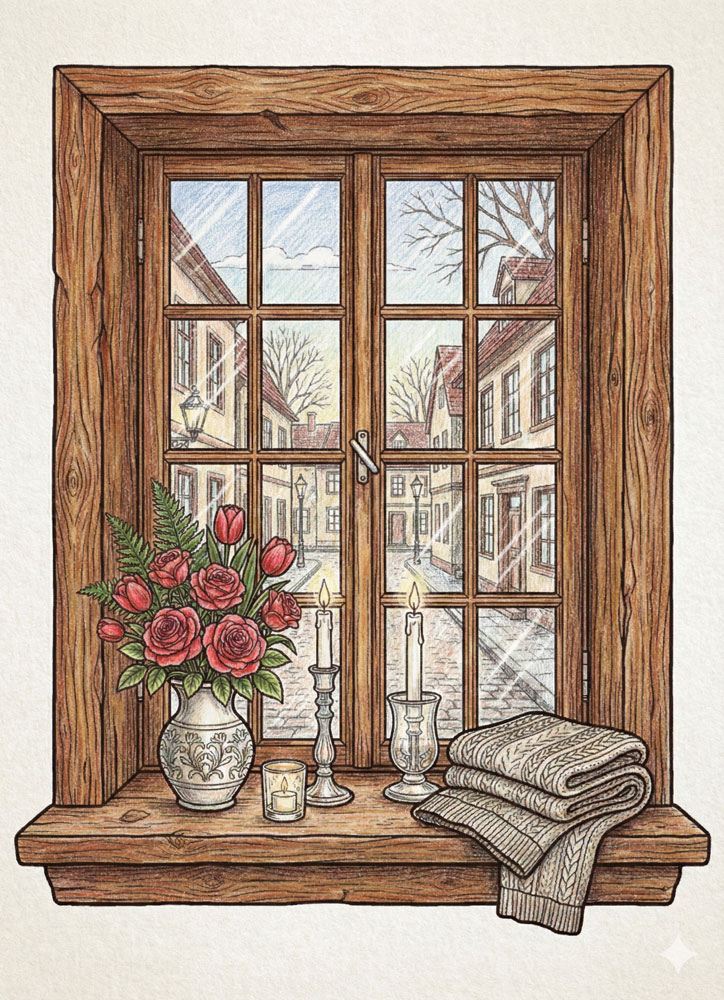
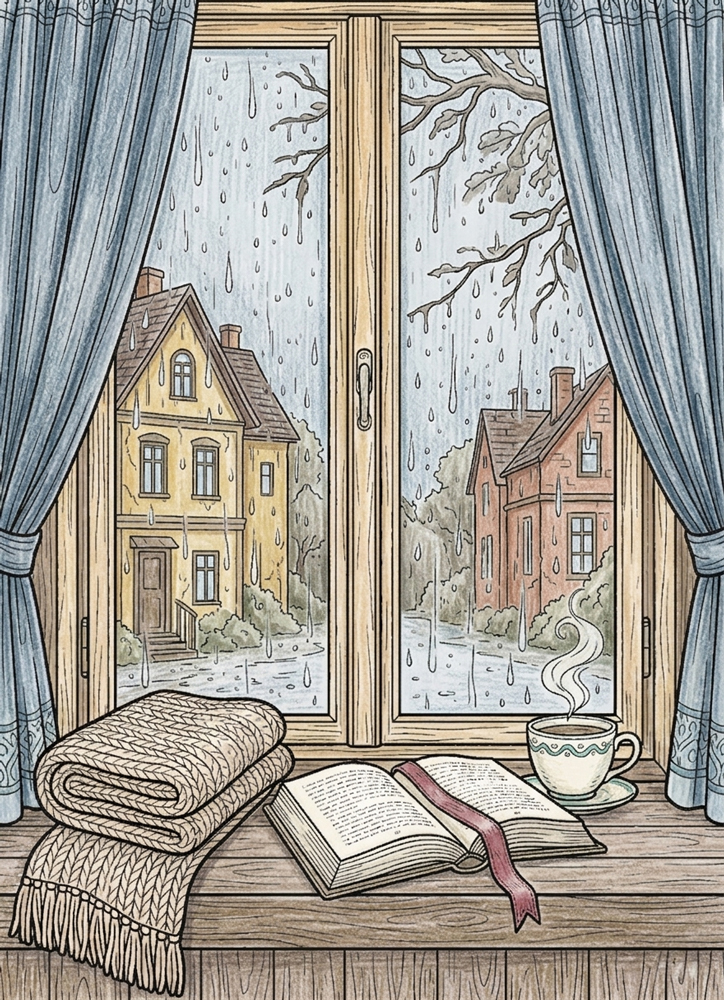
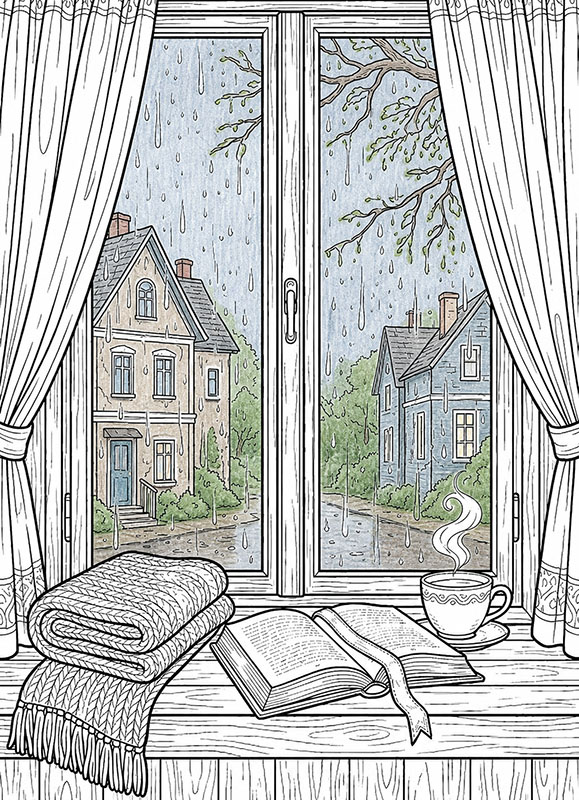
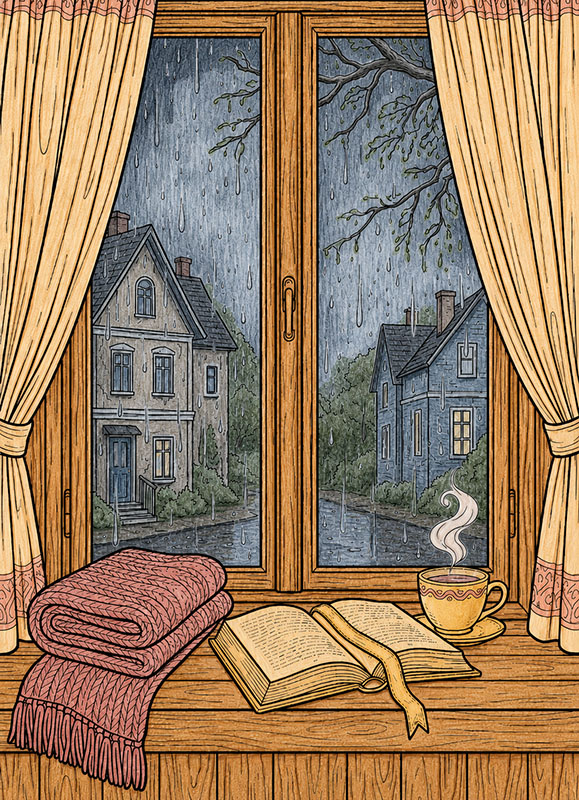
Example 2 The Hazy Layer
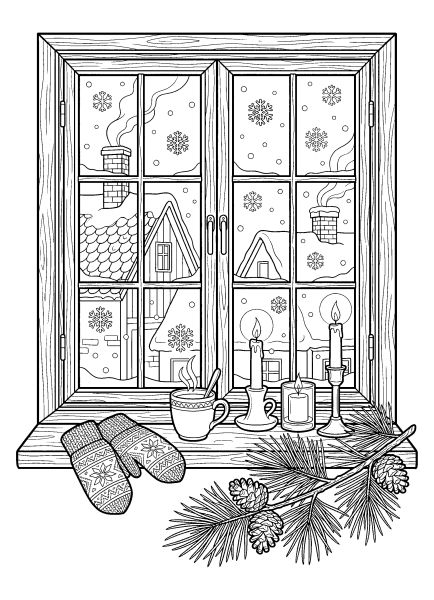
In this example, the view behind the window is intentionally softened. A light layer is applied over the outdoor scene to reduce contrast and brightness, making it appear filtered through glass. Clear white highlights are added in selected areas to suggest reflections without breaking the hazy effect. This version is colored with colored pencils, but a similar muted effect can also be achieved using markers and very light tones.
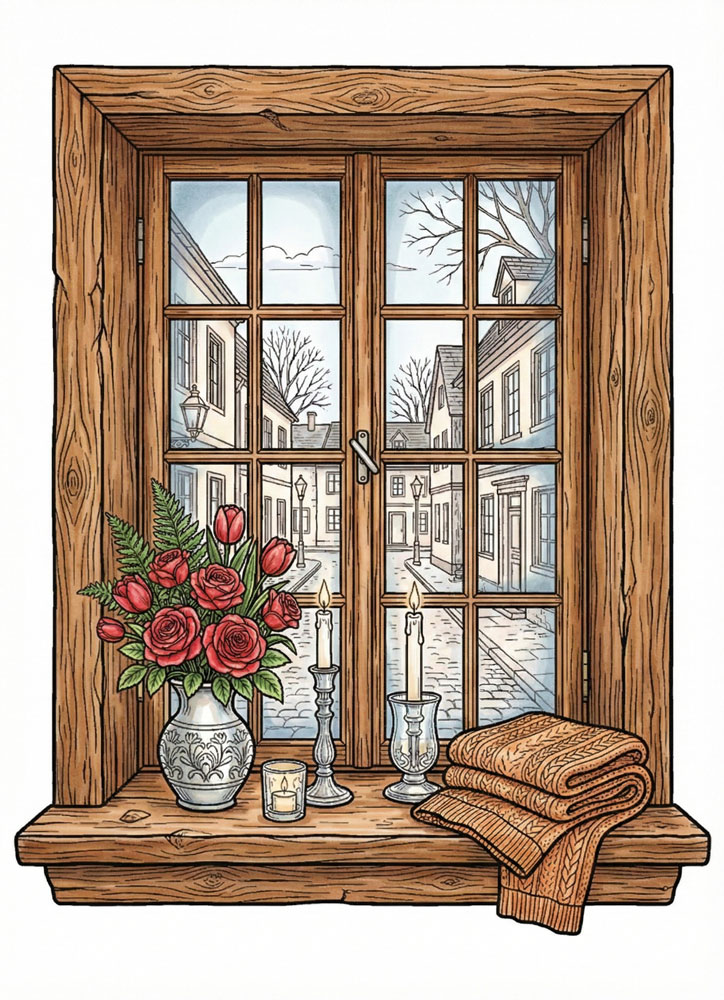
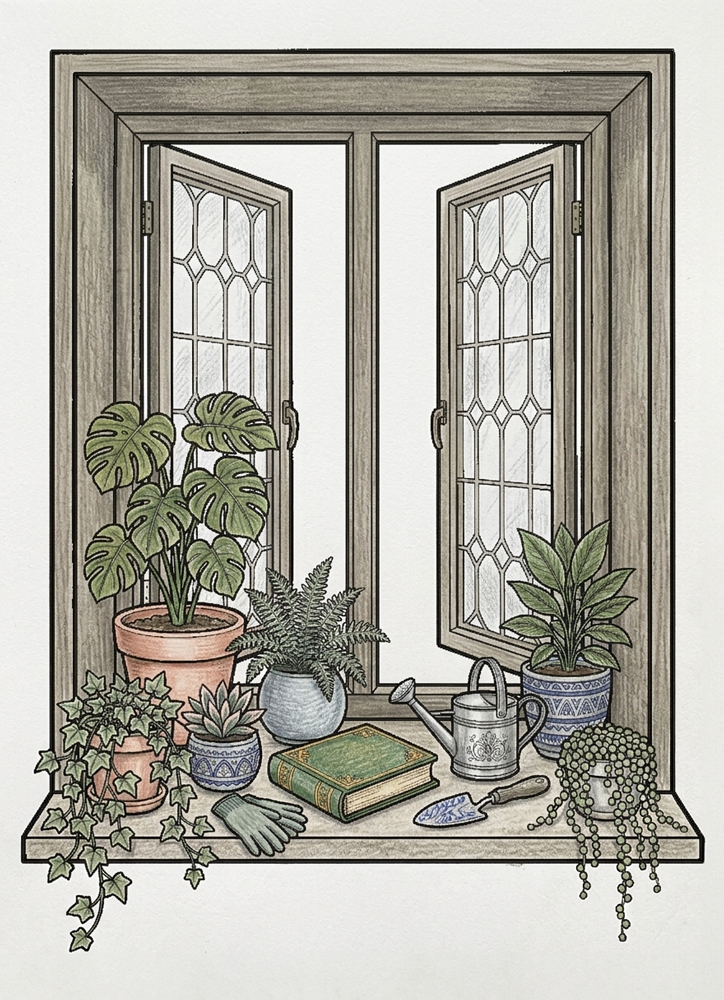
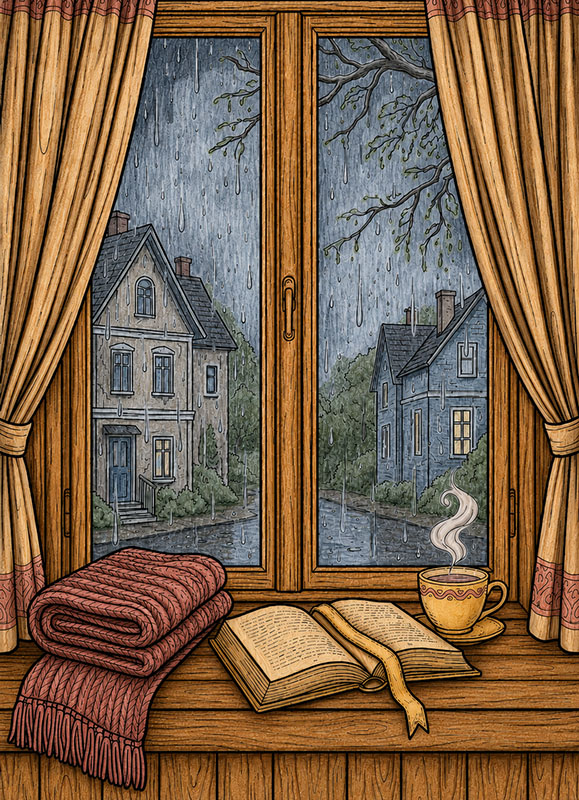
Example 3 The Soft Gradient Frame
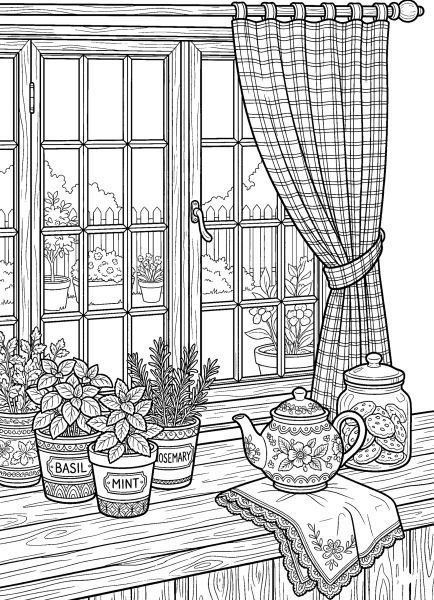
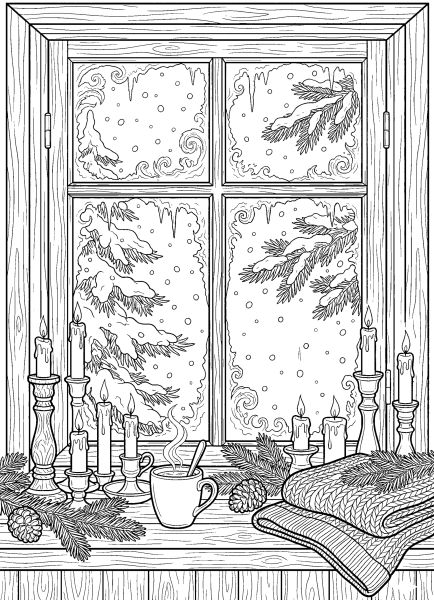
This version demonstrates how depth can be suggested near the window frame. Light color is concentrated along the edges and corners, then gradually faded toward the center. The middle of the window stays mostly white, which keeps the glass transparent while giving it a sense of thickness.In this example, the scene is colored with alcohol markers, but the same effect can also be achieved with colored pencils using light pressure and gradual layering.
Artistic Composition and Detail Balance
The window frame acts as a natural divider that organizes the entire composition.
Keeping the glass area light allows interior details to remain calm and readable. The strongest visual contrast stays within the room, while the outside view supports the mood without drawing attention away from the window itself.
Practical Application: How to Use
These pages are ideal for slow, relaxing coloring sessions focused on light and atmosphere.
They work well for:
evening or seasonal coloring themes
exploring light, reflection, and transparency
experimenting with mixed media in a controlled way
Using the same scene with different glass effects can also help compare approaches without changing the subject.
Technical Standards and Download Information
All pages are provided as high-resolution printable PDFs.
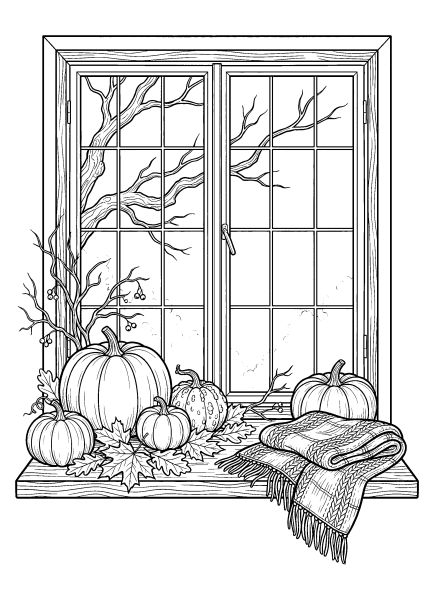
They feature clean black outlines, vertical A4 format, and are suitable for colored pencils, markers, and white pen accents.
Download, print, and enjoy bringing cozy window scenes to life.

