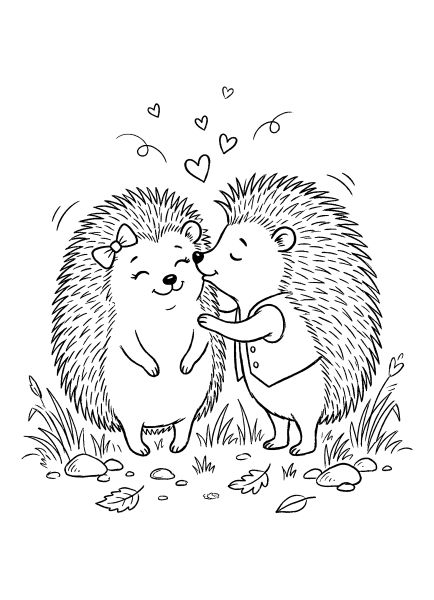
Valentine’s Day Coloring Pages
Valentine’s Day illustrations in a storybook doodle style focus on tenderness rather than drama. The charm of this theme lies in small gestures: characters holding hearts, wrapped in blankets, standing close together, surrounded by simple decorative symbols. The atmosphere is gentle, playful, and emotionally warm.
Instead of bold contrast or complex backgrounds, these pages highlight connection. Rounded shapes, soft expressions, and open space create a calm visual rhythm. The intention is not intensity, but sweetness and clarity.
This collection captures that quiet, affectionate tone through balanced compositions and clean, readable designs.
Understanding the Visual Language of the Theme
The visual structure relies on:
• rounded silhouettes
• minimal sharp angles
• evenly spaced decorative elements
• clear central focus
Characters are usually positioned close together, forming a compact focal area. Hearts, stars, or small decorative shapes float around them but do not overcrowd the page.
Linework is clean and slightly weighted, guiding color placement without requiring heavy shading. Negative space plays an important role. The open background allows the main figures to stand out and keeps the composition light.
Detail density remains moderate. Textures are suggested through simple folds, small patterns, or gentle outlines rather than intricate linework.
Coloring Techniques / Approach for This Theme
For cute Valentine’s Day coloring pages in a storybook doodle style, a controlled and book-like approach works best. This means:
• limited color selection
• soft shading
• visual breathing space
Choose 5 to 7 colors and stay within that range to keep the illustration cohesive. A typical set might include:
• two pinks, light and medium
• one warm red or coral for accents
• cream or beige for faces and light details
• warm gray for shadows
• one fresh accent such as lavender or mint
Before coloring, decide what should be the main focus. It might be the characters, the heart they are holding, or a blanket or accessory. The most saturated color should be used only on the primary focal element. Everything else remains softer so the eye knows where to look.
Color in a consistent order:
• characters first
• clothing and blankets second
• hearts and small decorations next
• background last, or left mostly white
Two simple techniques define this theme.
Soft Contact Shadow
A contact shadow is a small, gentle shadow placed where objects touch. Add shading:
• under the chin
• under blankets
• in the area of an embrace
• under feet
• in fabric folds
Use warm gray or a slightly darker version of the base color. Avoid pure black, which makes the illustration feel heavier and less delicate.
Two-Tone Texture
Instead of complex patterns, create texture by layering two tones of the same color. For example:
• fur with a base tone and a slightly darker edge
• blankets with a base layer and darker folds
Faces should remain simple. A very light pink on the cheeks is enough. Avoid dark shading around the eyes or nose. Minimal rendering preserves the cuteness.
Hearts and decorative elements should follow one consistent rule, such as using one color or alternating between two shades. This prevents visual clutter.
Backgrounds benefit from openness. Leave large areas white or add only a soft pastel halo around the characters with a light shadow beneath them.
If using a white gel pen, apply it sparingly. One or two small highlights in the eyes or on a single heart are sufficient.

Example Coloring penguin illustration
In the penguin illustration, the large heart clearly serves as the focal point. A warm coral red is used only for the heart, making it the most saturated and eye-catching element in the composition. The penguins themselves are kept in soft grays and creamy tones, which prevents competition with the central shape. Light pink is added gently to the cheeks to enhance warmth without overpowering the faces. Subtle contact shadows appear under the wings, along the lower edges of their bodies, and where they stand on the ice. The ice platform is tinted with a very pale blue-gray, just enough to separate it from the background while preserving openness. The floating hearts above them follow a consistent color rule, reinforcing harmony rather than creating visual noise.

Example Coloring teddy bear illustration
In the teddy bear illustration, the blanket becomes the visual anchor. A soft pink base is applied first, then a slightly deeper pink is layered into the folds to demonstrate the two-tone texture technique. This creates dimension without heavy shading. The bears are colored in warm beige with gentle shading under the chin, between the arms, and along the inner sides of the legs to suggest closeness. The faces remain minimally rendered, with only a light blush on the cheeks and no strong shadows around the eyes. The small decorative hearts are kept in one controlled palette so they feel intentional. The grass beneath the characters receives a soft green layer with a slightly darker tone at the base, grounding the figures while keeping the overall atmosphere light and cohesive.
Artistic Composition and Detail Balance
Each page centers the emotional interaction. The main figures occupy the middle portion of the page, creating a natural focal point. Decorative elements are distributed evenly but do not compete for attention.
Negative space around the characters prevents visual overload. The simplicity of the composition supports clean color decisions and controlled shading.
Practical Application: How to Use
These Valentine’s Day coloring pages can be used for:
• handmade Valentine cards
• classroom seasonal activities
• quiet art sessions at home
• printable decorations
• small framed gifts
They are particularly suitable for projects where a soft and cohesive color scheme is desired.
Target Audience: Who These Pages Are Best For
These Valentine’s Day coloring pages are best suited for:
• children who enjoy cute animal characters
• older kids practicing neat coloring and gentle shading
• teens who prefer soft, romantic illustrations
• adults looking for a calm, light seasonal project
The designs are moderately detailed but not complex. They reward careful coloring without requiring advanced blending skills.
Technical Standards and Download Information
All Valentine’s Day coloring pages are available as free printable PDF files.
Each file includes:
• clean black outlines
• high-resolution formatting
• A4 and US Letter sizes
Download, print on standard paper, and enjoy a soft, storybook-style coloring experience.

