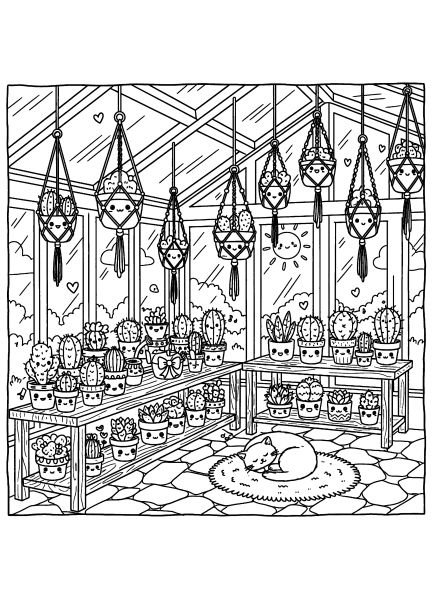
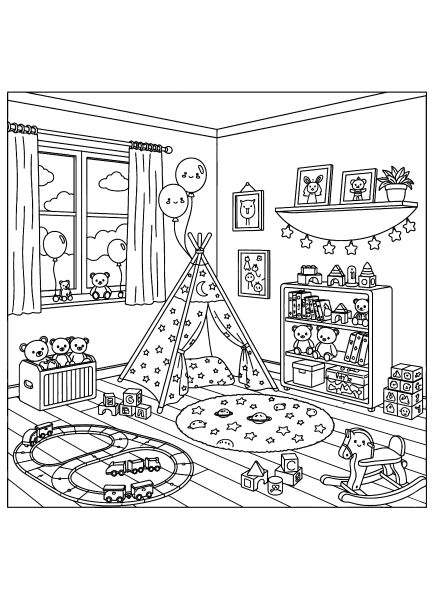
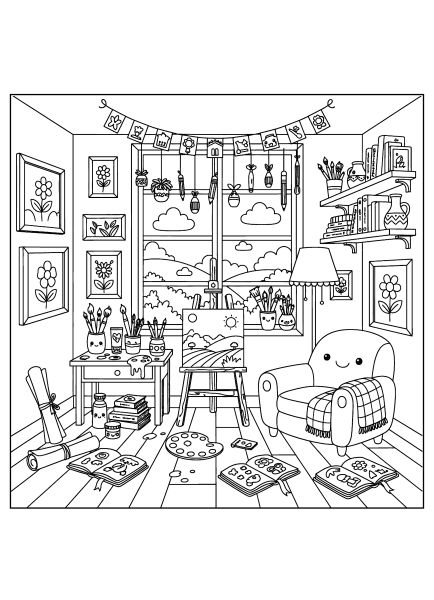
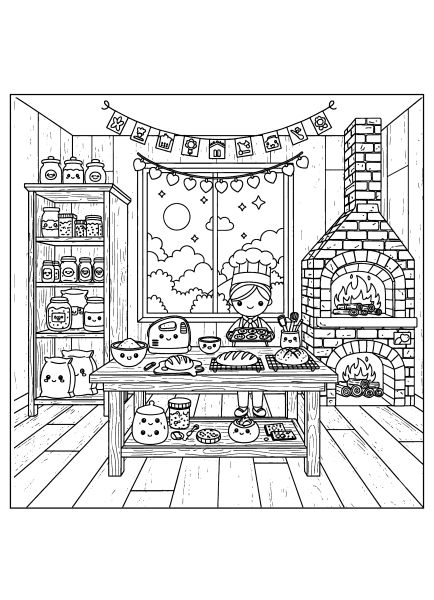
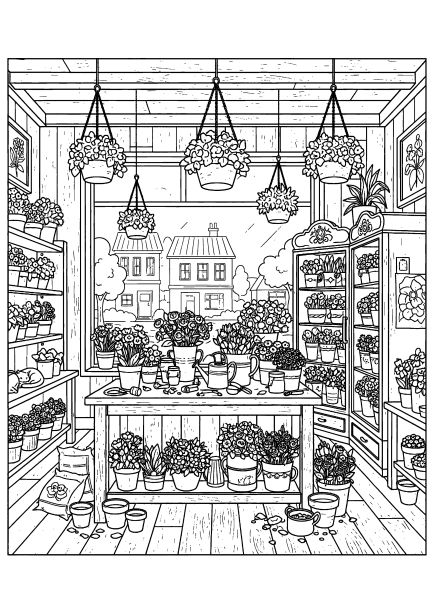
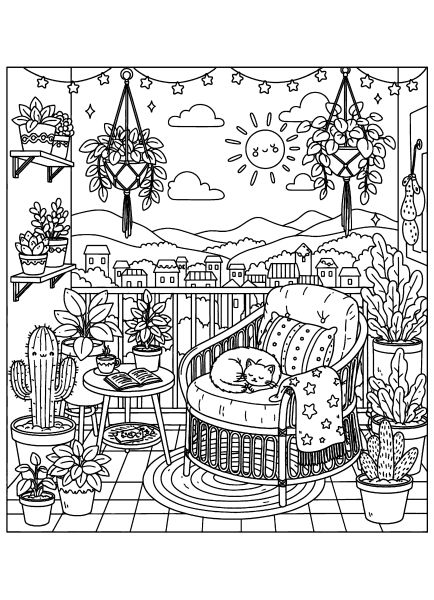
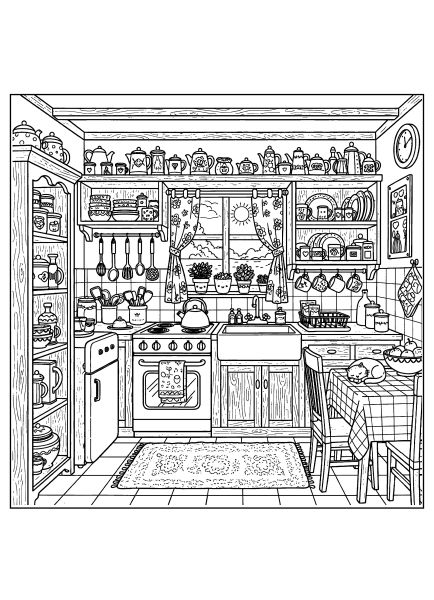
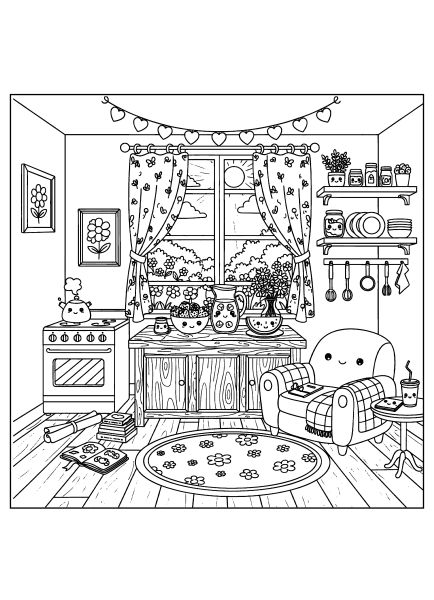
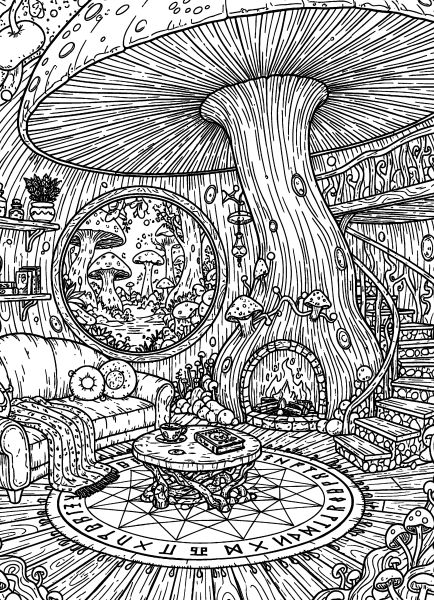
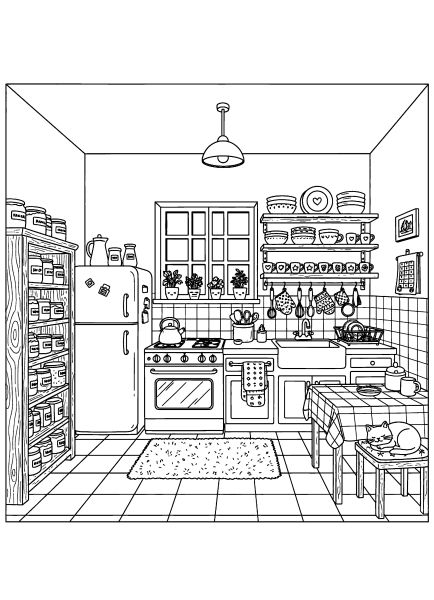
Cozy interiors coloring pages

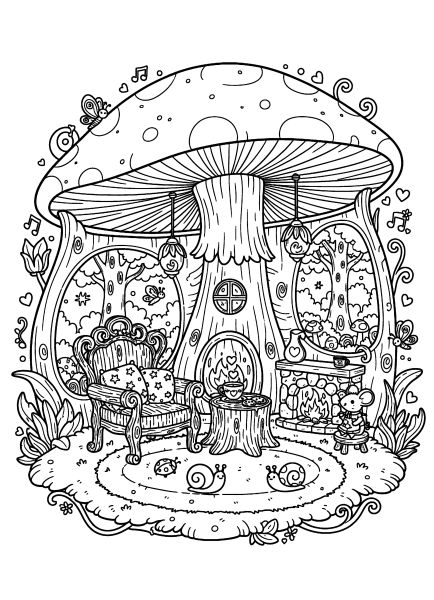
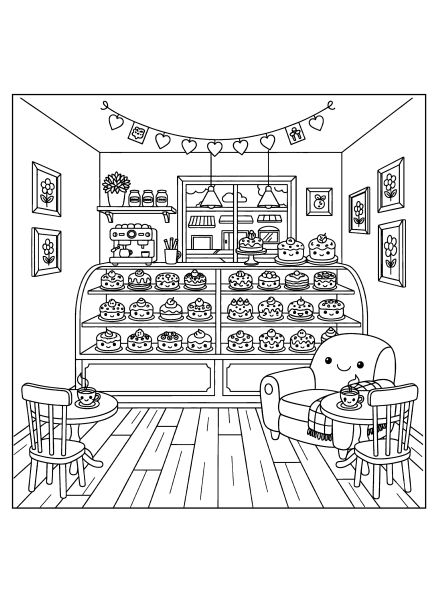
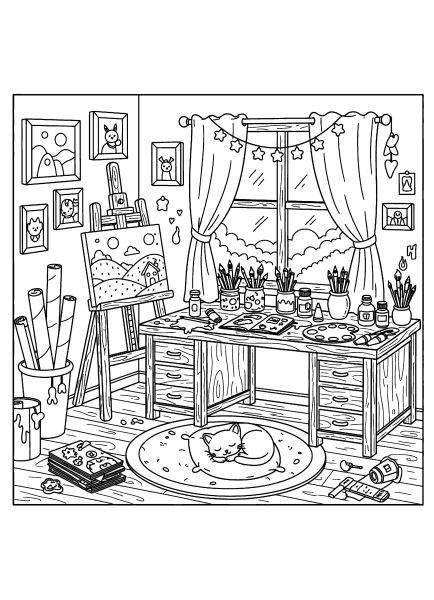
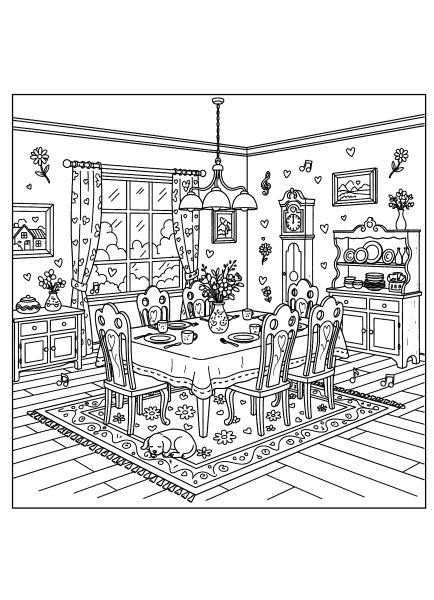
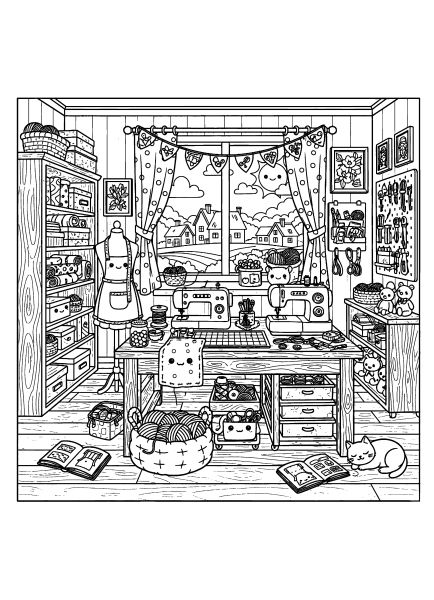
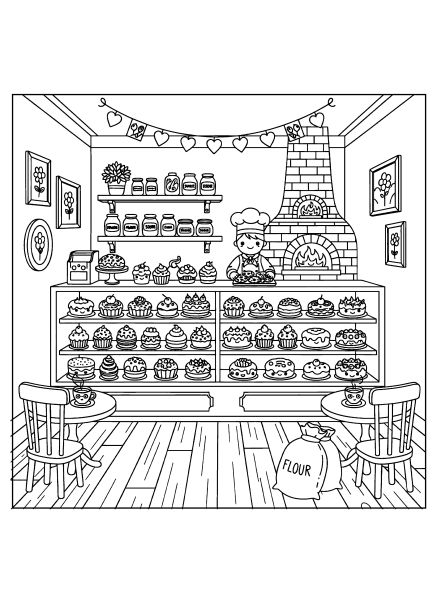
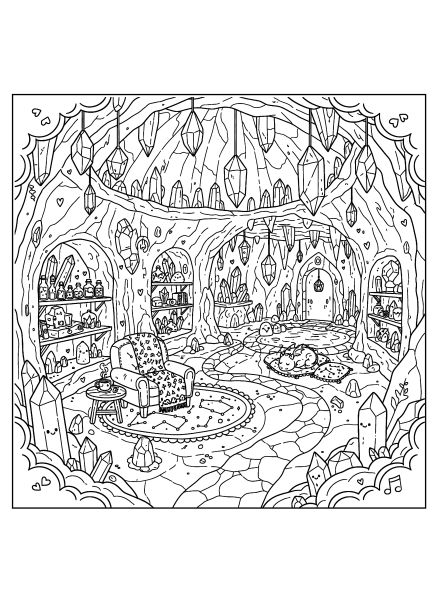
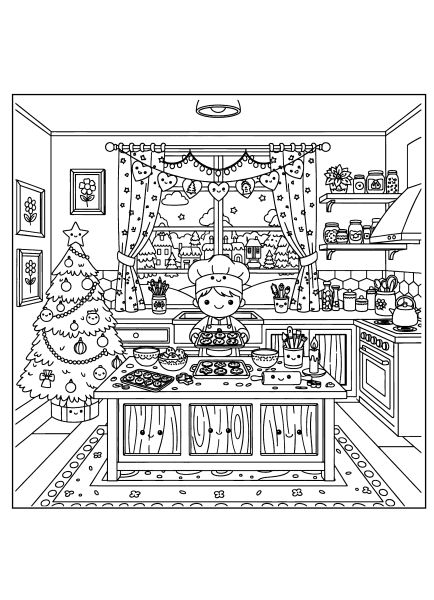
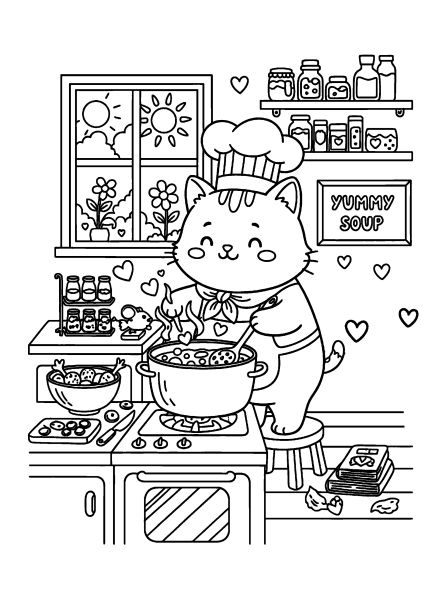
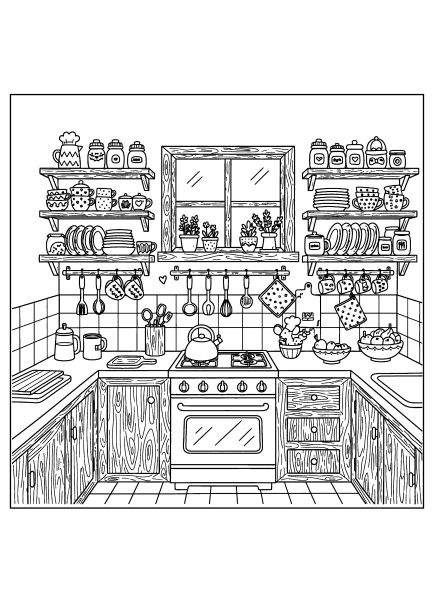
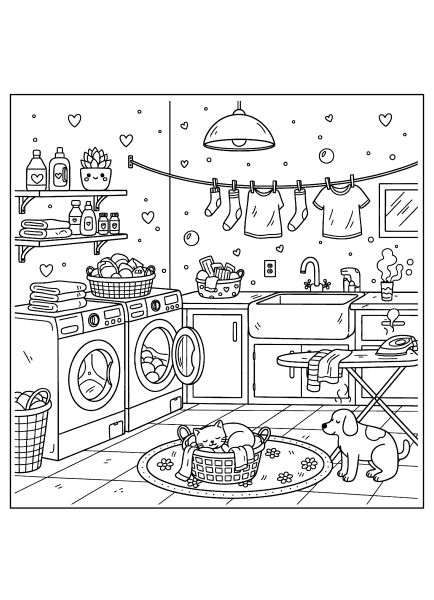
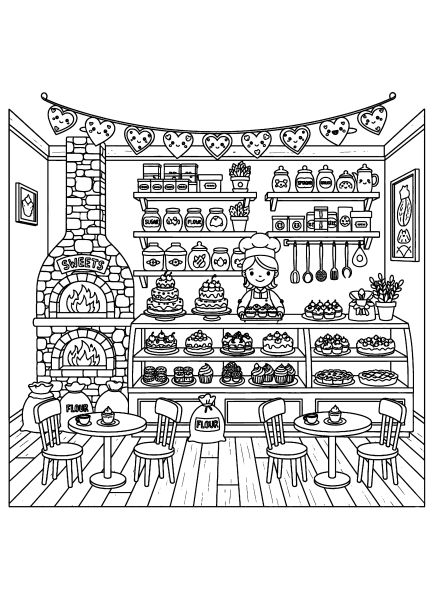
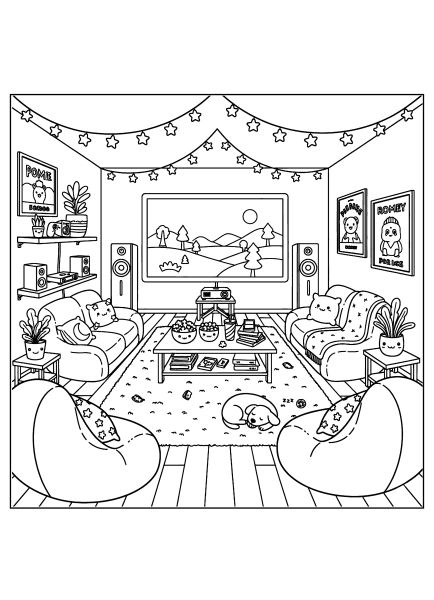
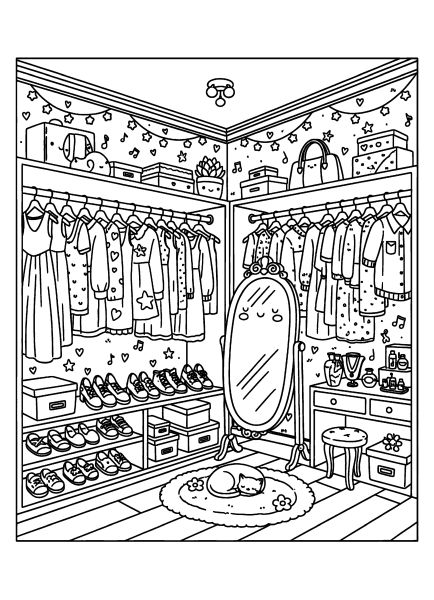
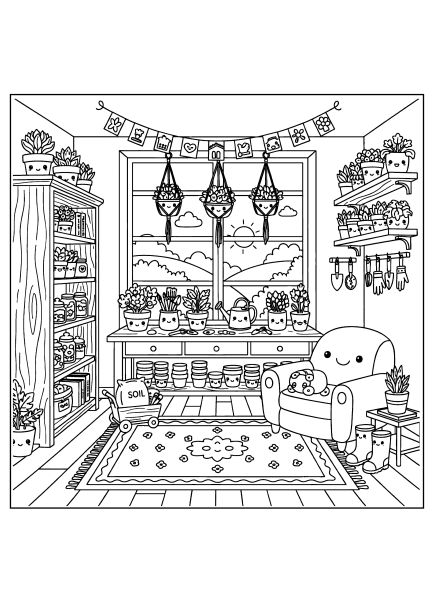
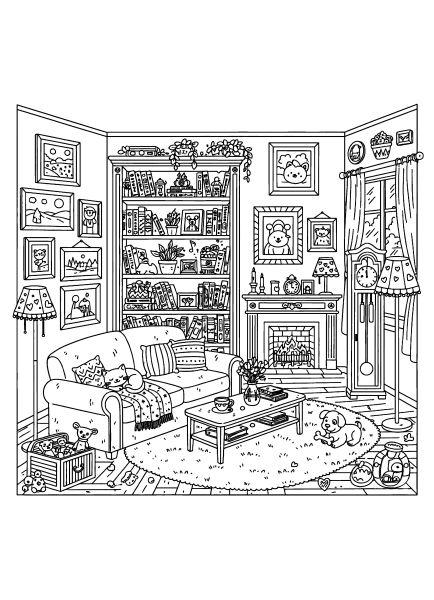
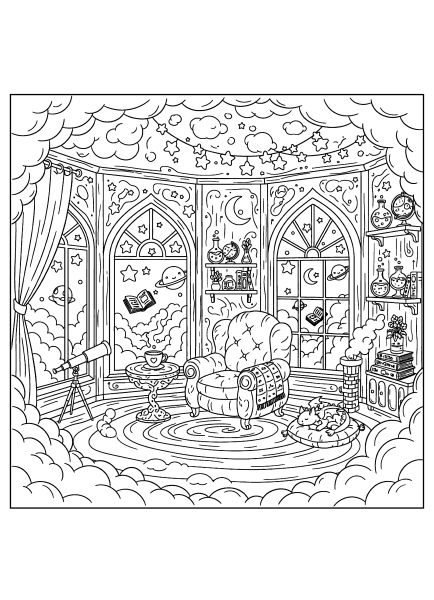
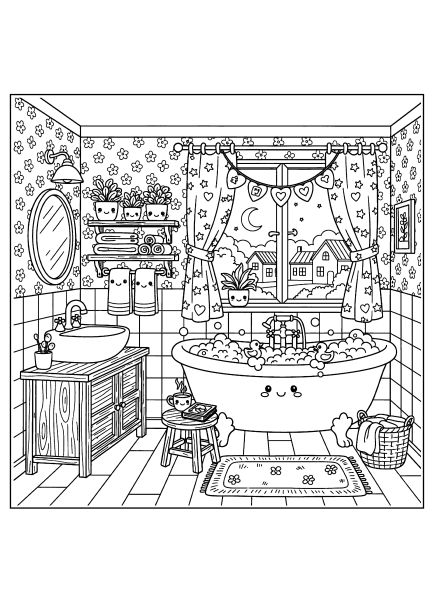
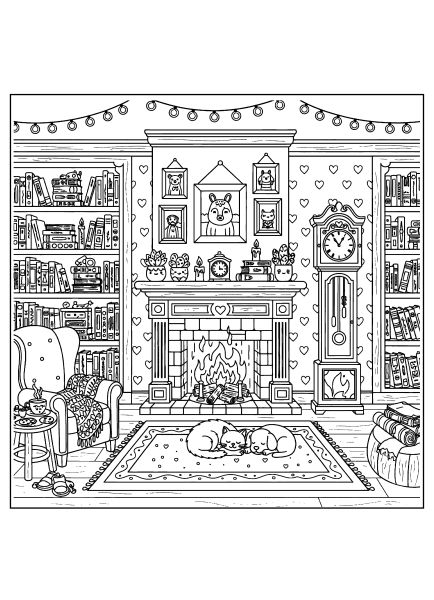
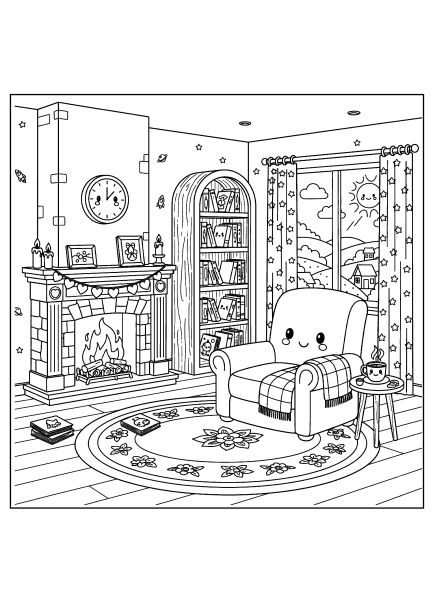
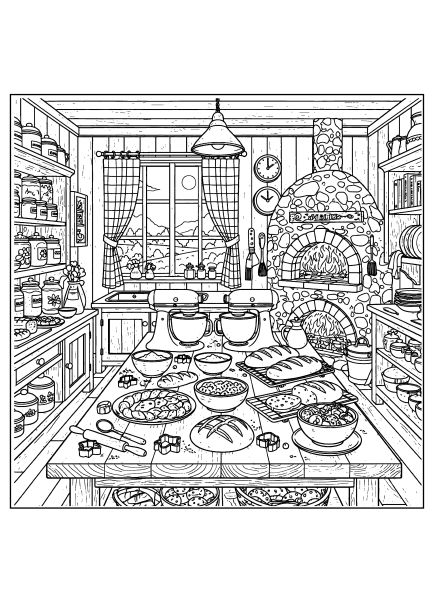
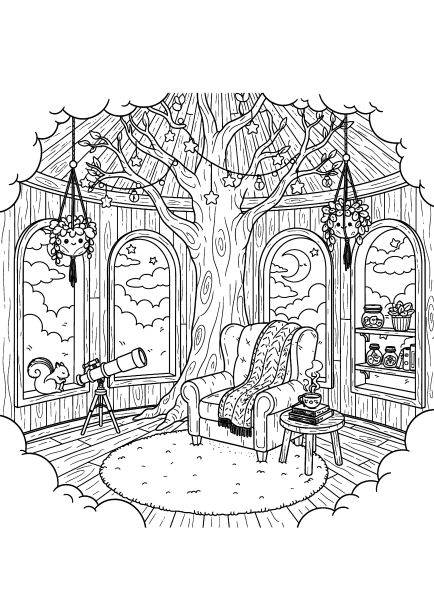
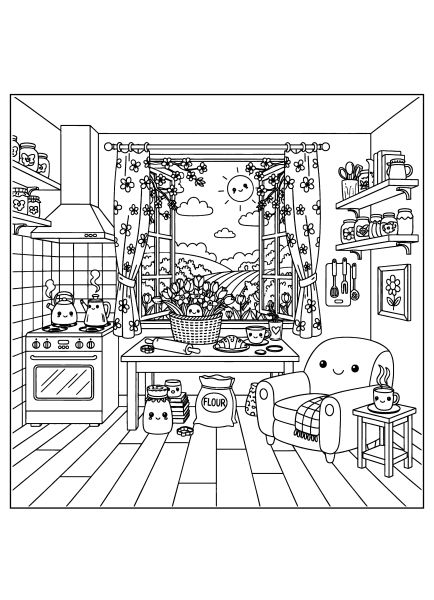
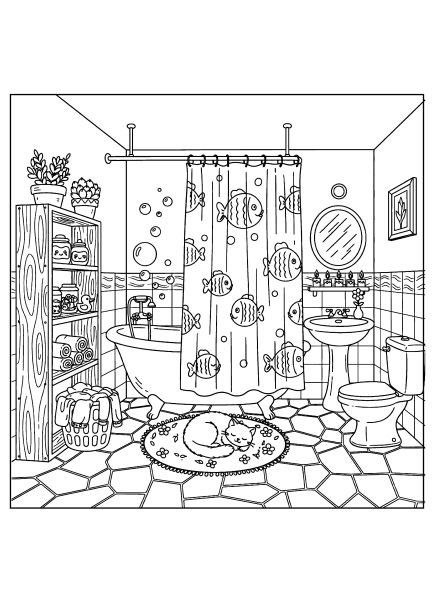
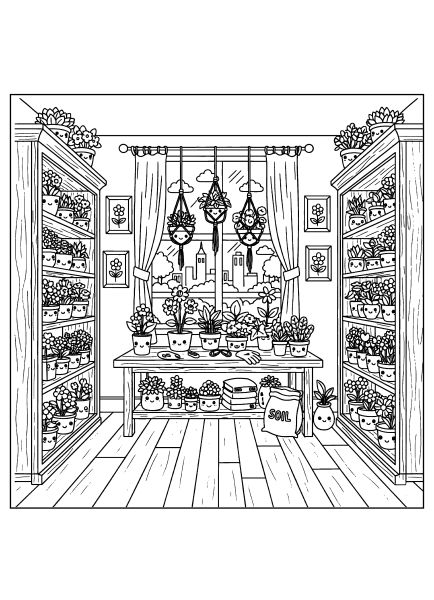
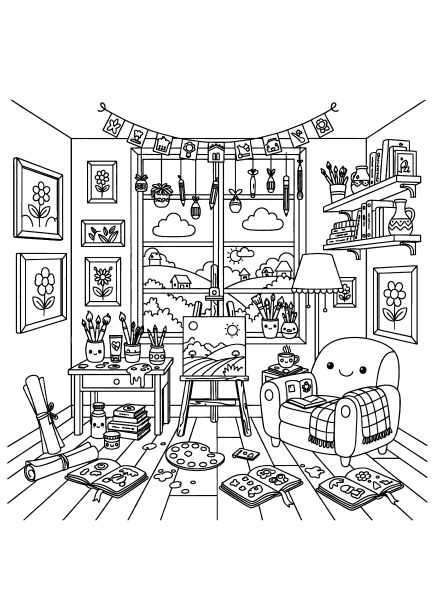
Cozy interiors capture the quiet atmosphere of lived-in spaces — reading corners, wooden shelves, warm lighting, plants on windowsills, and small decorative details that make a room feel personal. These illustrations focus on intimate indoor environments where comfort is expressed through objects rather than dramatic action.

The charm of this theme lies in familiarity. A desk with books, a hallway bench, a softly patterned rug, or curtains framing a window — each element suggests calm routine and gentle domestic rhythm. These pages are designed to slow the coloring process down and invite careful observation.

Understanding the Visual Language of the Theme

The visual structure of these interiors is moderately detailed but balanced. Rooms are framed frontally, with clear perspective lines guiding the eye toward central furniture pieces.

Key characteristics include:

  • layered objects (shelves, books, plants, textiles)

  • medium-density linework

  • repeated small motifs (hearts, frames, decor items)

  • clearly separated functional zones within the room

Large surfaces such as walls, rugs, curtains, and furniture provide open coloring areas. Smaller decorative elements add rhythm without overwhelming the composition.

Negative space is present but controlled — these are filled rooms, yet they do not feel chaotic.

Coloring Techniques / Approach for This Theme

Limited Palette: How to Color Storybook Doodle with Colored Pencils

Choose 5–6 colored pencils and use only them across the entire page. This method creates a cohesive, tidy, book-like look — especially important when the illustration contains many details.

How to Choose Your Palette

• 1 light base: cream or light beige
• 1 neutral: warm light gray
• 2–3 main colors: for example sage green, dusty pink, sky blue
• 1 accent color: terracotta or warm red (used sparingly)

Step 1. Assign Color Roles

“Wood” (shelves, desk, furniture): base beige + gray for shadows

“Textiles” (curtains, rug, cushions): one main color (pink or blue)

“Greenery” (plants): sage green

“Small cute details” (hearts, stickers): accent color

“Appliances / frames / ceramics”: neutral gray

Step 2. Color from Light to Dark

• First layer — very light pressure
• Second layer — only in shadow areas: under objects, in corners, behind pots, under tabletops

Avoid black for shadows. Instead:

  • deepen the same color

  • or layer warm gray gently on top

Step 3. Connect the Composition Through Repetition

Repeat each color in 2–4 places.
For example: dusty pink on curtains, one book cover, and a small decorative detail.

This builds harmony without expanding the palette.

Step 4. Leave Breathing Space

Do not color every tiny element.
Some minor details can remain white or lightly touched with the lightest pencil.

This prevents visual noise and keeps the illustration calm.

Finish

Add 3–5 darkest points (small gaps, object overlaps, tight corners) using a color already present in the palette.

Use the accent color sparingly — approximately 10–15% of the image.

If you prefer brighter colors and enjoy working with markers instead of colored pencils, you may explore the Whimsical House Coloring Pages – Cartoon Style collection. That page includes a step-by-step guide specifically designed for bold, saturated marker coloring with stronger contrast and clearer color separation.

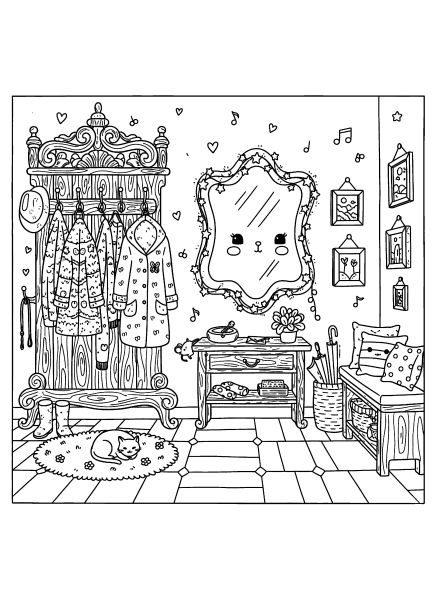
Example Coloring Hallway Interior with Mirror

This example demonstrates how a limited palette keeps a detailed interior calm and cohesive. The wooden furniture is colored in light beige, with warm gray layered gently into corners, under hooks, and along the base of the cabinet to create soft depth. Dusty pink and muted blue are repeated across textiles — coats, pillows, and small decorative elements — so the eye moves naturally around the composition. Notice that many tiny background details are either left white or only lightly tinted. This prevents visual overload and allows the main furniture and mirror to remain the visual anchor of the room. The accent color appears in small hearts and subtle decor pieces, adding warmth without dominating the scene.

Gemini Generated Image t1sw61t1sw61t1sw

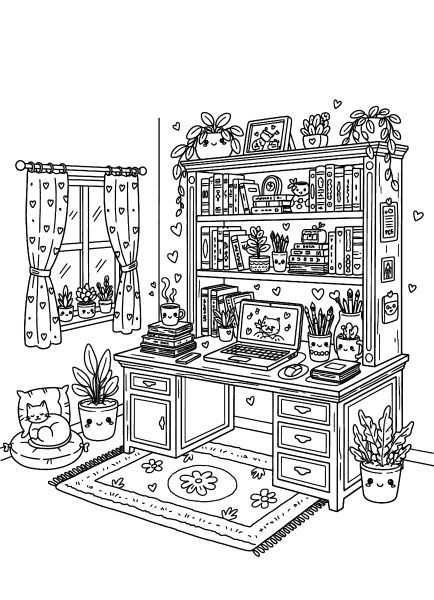
Example Coloring Study Desk with Books and Plants

This example focuses on repetition and balance. Sage green appears across plants, small decorative elements, and subtle details on the rug, tying the composition together. The desk and shelves use a light base tone with slightly darker shading beneath objects and along drawer edges to suggest depth without heavy contrast. Books are not all colored individually in bright tones; instead, selected covers repeat the main palette colors. This prevents the bookshelf from becoming chaotic. The accent color is used sparingly in small motifs, guiding attention without overwhelming the space. The result feels organized, soft, and intentionally composed rather than busy.

Artistic Composition and Detail Balance

Interiors naturally contain many objects. The key is prioritization.

Focus areas often include:

  • the largest furniture piece

  • a central desk or shelf

  • a window or mirror

Secondary details should remain softer. Leaving selective white space prevents the room from appearing crowded.

Depth is created through subtle shadow layering rather than high contrast.

Practical Application: How to Use

These cozy interior coloring pages are suitable for:

  • mindful evening coloring sessions

  • classroom discussions about room design

  • creative journaling inserts

  • interior color planning experiments

They can also be used as inspiration boards for children designing imaginary rooms or organizing personal spaces.

Target Audience: Who These Pages Are Best For

Best suited for:

  • older children (8+)

  • teens

  • adults who enjoy calm, detailed environments

  • colorists who prefer structured compositions

The moderate detail density requires some patience but does not demand advanced blending skills.

Technical Standards and Download Information

All cozy interiors coloring pages are provided as free printable PDF files.

Each page includes:

  • clean black outlines

  • balanced line weight

  • A4 and US Letter formats

Files are optimized for home printing on standard paper.
Download, print, choose a limited palette, and build a harmonious storybook interior scene.


pinit fg en rect red 28

Scroll to Top