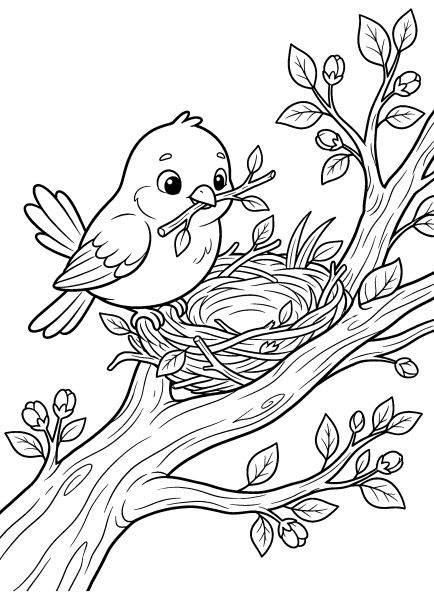
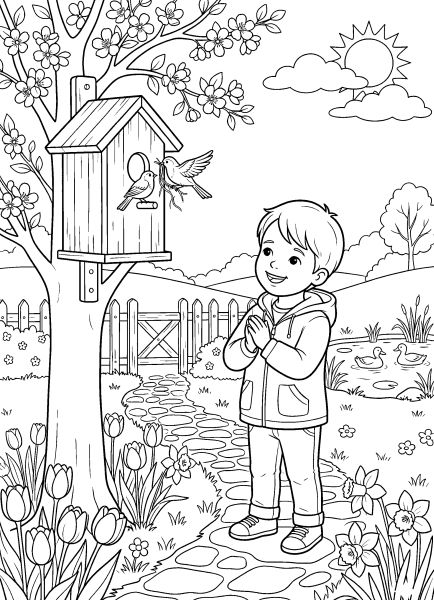
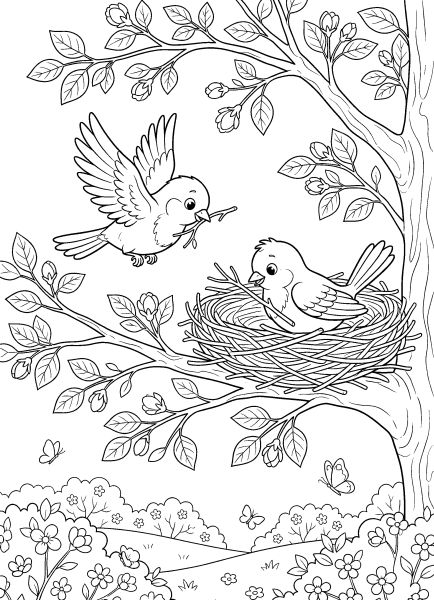
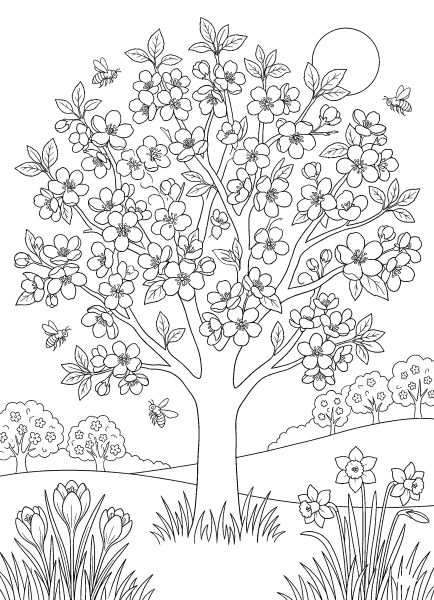
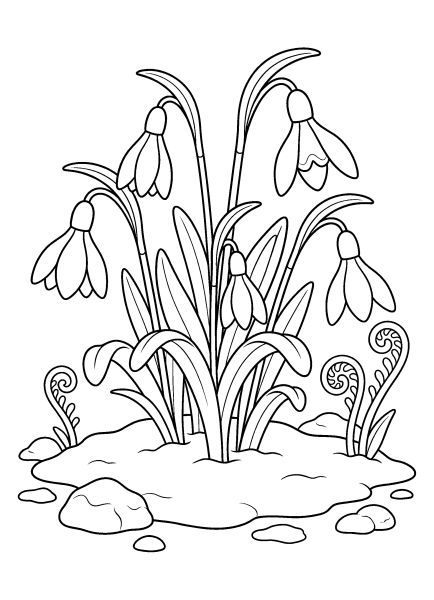
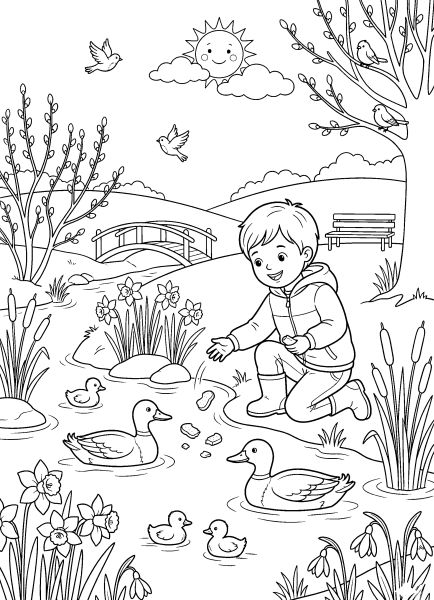
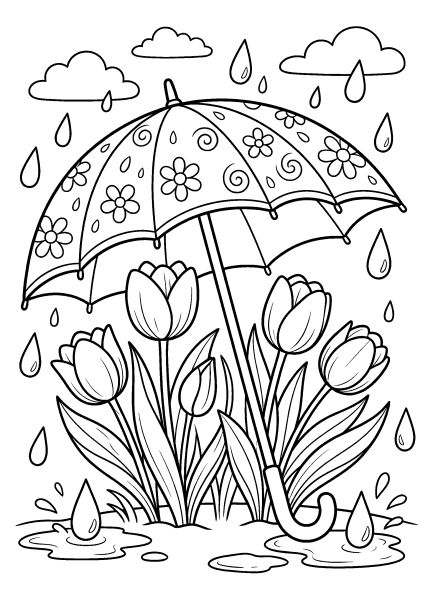
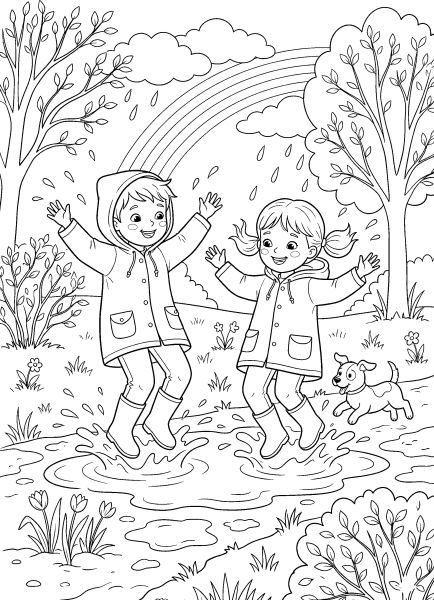
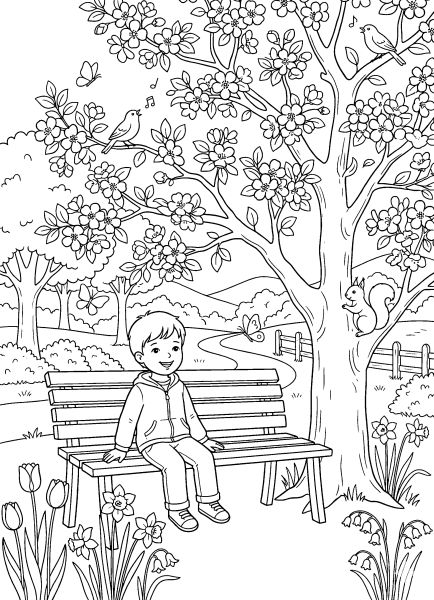
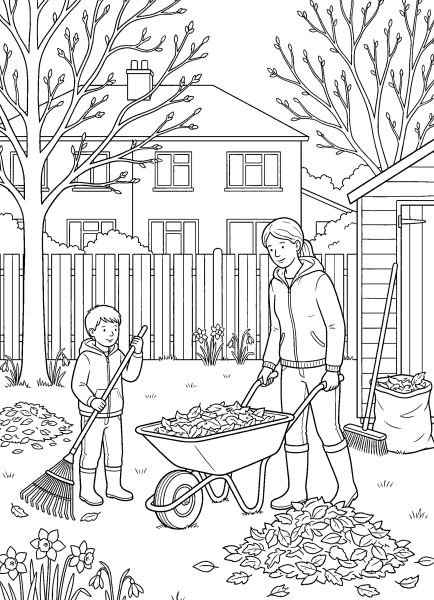
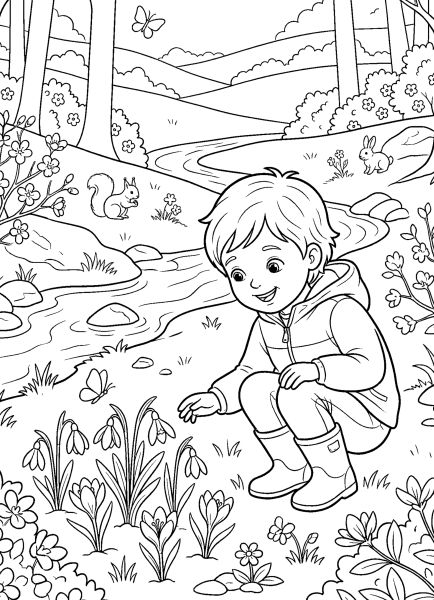
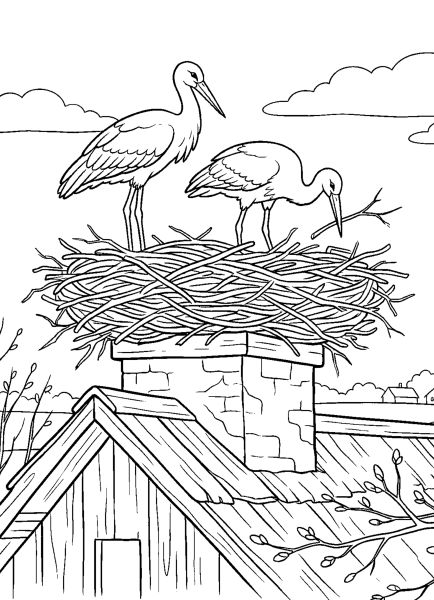
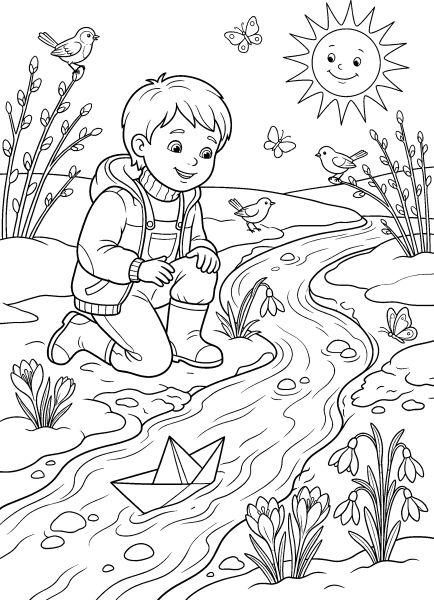
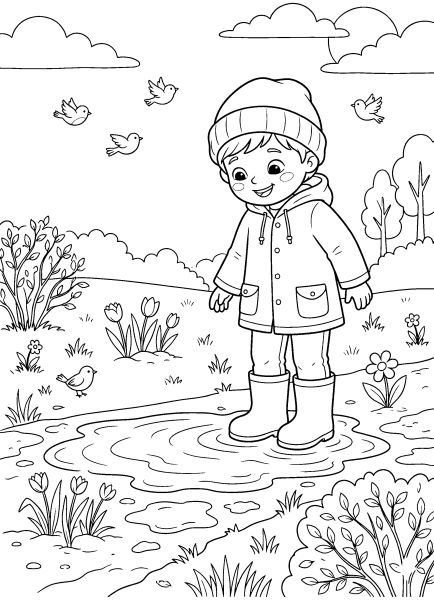
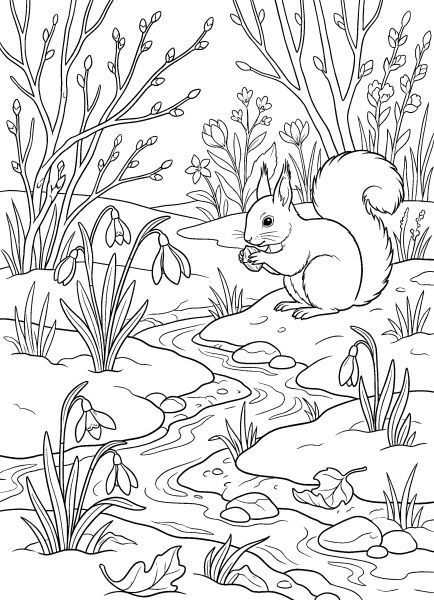
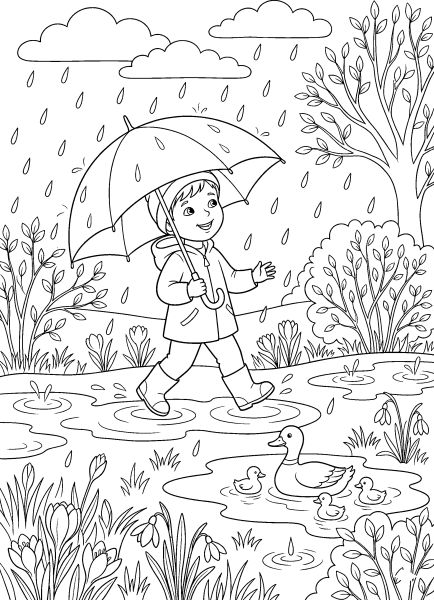
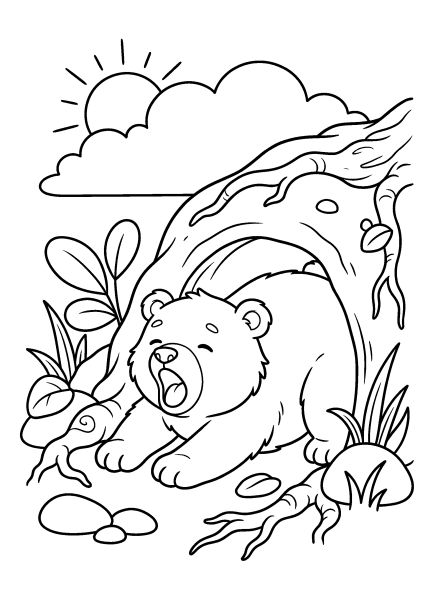
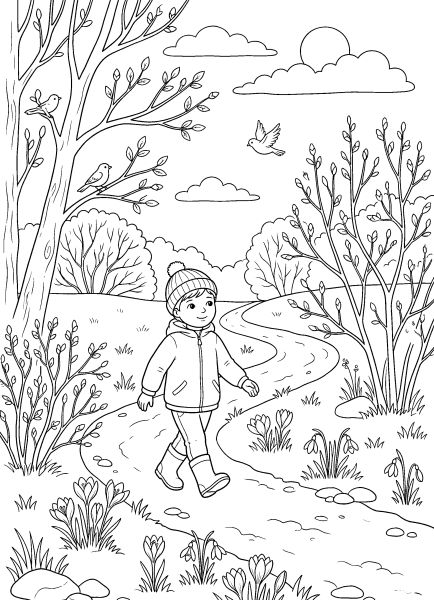
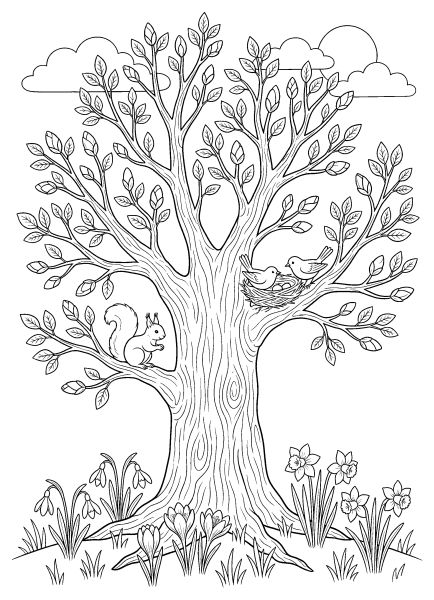
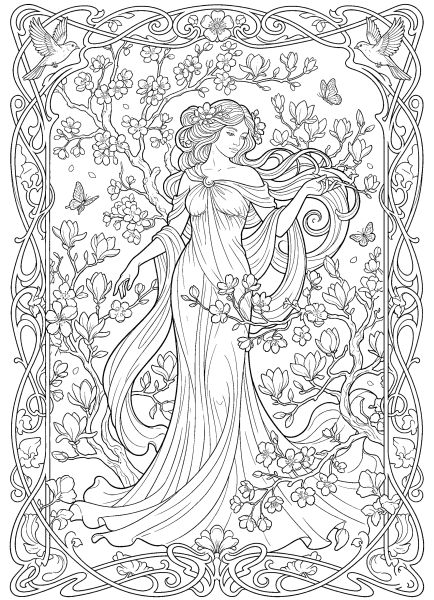
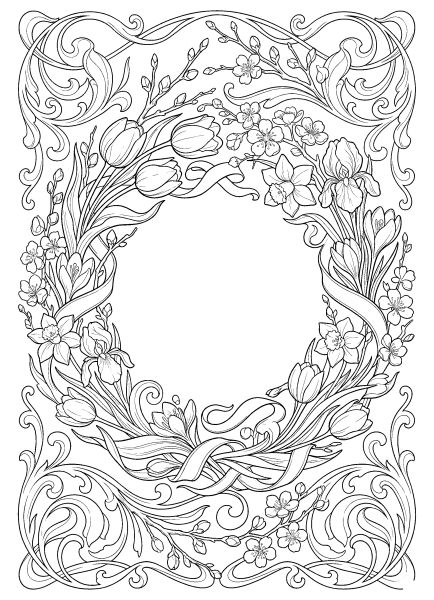
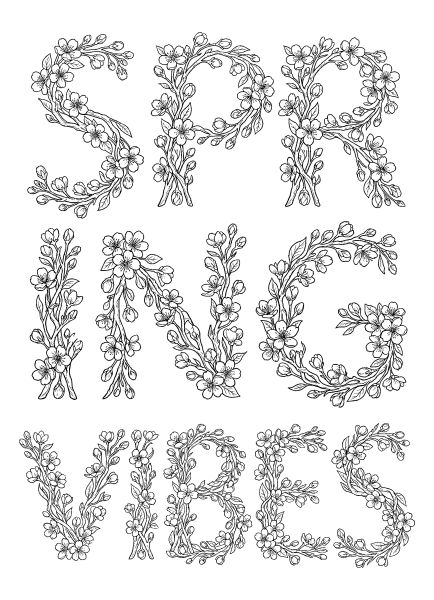
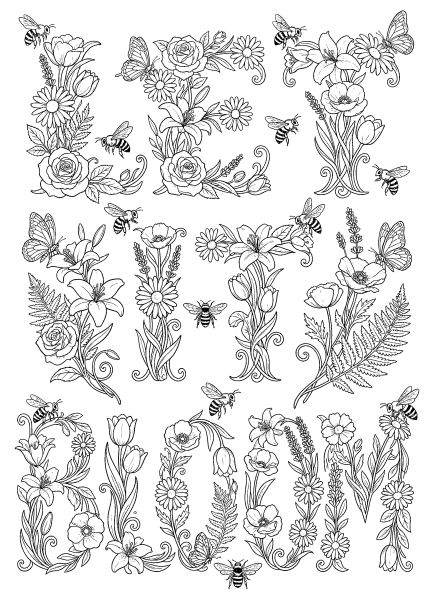
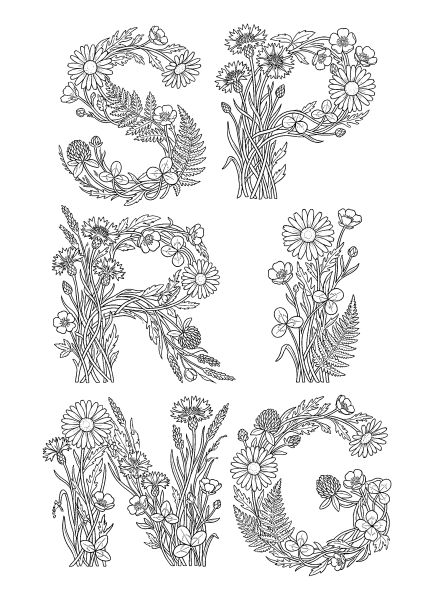
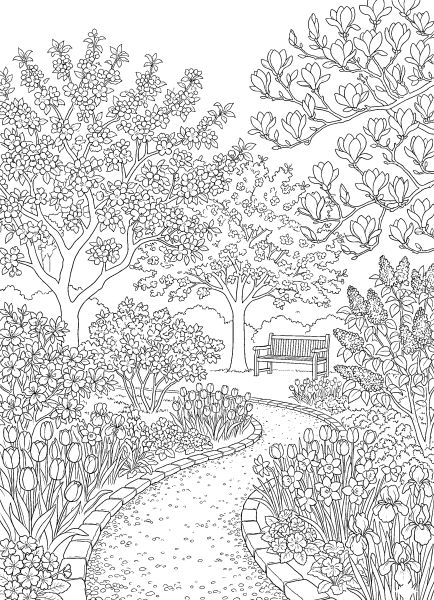
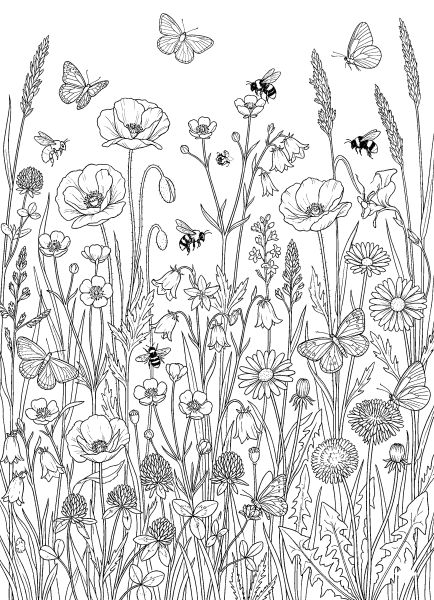
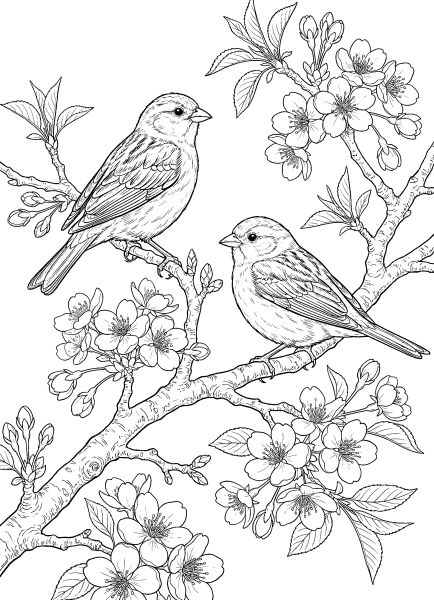
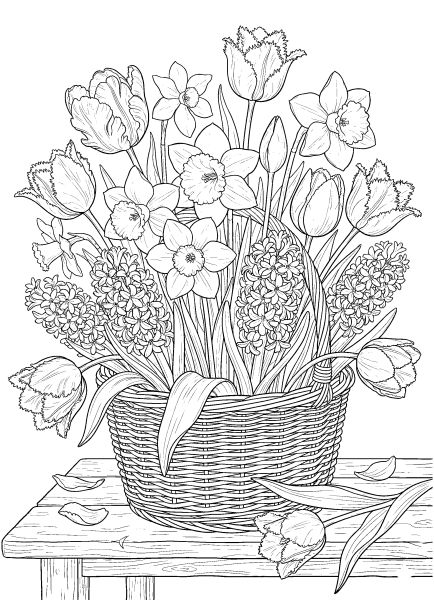
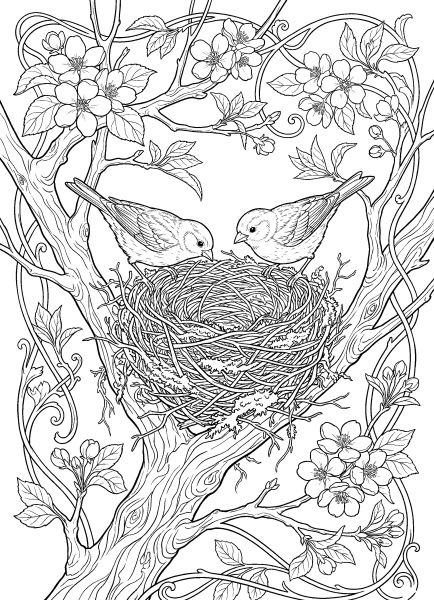
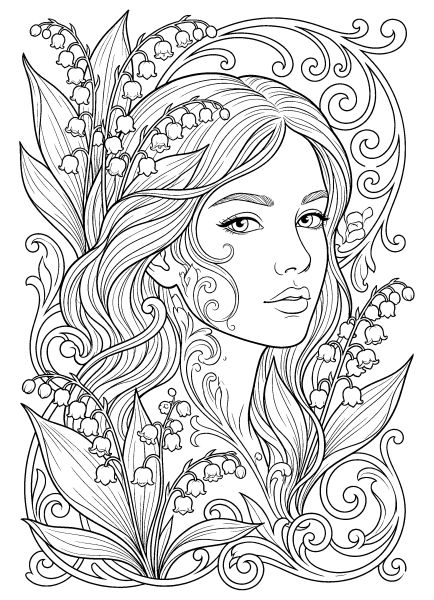
Spring represents the transition from stillness to growth. As daylight increases, plants activate new leaves, buds, and blossoms, filling the landscape with light, movement, and fresh color. Spring Coloring Pages are created to reflect this moment of renewal, combining open compositions, botanical forms, and a soft, optimistic color atmosphere.
Spring visuals are defined by flow and lightness. Lines curve gently, following the natural direction of stems and vines. Shapes overlap without feeling crowded, allowing growth to feel continuous rather than dense. Details are concentrated around blossoms and leaves, while surrounding areas remain open. This balance between detail and space reinforces the airy character of spring scenes.
Color Palette and Seasonal Mood
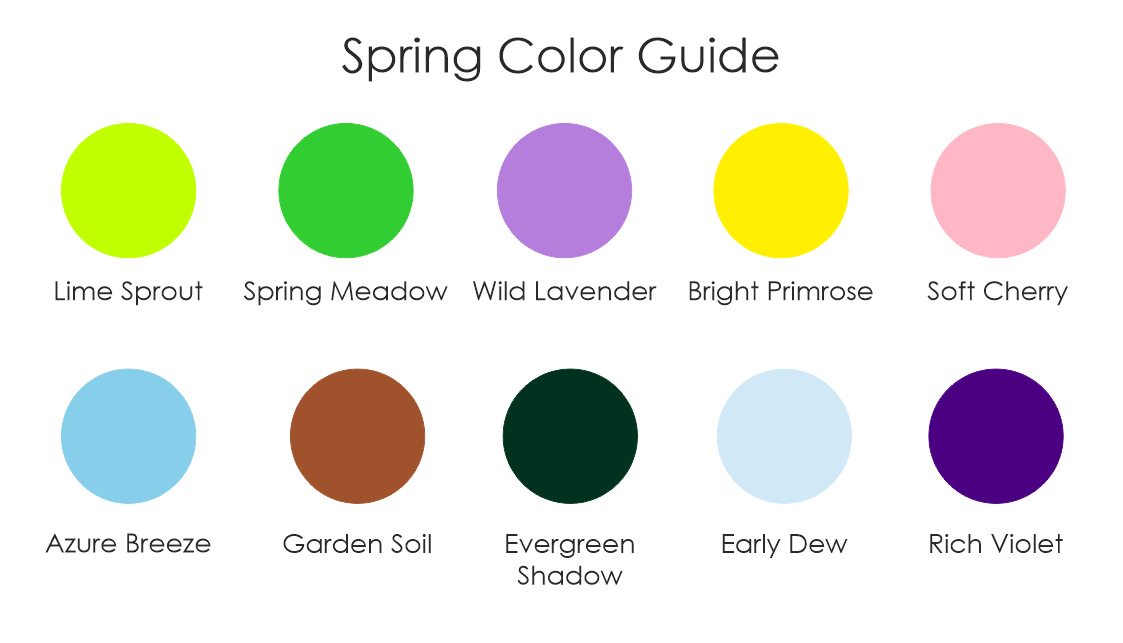
The spring palette is built around freshness, clarity, and gentle contrast. Colors are used in light layers rather than heavy fills.
Lime Sprout and Spring Meadow work as primary greens for new leaves and active growth.
Bright Primrose and Soft Cherry bring warmth to flowers and budding plants.
Wild Lavender adds calm floral accents and subtle contrast.
Azure Breeze and Early Dew keep backgrounds light and breathable.
Garden Soil grounds stems and roots without darkening the scene.
Evergreen Shadow and Rich Violet are used sparingly to anchor focal points.
Together, these tones create a lively but balanced spring atmosphere.
Coloring Techniques
Main Technique: Light Layering with Controlled Pressure
Spring illustrations benefit from light layering and gentle pressure control. Start with very soft applications of Lime Sprout or Azure Breeze, allowing the paper to remain visible. Gradually build color in overlapping areas using Spring Meadow or Soft Cherry, keeping transitions smooth.
Colored Example
This example shows how gradual layering keeps botanical elements fresh and dimensional without making the image feel heavy.
Video Lesson
The embedded lesson demonstrates light layering and pressure control techniques commonly used for botanical coloring. Focus on how color is built slowly and how highlights are preserved rather than covered.
Artistic Composition and Detail Balance
Spring compositions rely on selective focus. Flowers and leaves carry most of the detail, while backgrounds remain open and softly colored with Early Dew or Azure Breeze. This approach keeps the scene calm and allows brighter colors to stand out naturally.
Practical Application: How to Use These Spring Coloring Pages
Spring coloring pages are well suited for:
classroom activities about plant growth and seasonal change
calm creative sessions that encourage relaxation and positivity
art lessons focused on layering and color harmony
independent or guided coloring for different age groups
Their open structure supports both learning and free expression.
Technical Standards and Download Information
All Spring Coloring Pages are provided as high-resolution printable PDFs with:
vertical A4 format
clean, single-weight black line art
spacing optimized for comfortable coloring
For best results, print at 100% scale on 120–160 gsm paper, depending on your tools. Browse the gallery below and click Download to save your selected pages.