Hibiscus Coloring Pages
🌺 Free Printable Hibiscus Coloring Pages
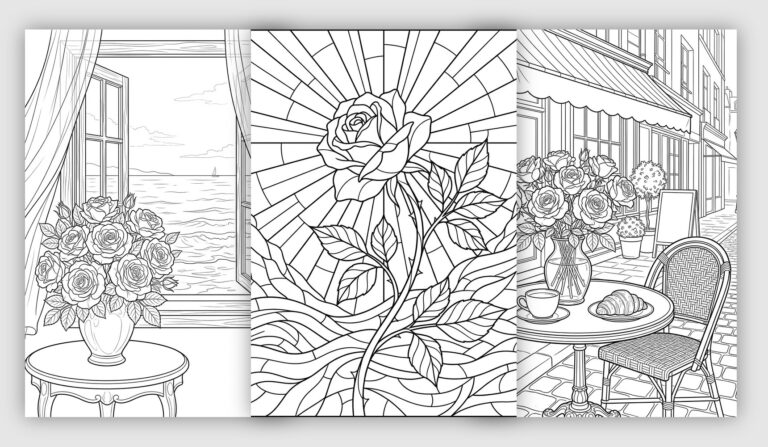
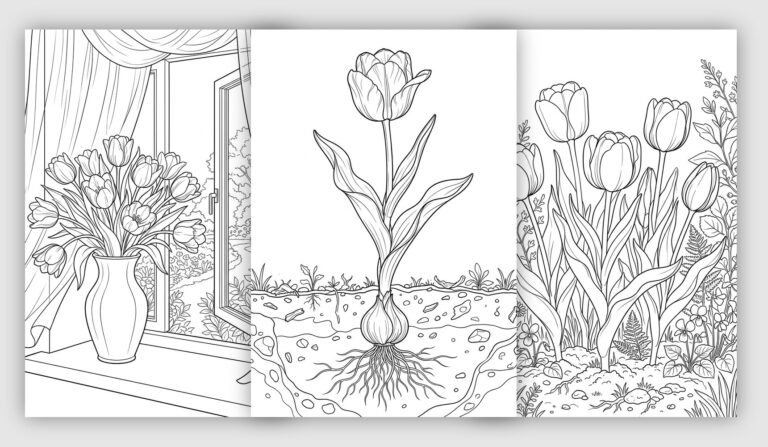
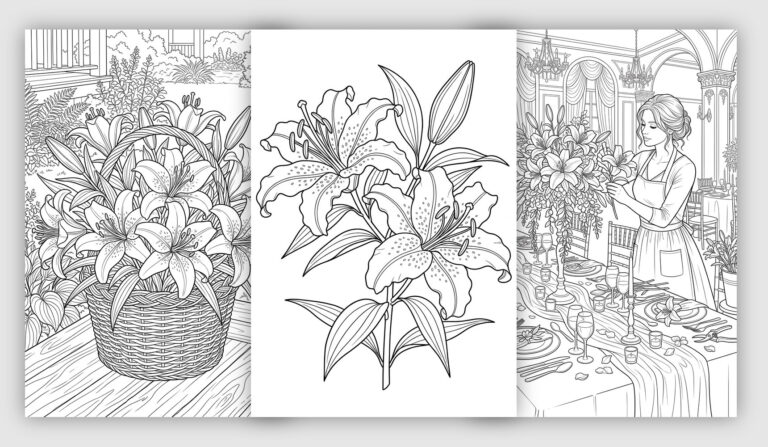
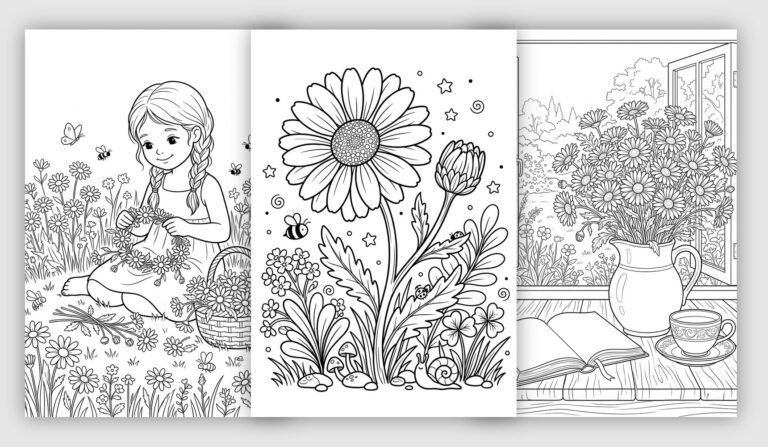
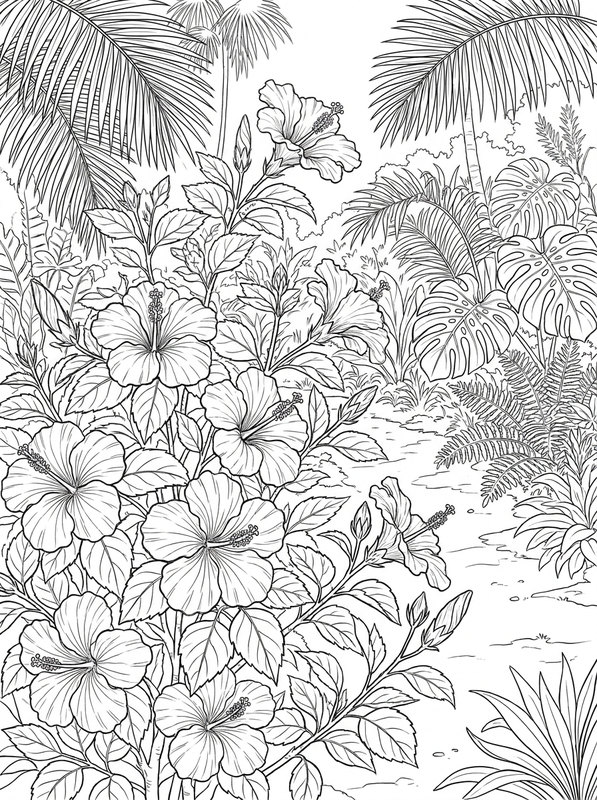
These 26 free printable hibiscus coloring pages feature the flower's broad, often ruffled petals, distinctive central column, and tropical foliage. Download the designs as A4 PDFs for printing at home. You'll find simple hibiscus flower coloring pages with large, easy-to-color sections alongside detailed botanical illustrations, garden scenes, and ornamental floral patterns.
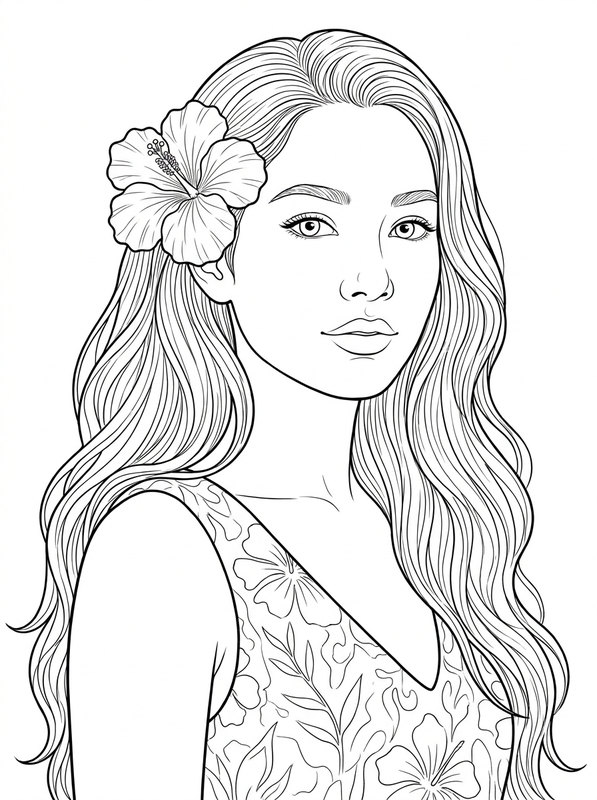
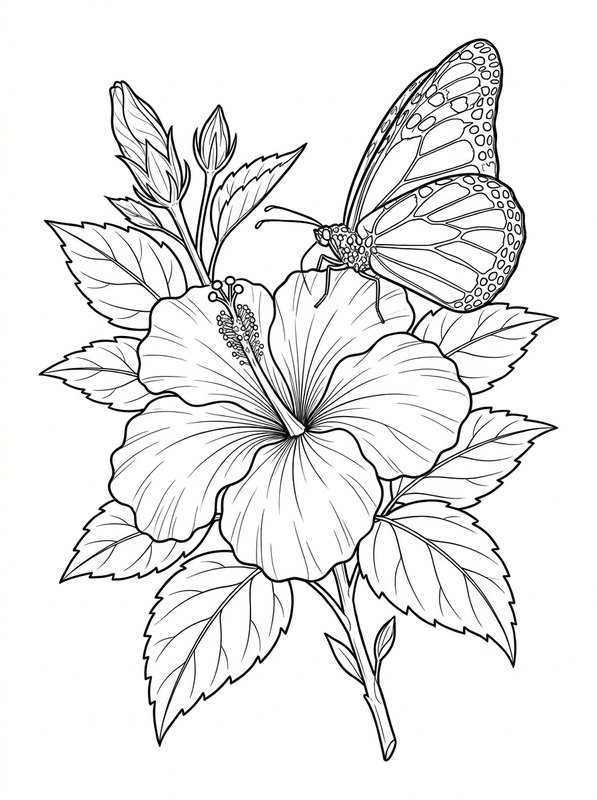
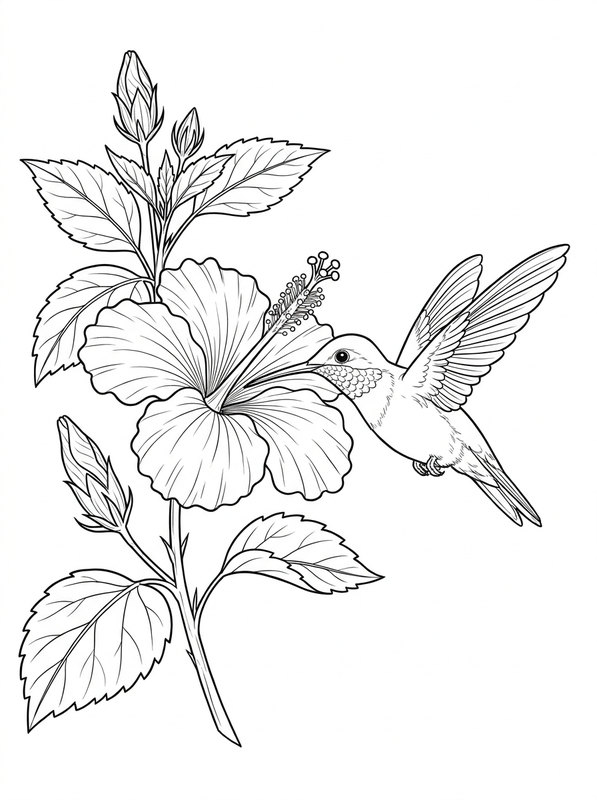
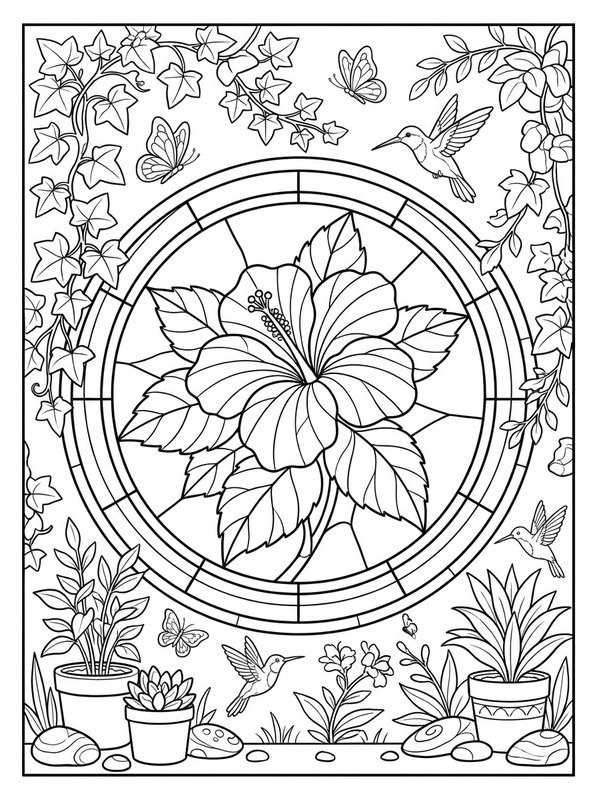
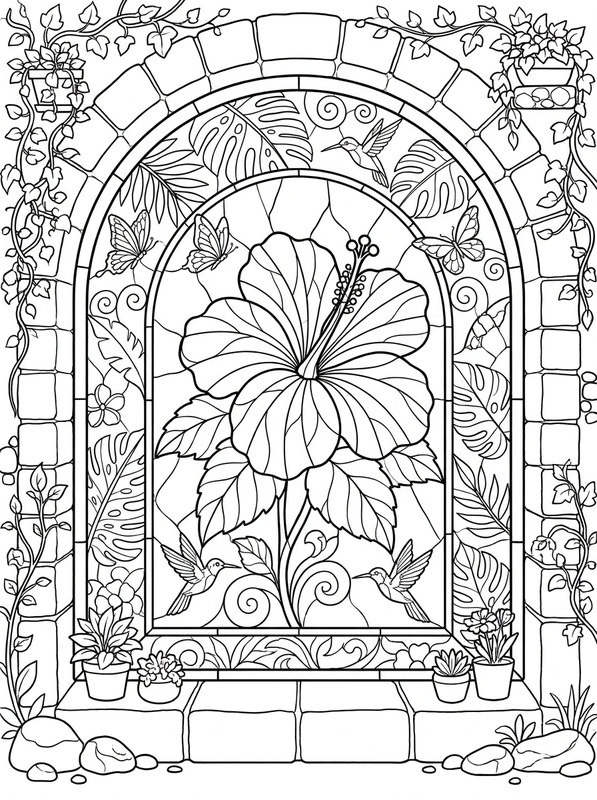
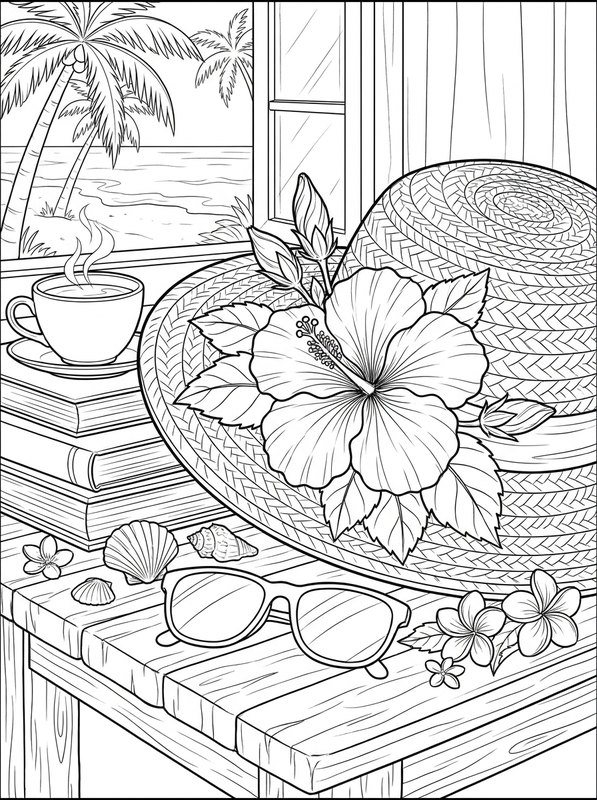
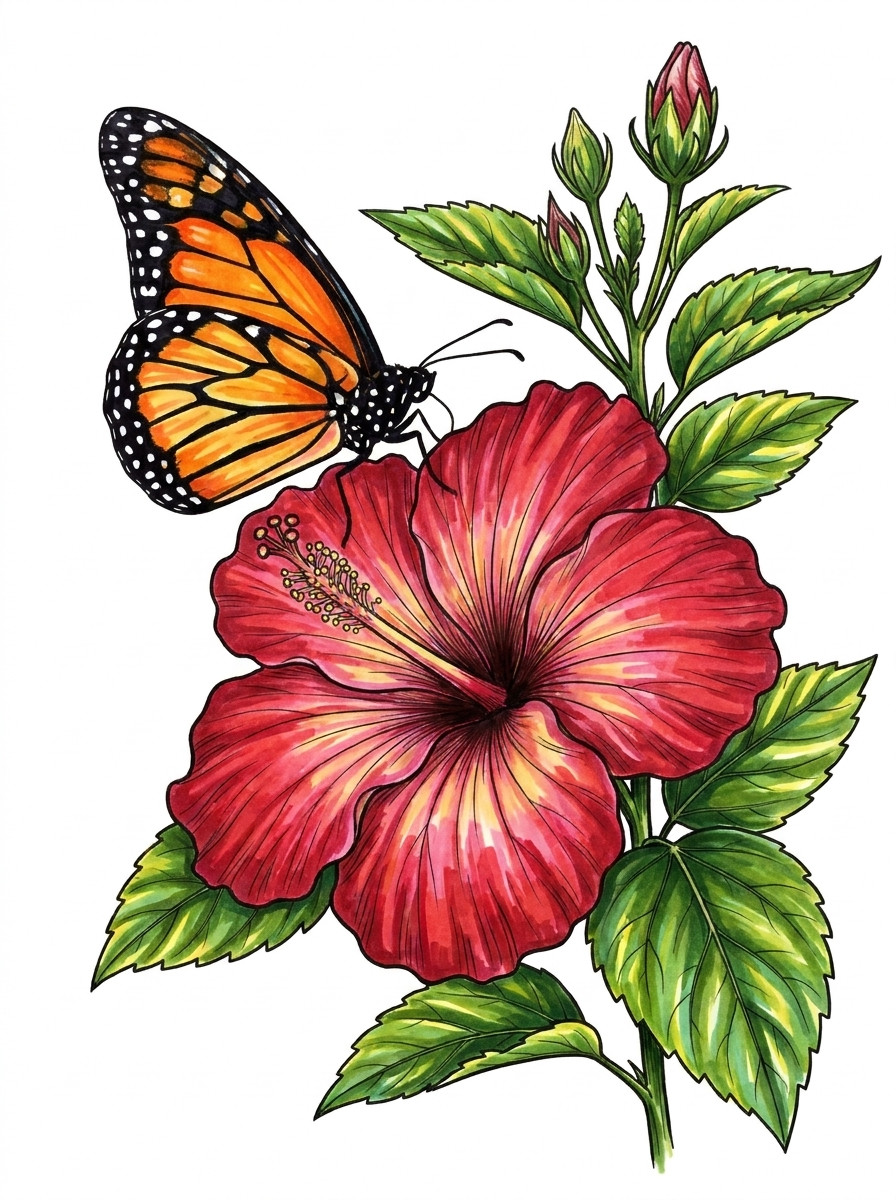
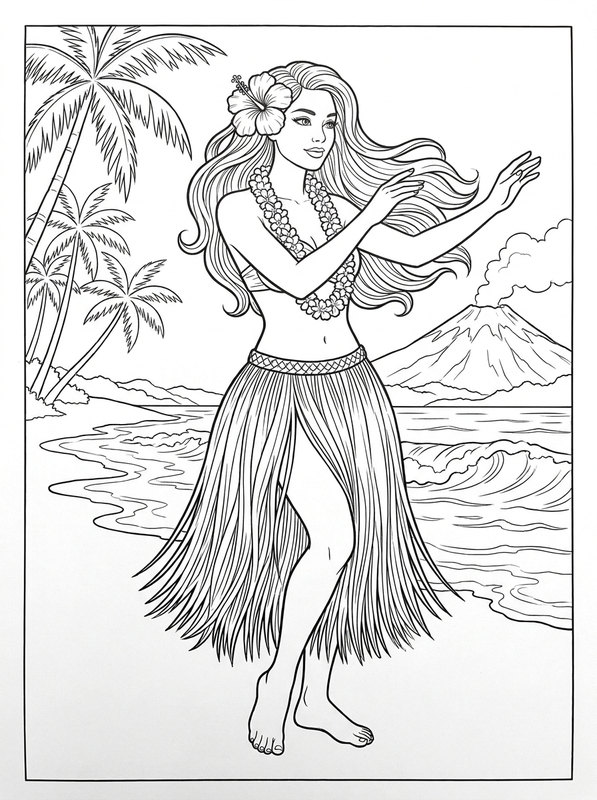
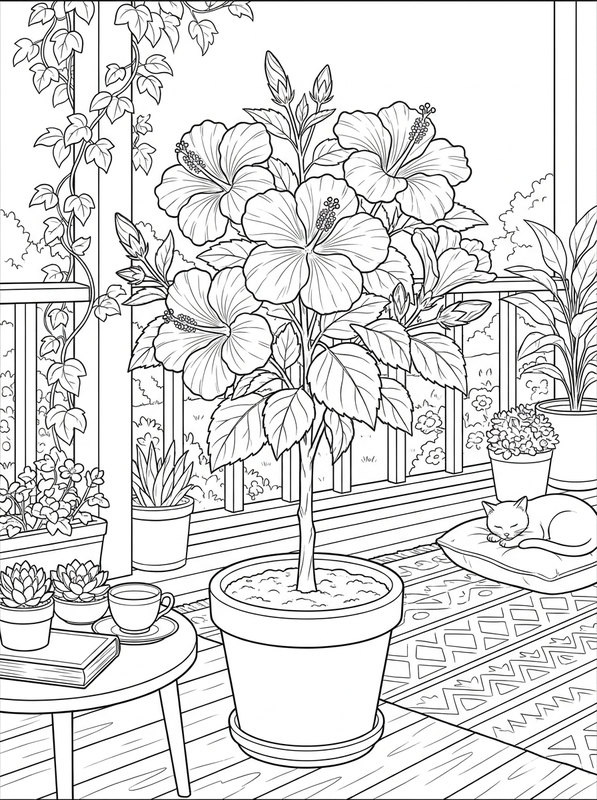
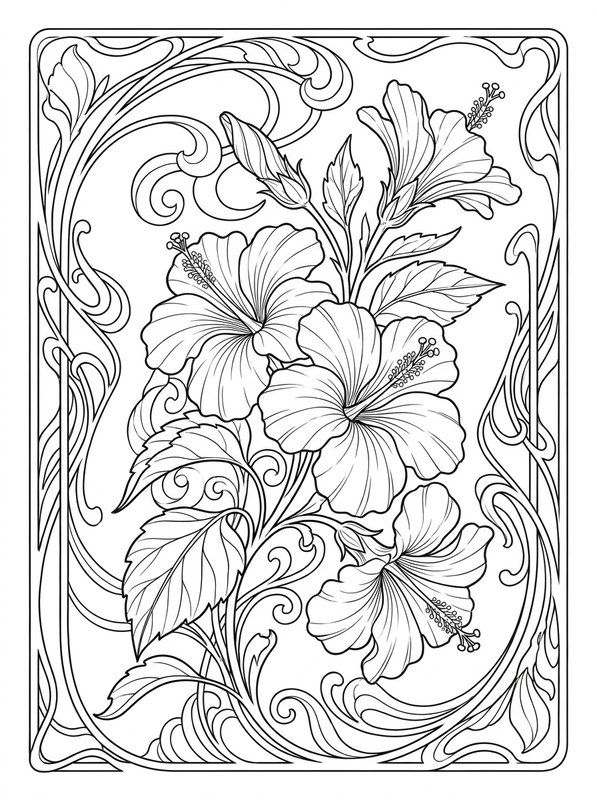
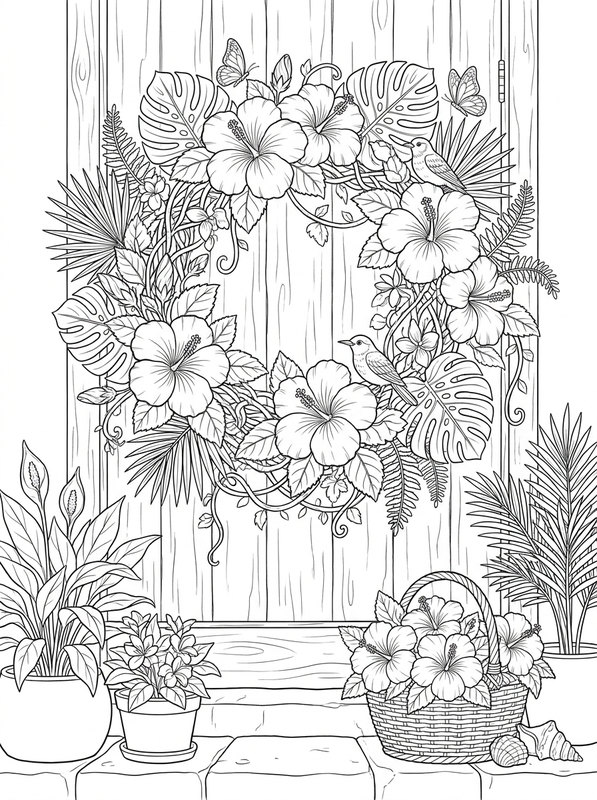
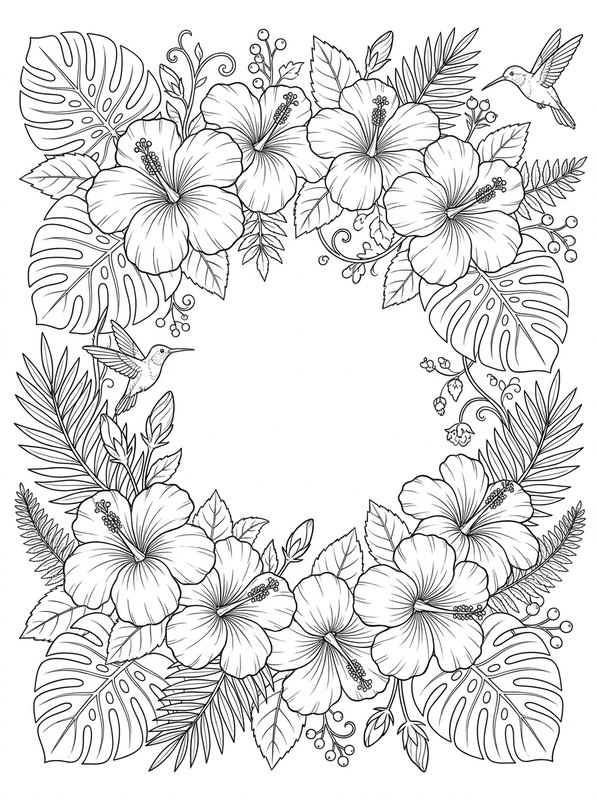
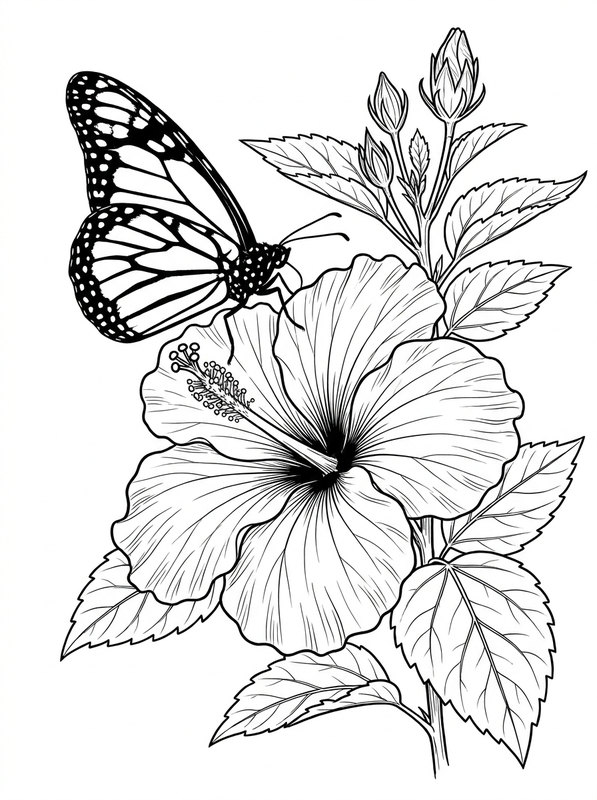
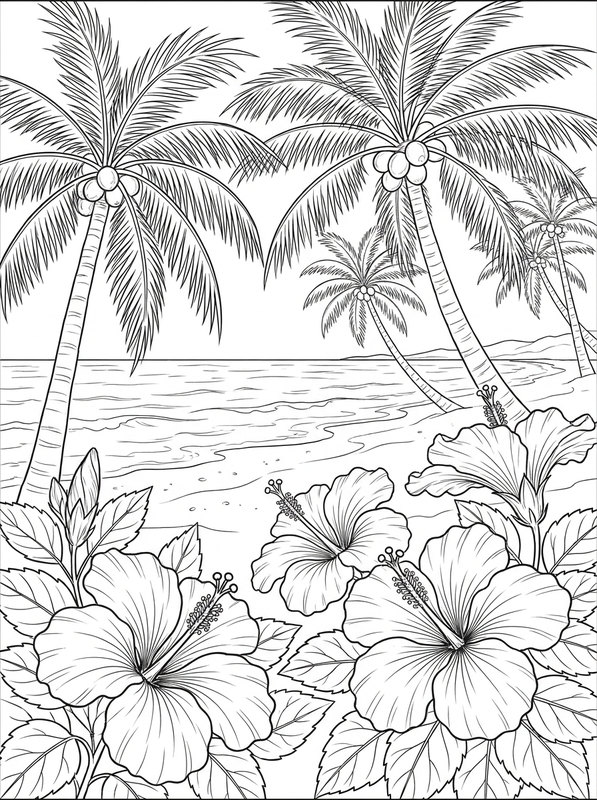
The pictures range from flowering hibiscus shrubs and hummingbirds visiting blossoms to palm-lined beaches and Hawaiian-inspired scenes. A hula dancer wears a flower in her hair, while other designs feature a butterfly on hibiscus petals, a flowering tree on a terrace, and tropical arrangements with monstera leaves. Circular stained-glass patterns, floral wreaths, and an Art Nouveau panel offer different ways to color this recognizable flower.
🎨 Hibiscus Color Ideas: Bold Petals and Tropical Greens
Hibiscus flowers can be red, coral, pink, orange, yellow, peach, or white, and many varieties have a contrasting color near the center. A bright red flower with a darker throat creates a different effect from a pale yellow bloom with a crimson center. You can follow the veins and folds of the petals with slightly deeper shades, leaving lighter areas toward their edges. The protruding central column is another distinctive feature: its anthers can be colored yellow, while the stigma tips may be red, yellow, or another color depending on the flower.
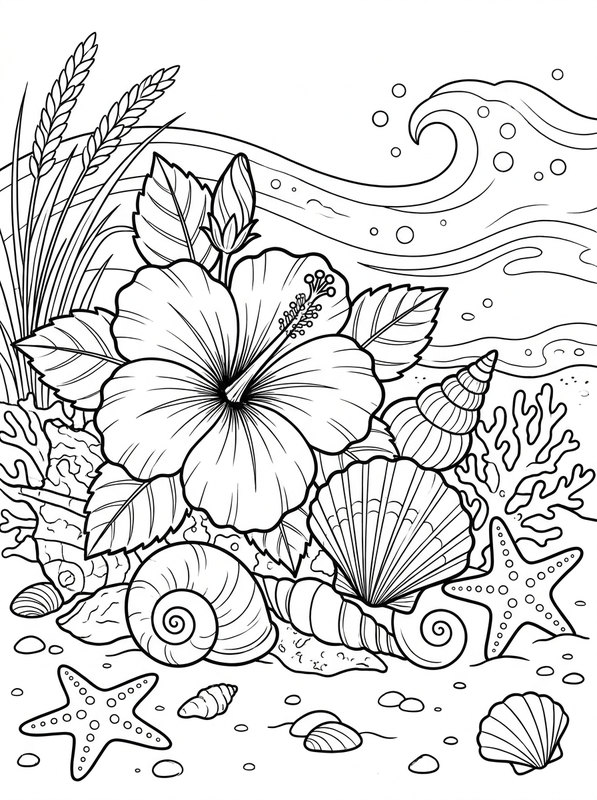
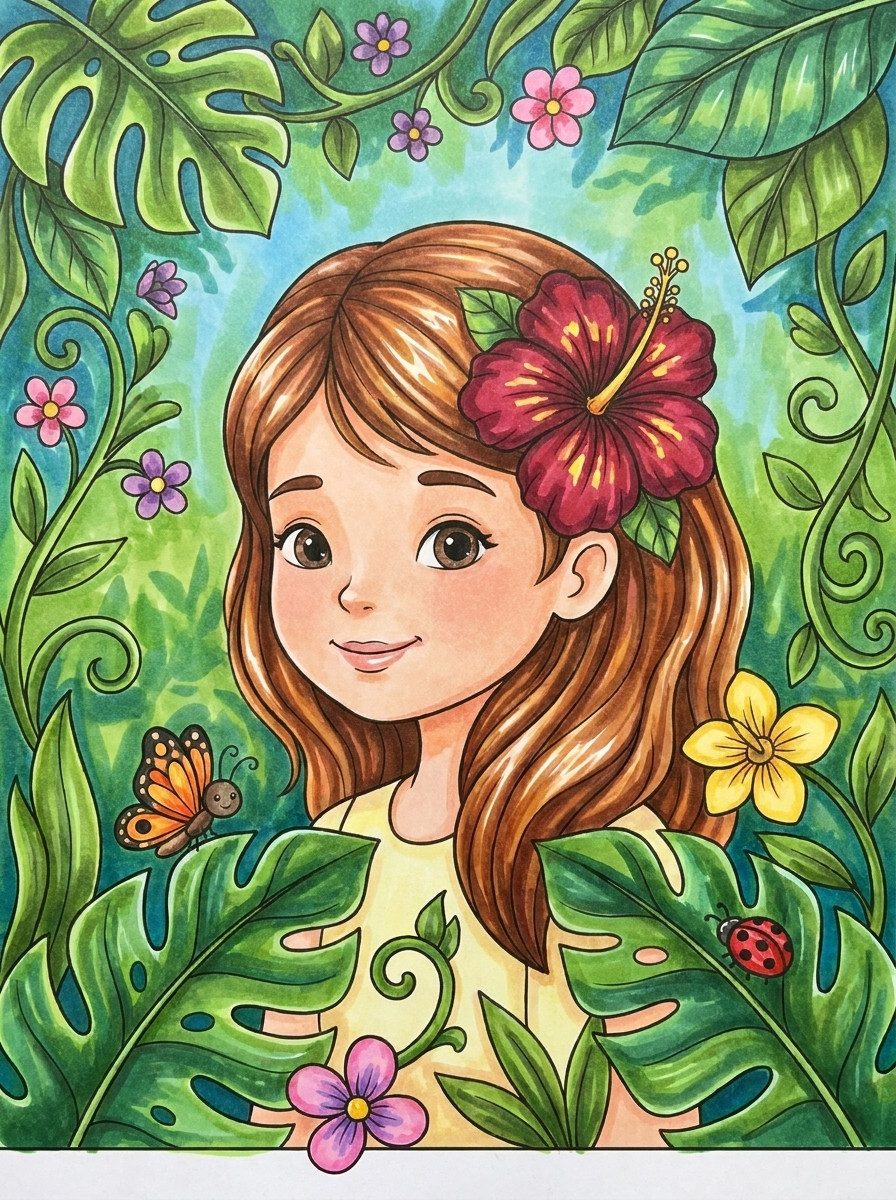
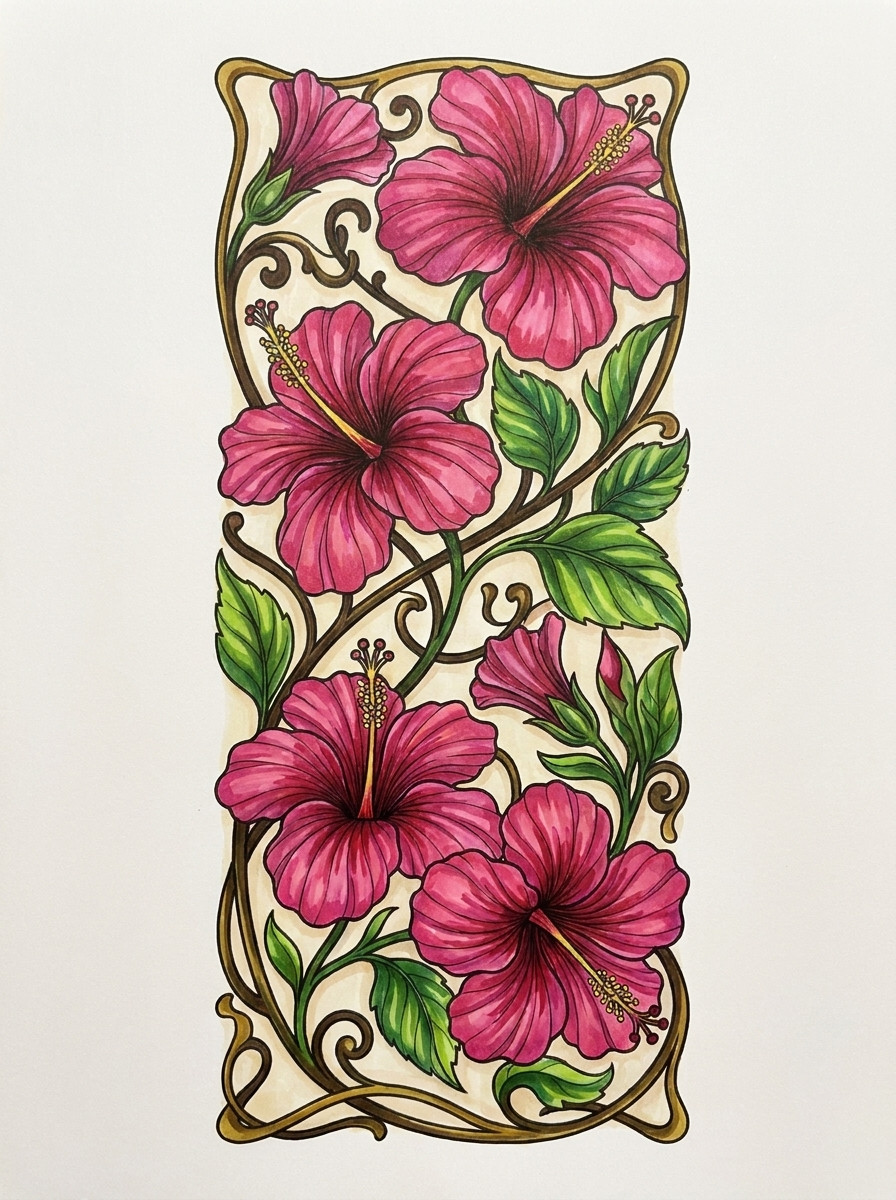
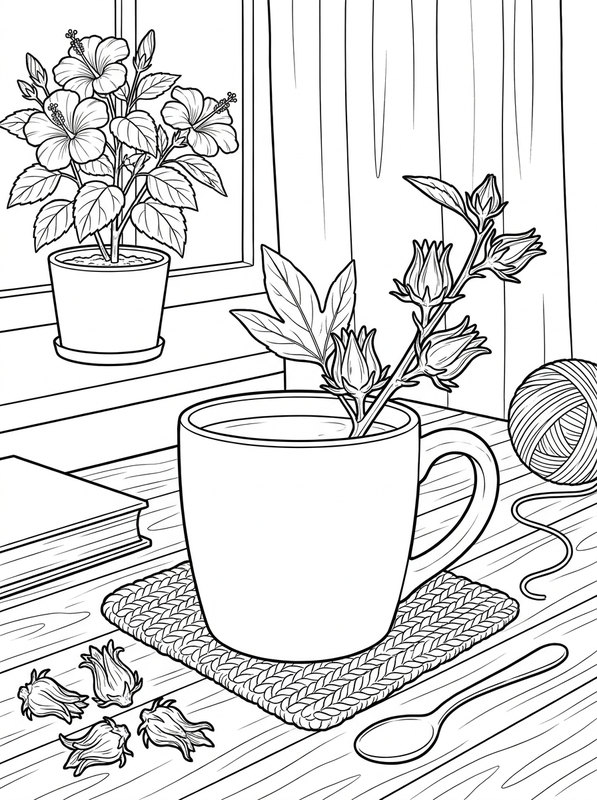
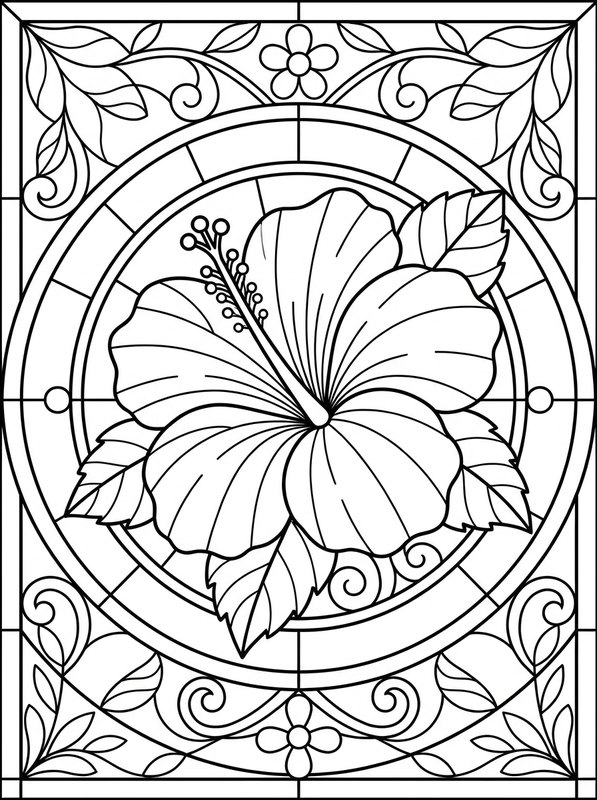
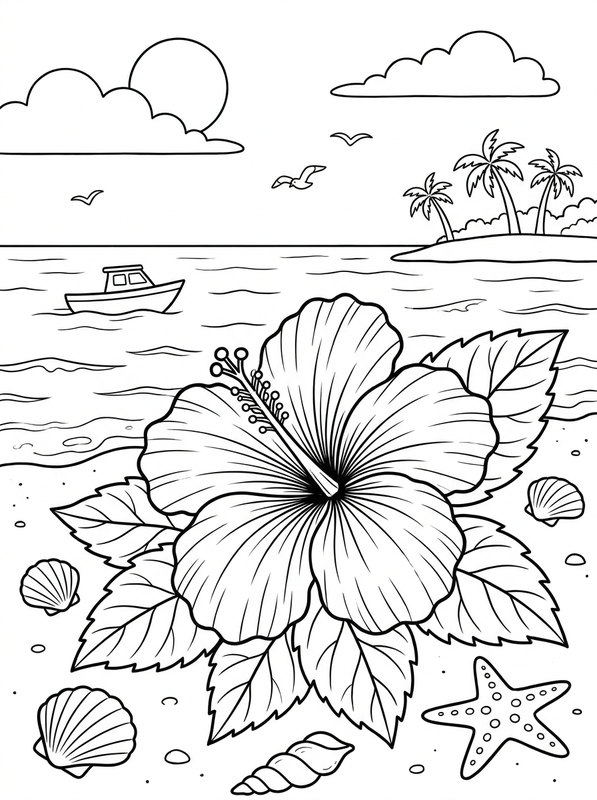
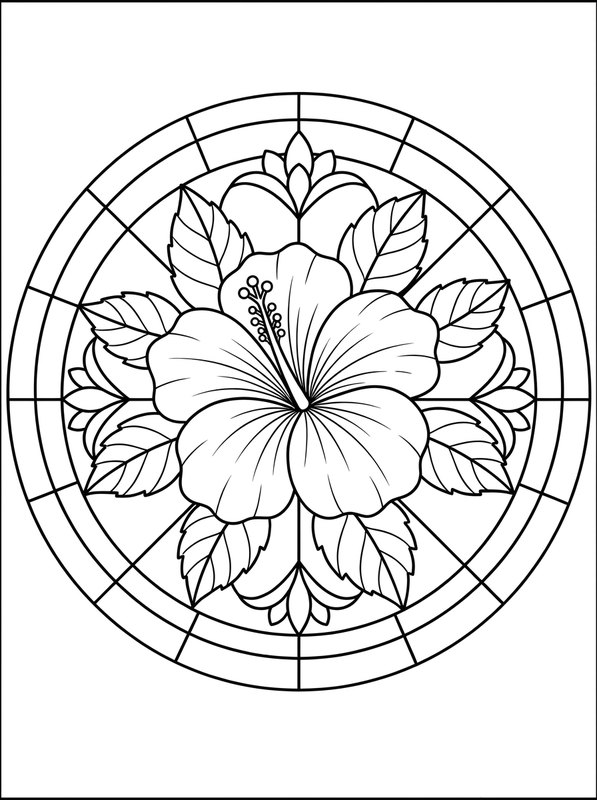
The colored examples show how the flowers can work with different surroundings. Coral or pink petals stand out against deep green tropical leaves, while pale blossoms provide contrast in a garden with dense foliage. Beach scenes allow you to introduce turquoise water, sandy tones, and the varied greens of palm fronds. For the stained-glass and ornamental pictures, each outlined section can have its own color, even if the result is less botanically realistic. These combinations are suggestions rather than rules, so use the colors you enjoy. Click on any image to enlarge and explore the details up close.
🌺 From Hibiscus Flower Anatomy to Island-Inspired Designs
The most recognizable part of many hibiscus flowers is the long central column extending beyond the petals. It carries numerous pollen-producing anthers, with the stigma divided into rounded tips near the end. This gives the flower a very different silhouette from blossoms whose reproductive parts remain hidden in the center. The close-up coloring pictures make these structures easier to see, together with the curved petal edges, visible veins, and pointed leaves.
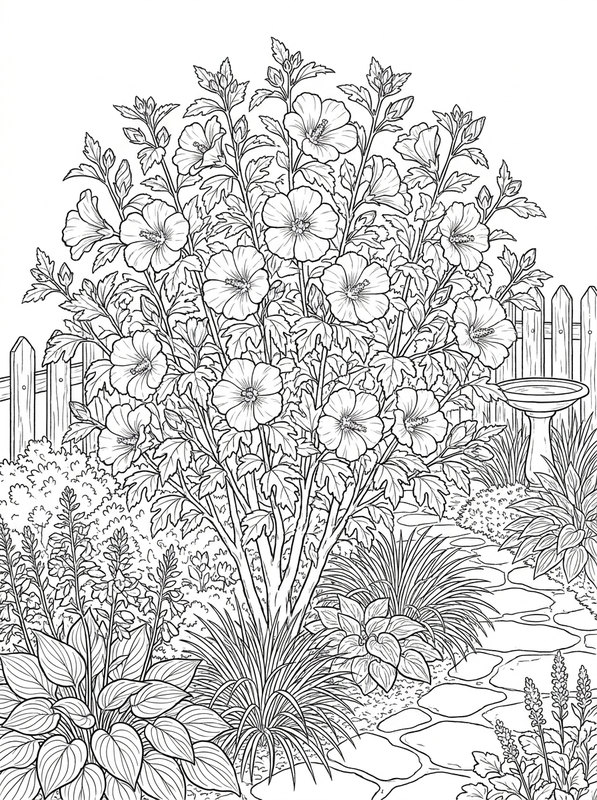
A hibiscus plant offers more to examine than its open flowers. The garden and terrace illustrations show branches carrying blossoms, leaves, and buds at different stages of development. Some flowers are positioned among broad tropical foliage, while others stand out from the narrower leaves of their own plant. In the potted-tree design, the trunk and branching structure are visible as well. These differences help distinguish a complete flowering shrub from an isolated flower illustration.
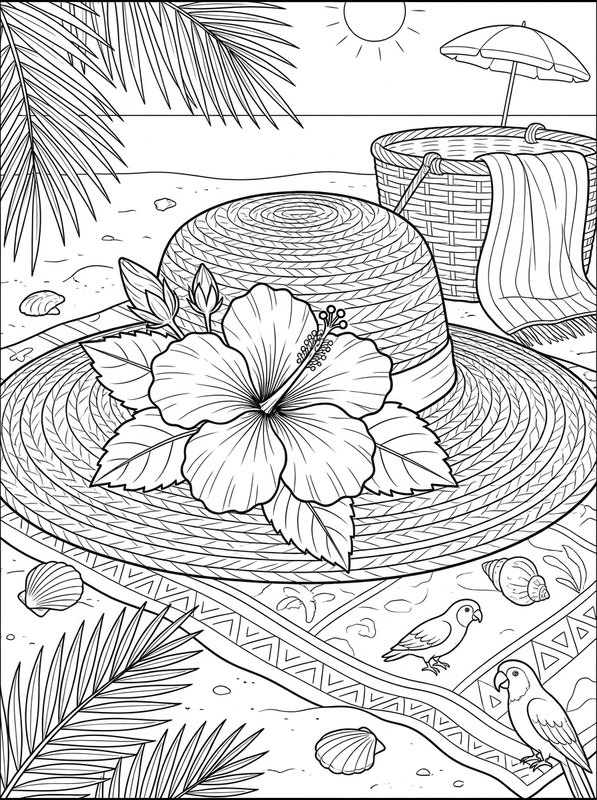
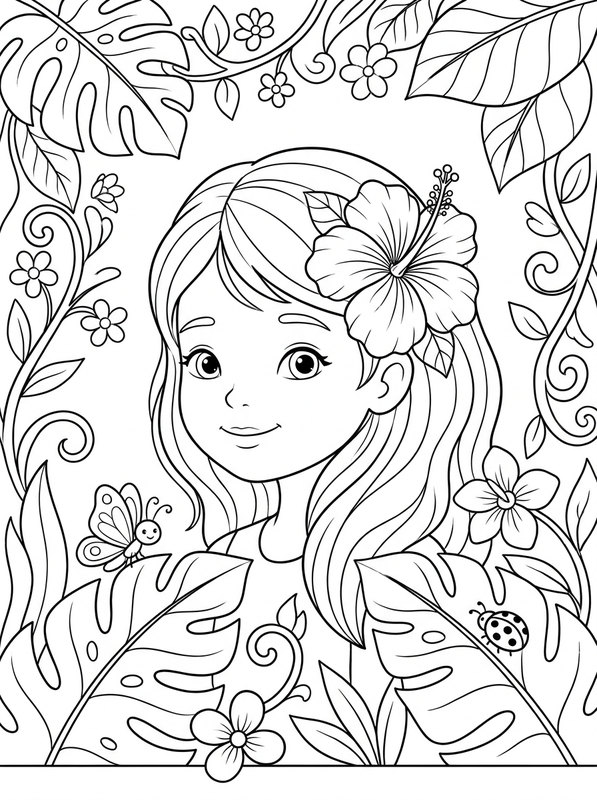
Hibiscus has a strong visual connection with Hawaii and tropical coastal settings, although the genus includes plants found in many other regions. The island-themed coloring pictures show blossoms near palm trees, ocean waves, and beach accessories. A hula dancer wears a hibiscus in her hair, and another illustration features a woman with a flower tucked above her ear. These images use the flower as part of a recognizable tropical scene rather than simply placing it in a vase.
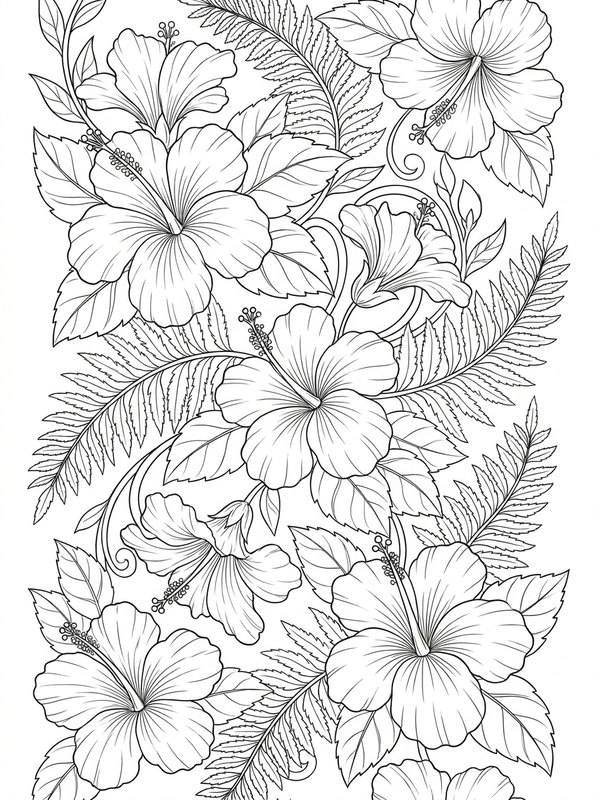
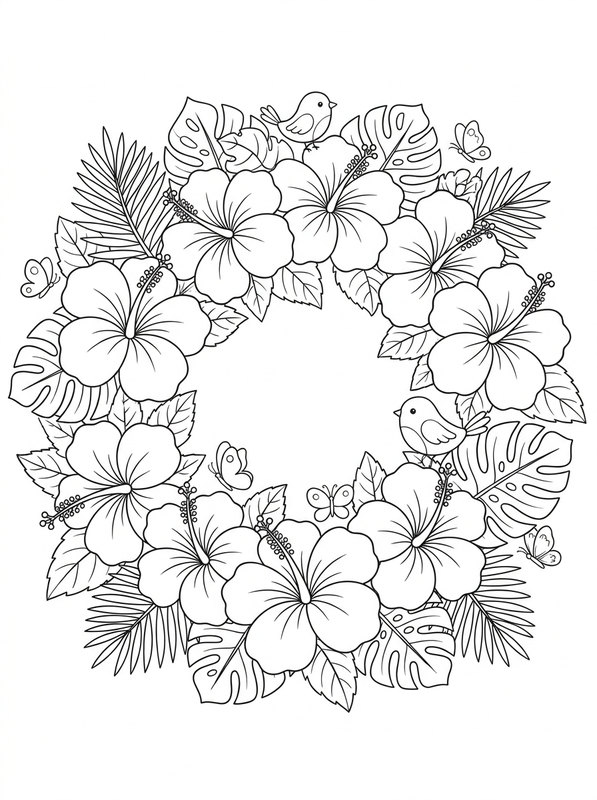
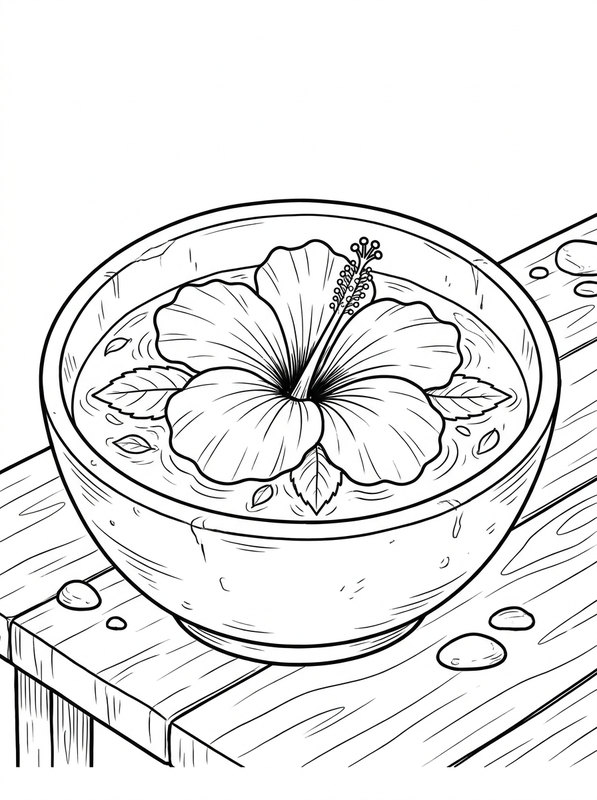
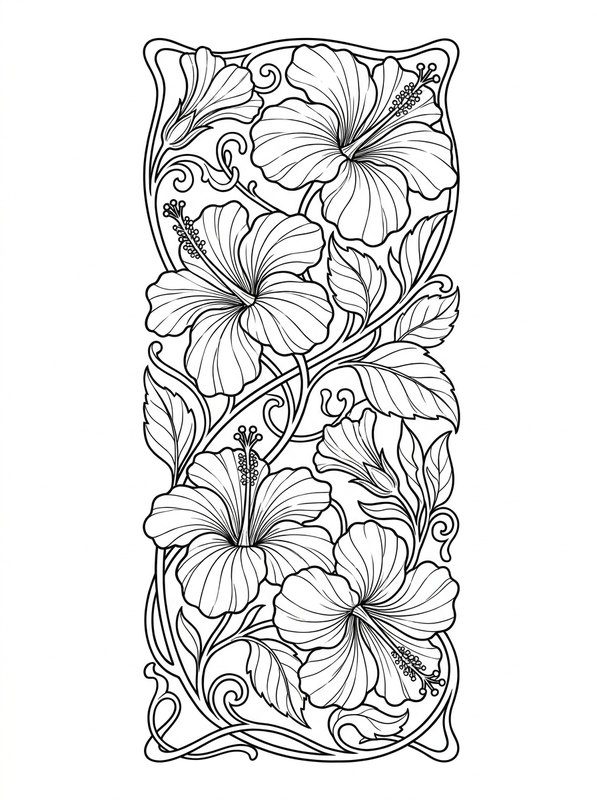
The ornamental designs emphasize the hibiscus flower's five-petal shape and prominent center. In the stained-glass illustrations, outlines divide the petals, leaves, and surrounding background into separate sections. The Art Nouveau panel uses flowing stems and curved foliage, while the circular wreaths repeat blossoms around an open center. A hibiscus floating in a bowl of water provides a quieter arrangement, with the flower itself carrying most of the detail. Each design presents a different balance of large shapes and smaller areas to color.
All 26 hibiscus pictures are available as printable A4 PDFs. Print at 100% scale to retain the original proportions and preserve fine details such as anthers, petal veins, and narrow stained-glass sections. Colored pencils are useful when working around the flower centers, while broad petals and open backgrounds can be filled with crayons or markers. If you use alcohol-based markers, heavier paper and a protective sheet underneath can help manage ink bleed-through.