Flower Coloring Pages
🌸 Free Printable Flower Coloring Pages
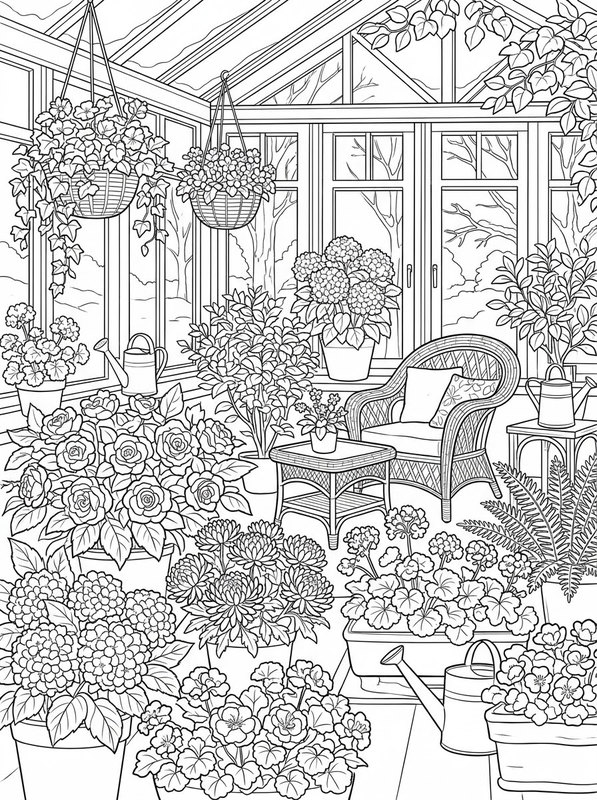
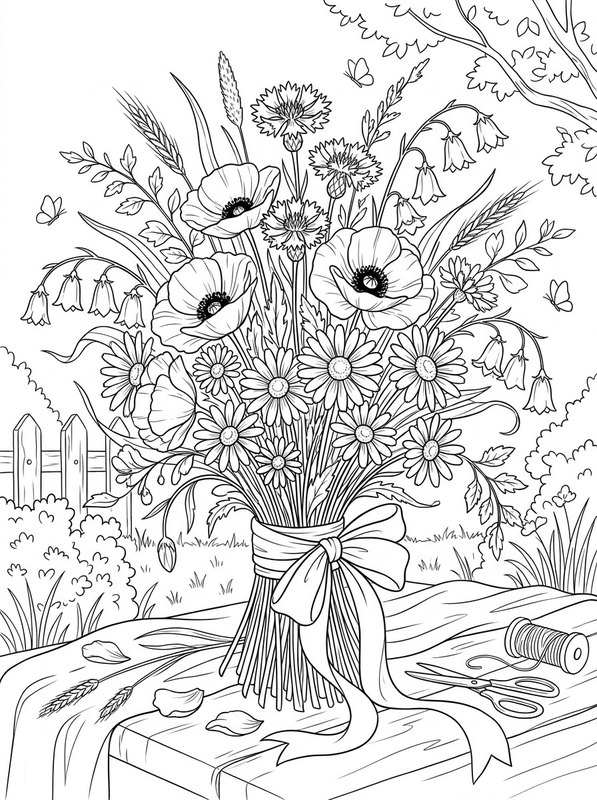
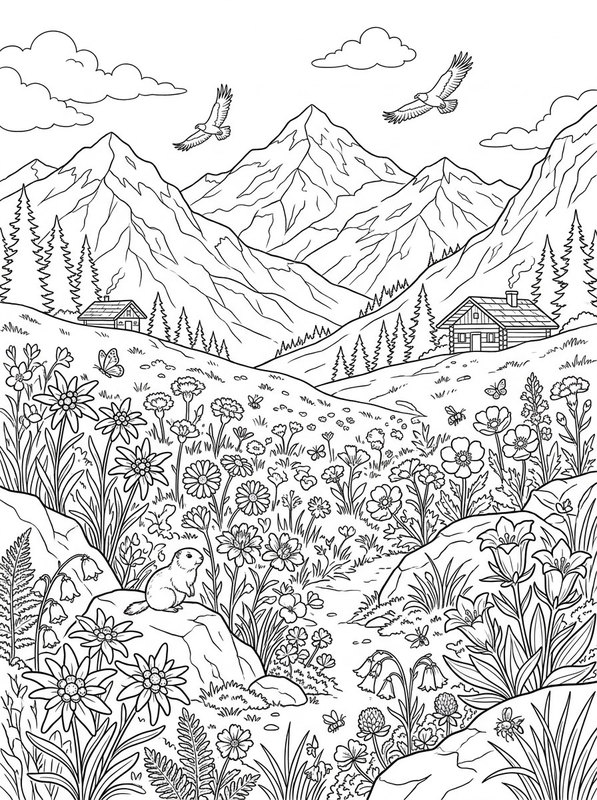
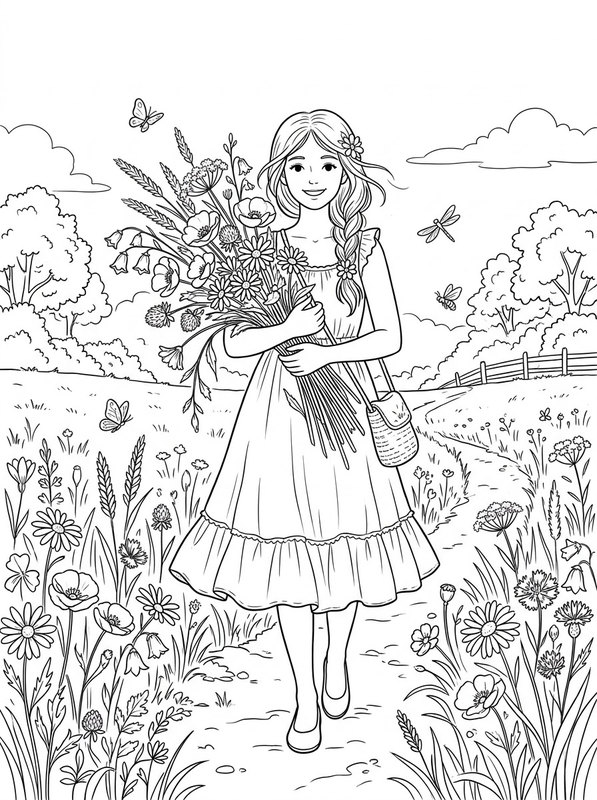
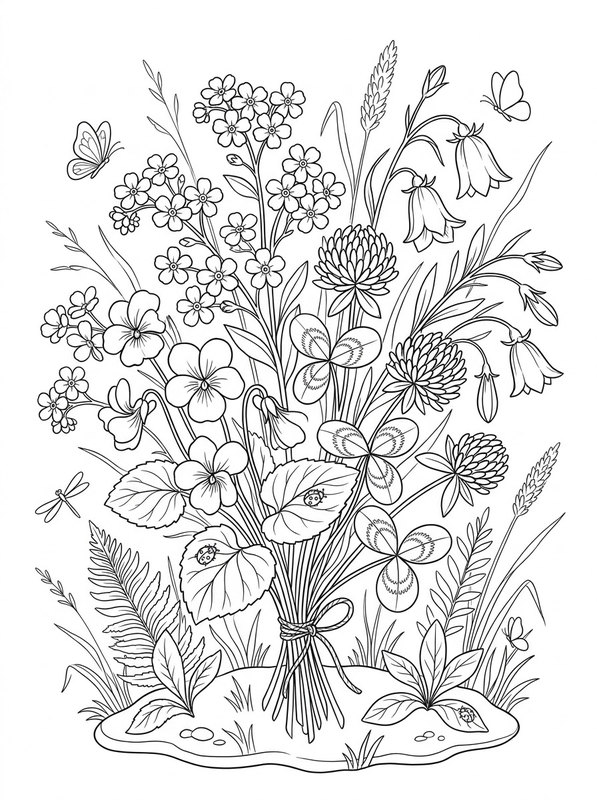
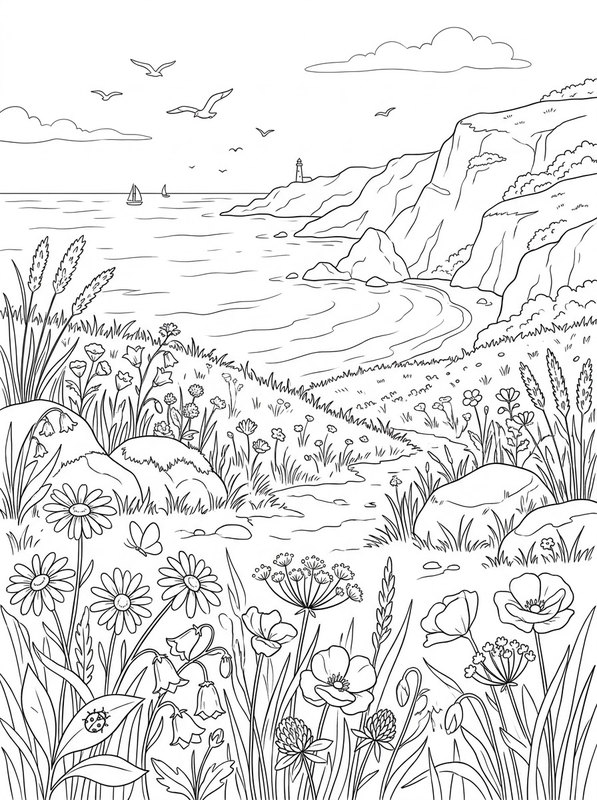
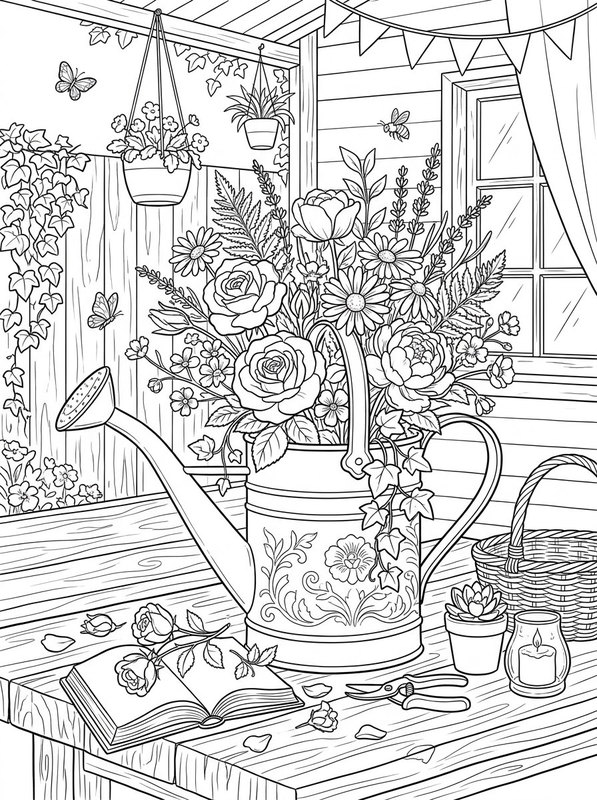
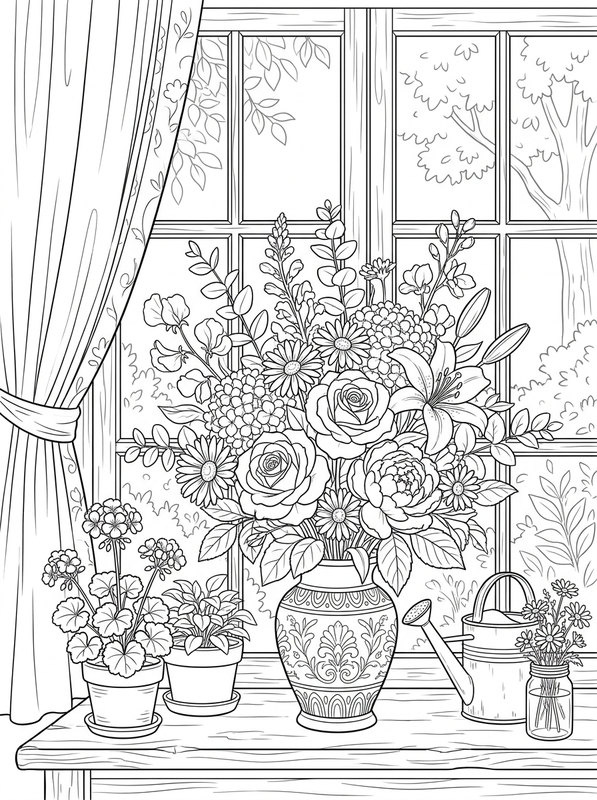
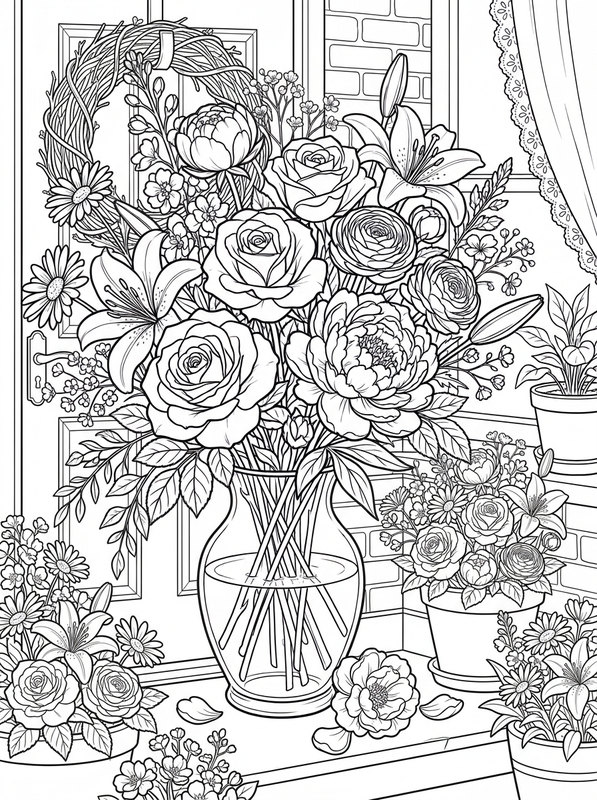
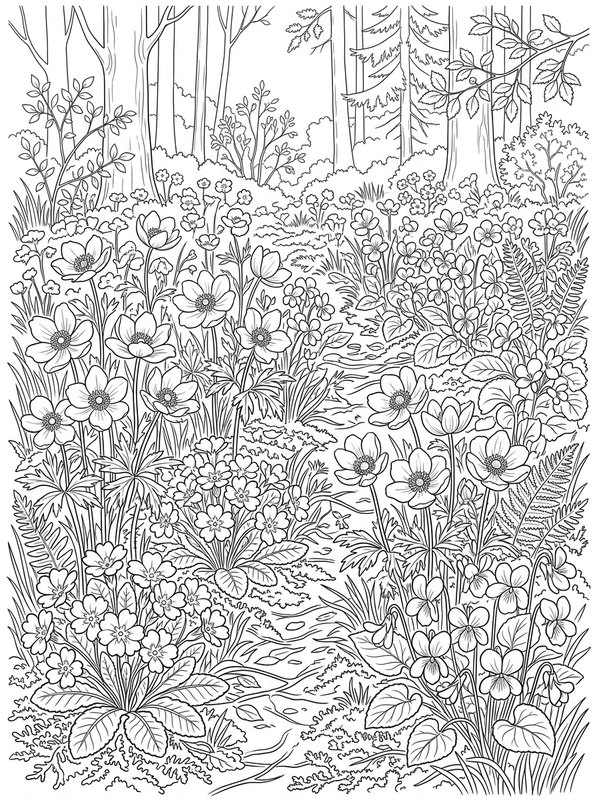
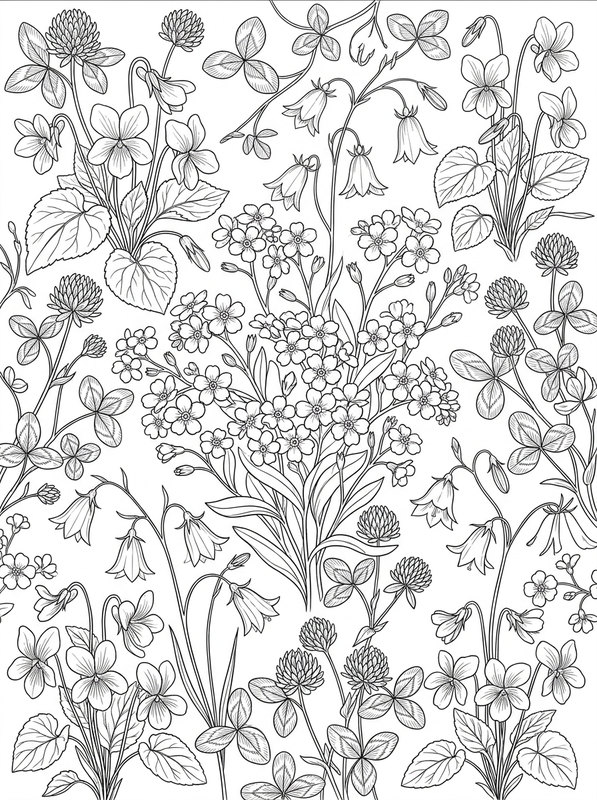
These free printable flower coloring pages feature mixed bouquets, wildflowers, flower gardens, and arrangements made with different kinds of blooms. Each coloring sheet is available as an A4 PDF to download and print. There are simple flower pictures for kids, along with more detailed illustrations for anyone who enjoys coloring floral scenes.
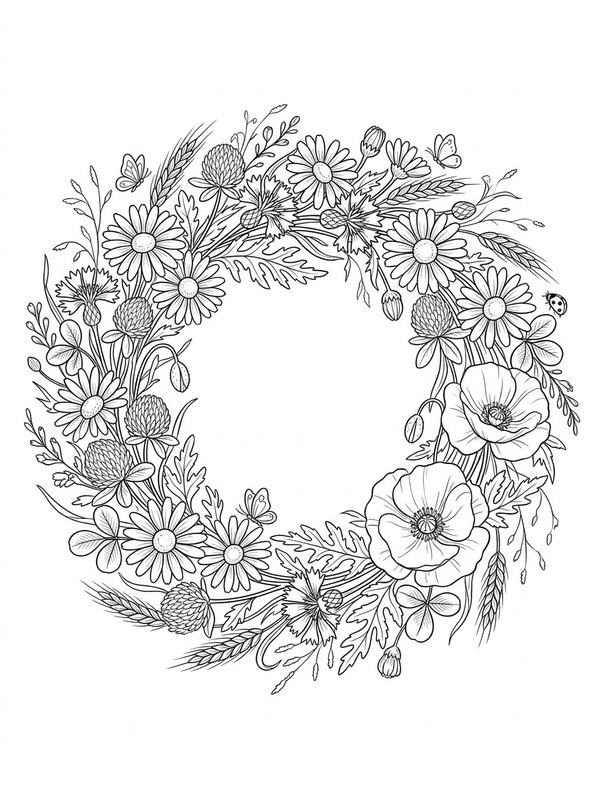
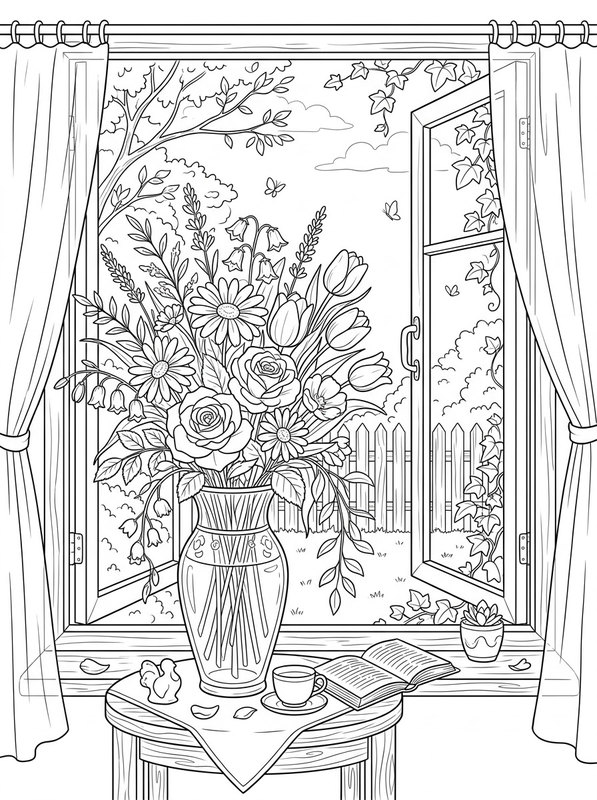
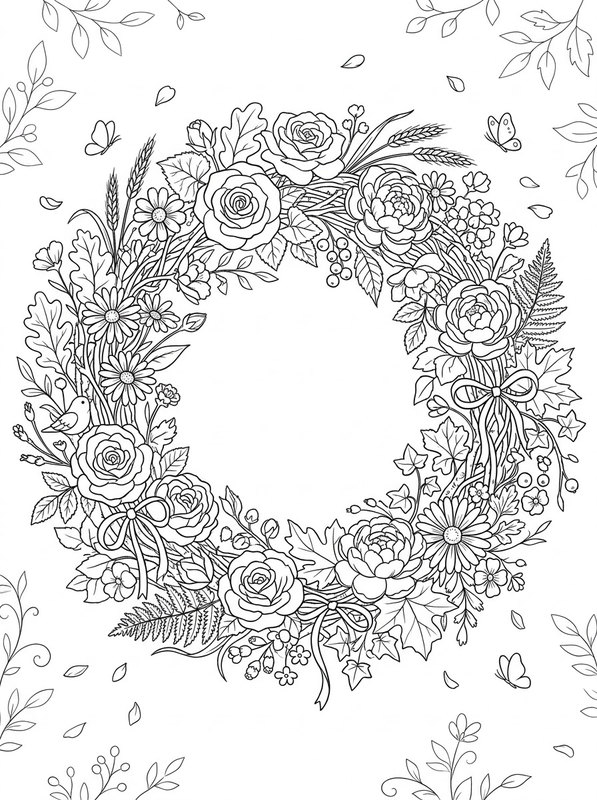
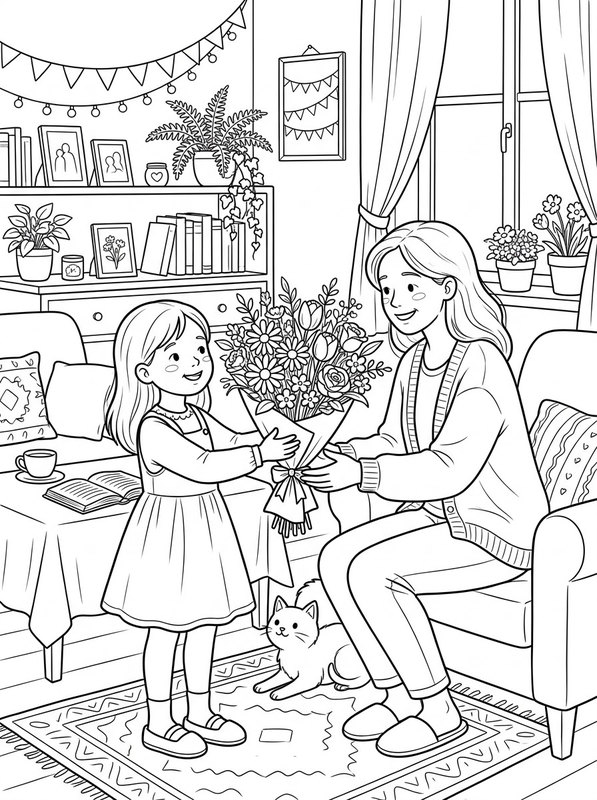
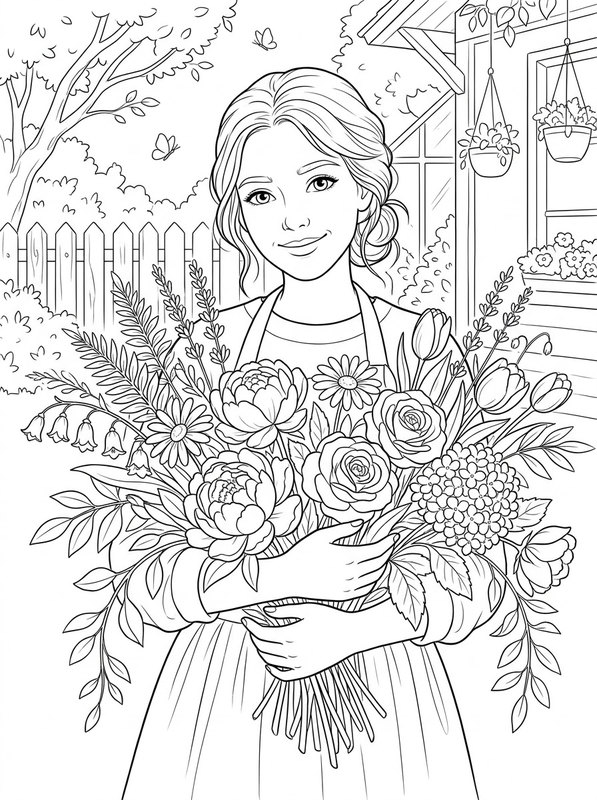
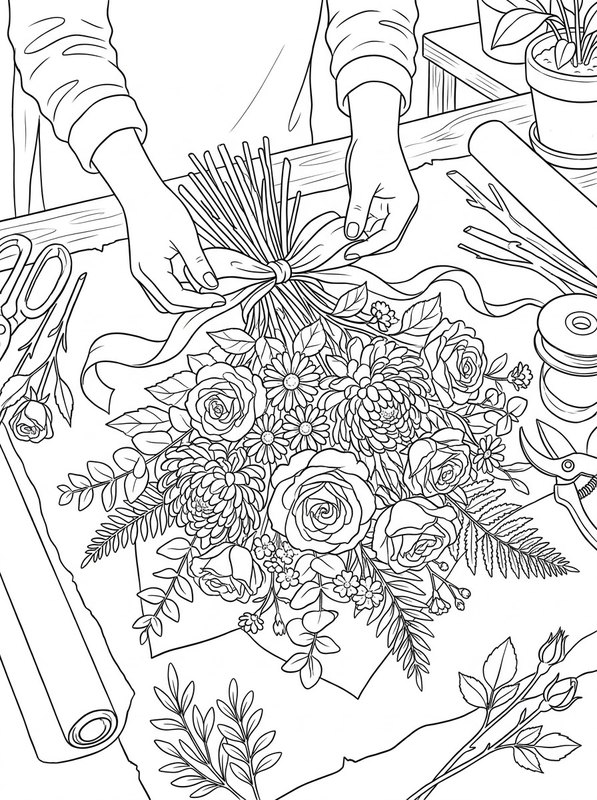
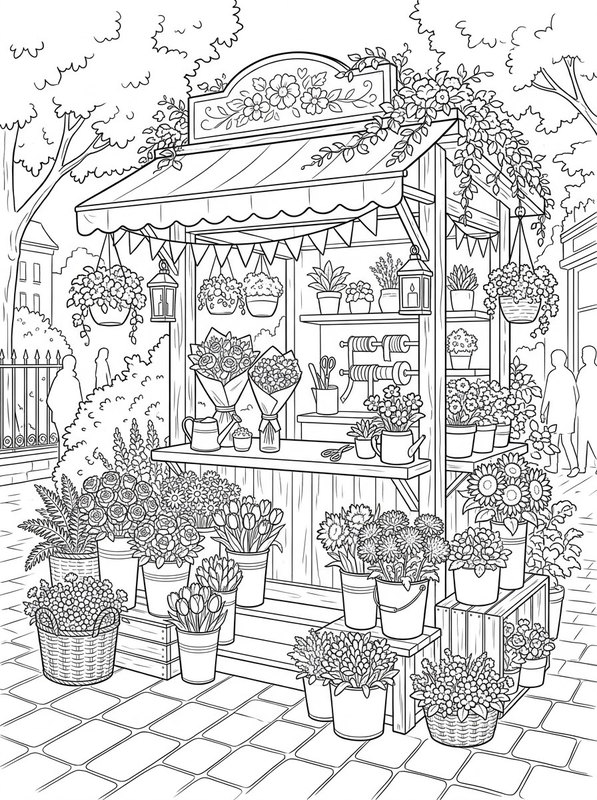
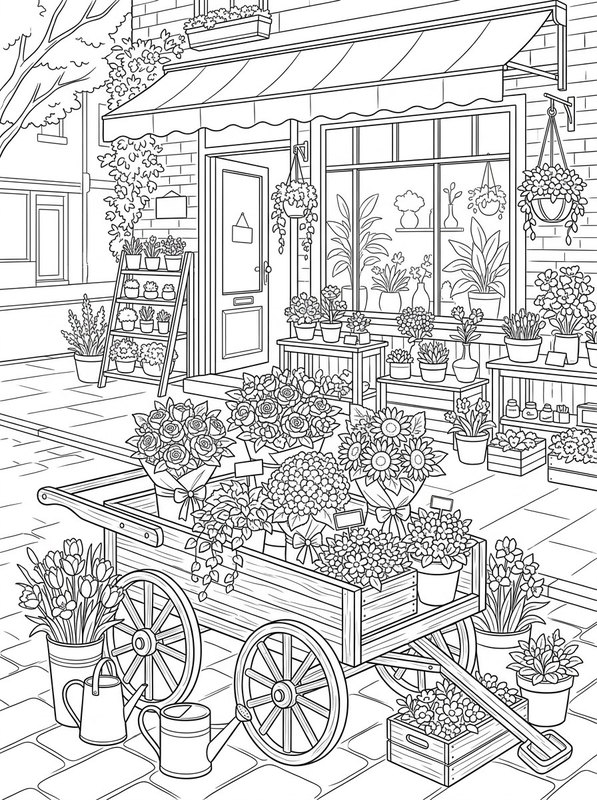
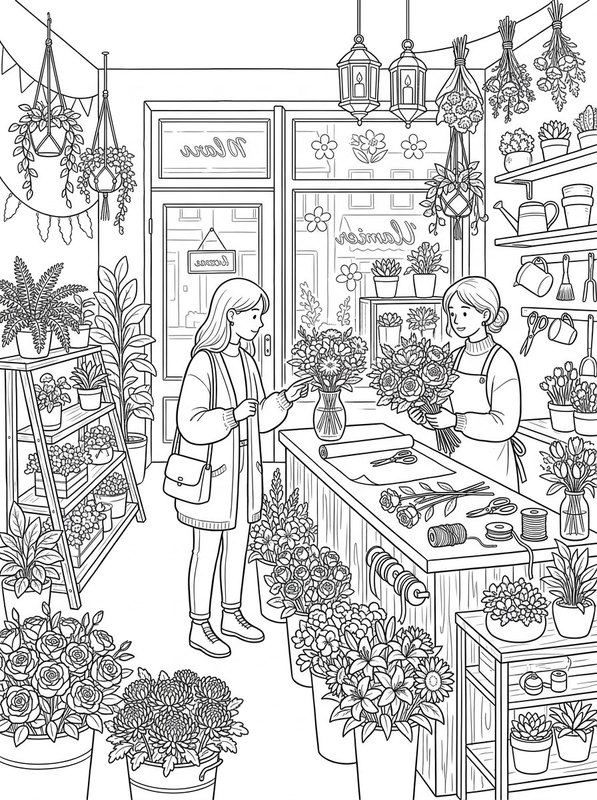
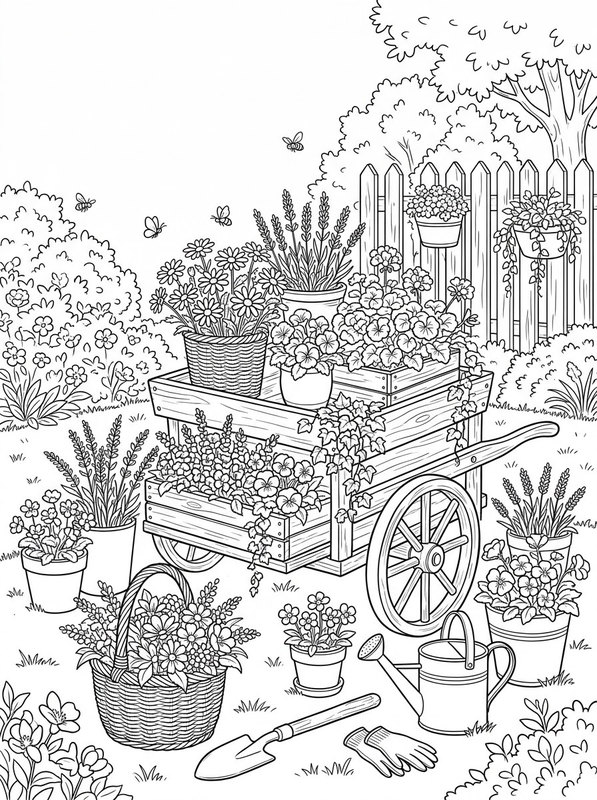
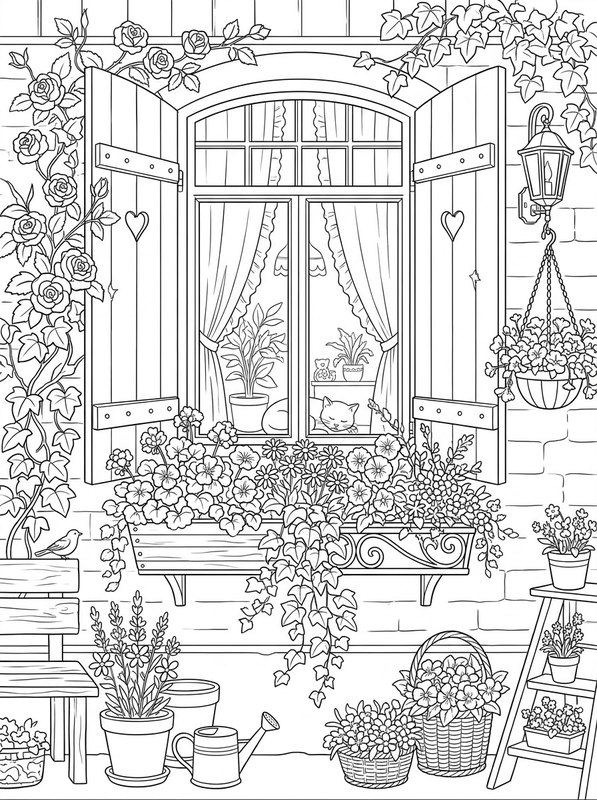
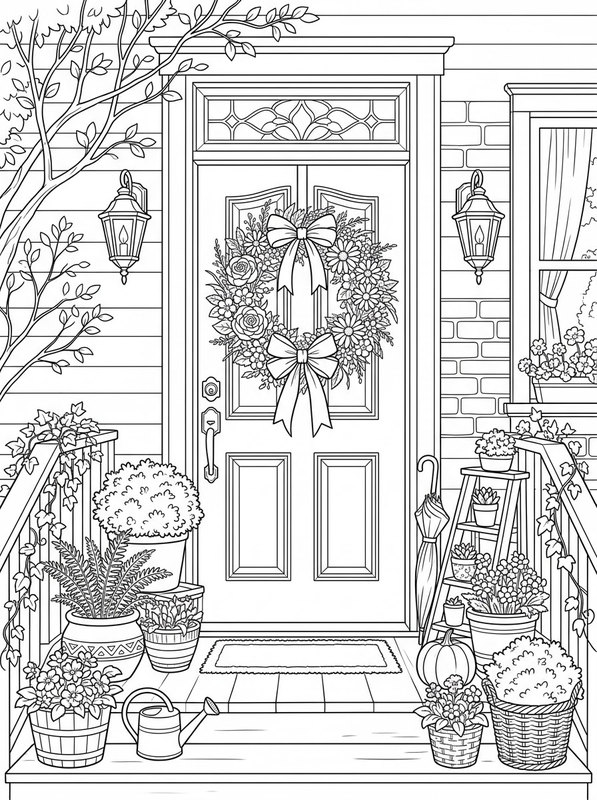
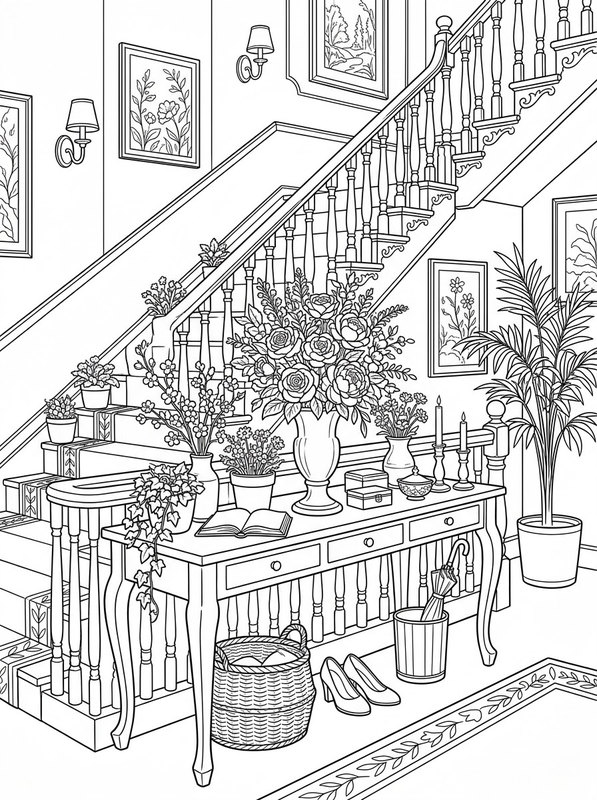
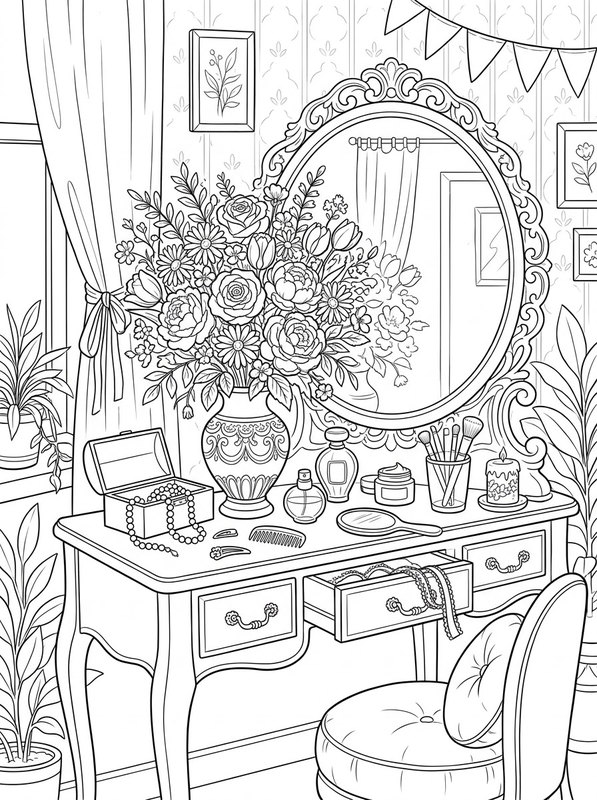
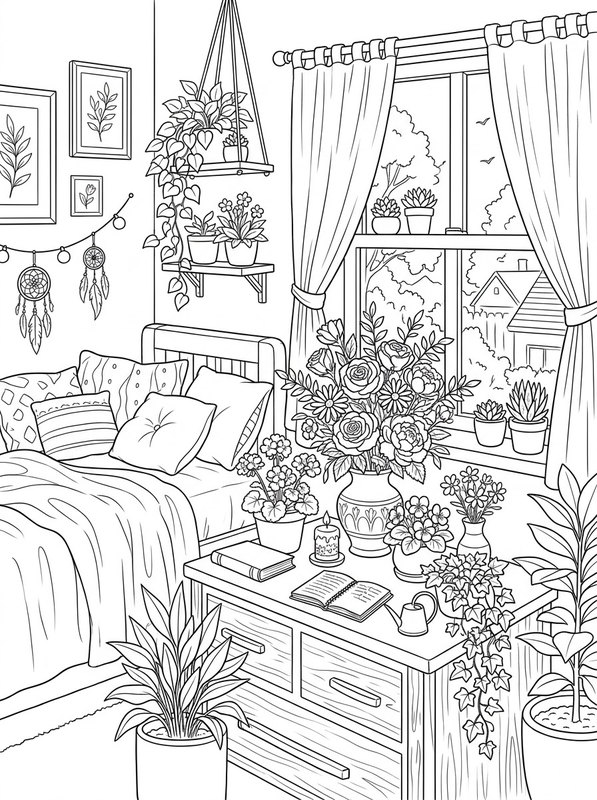
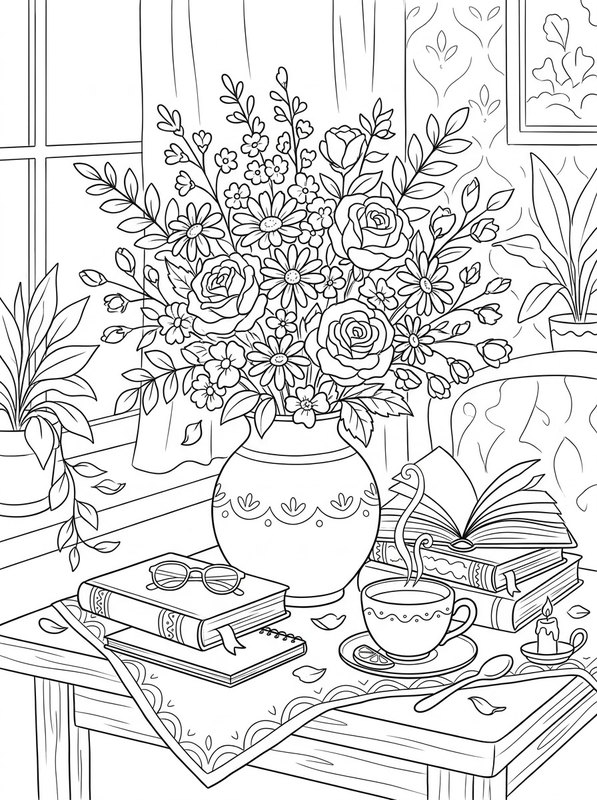
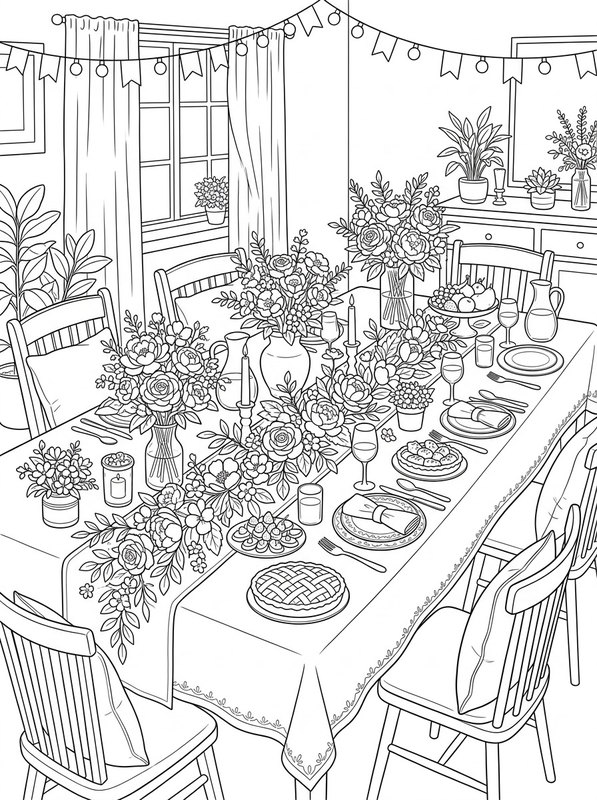
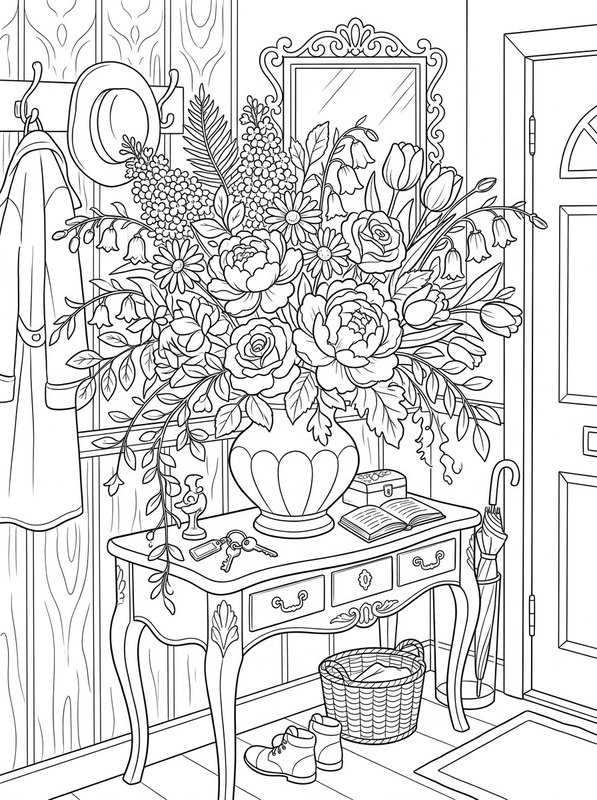
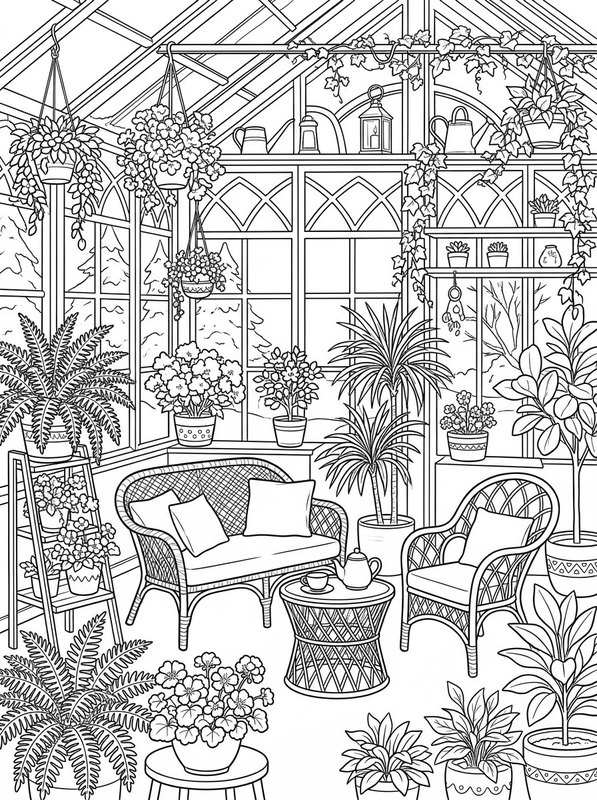
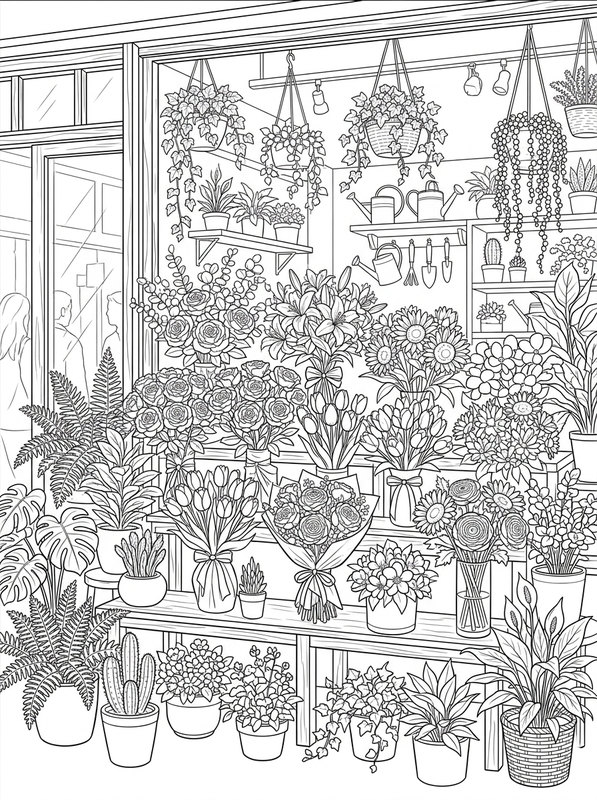
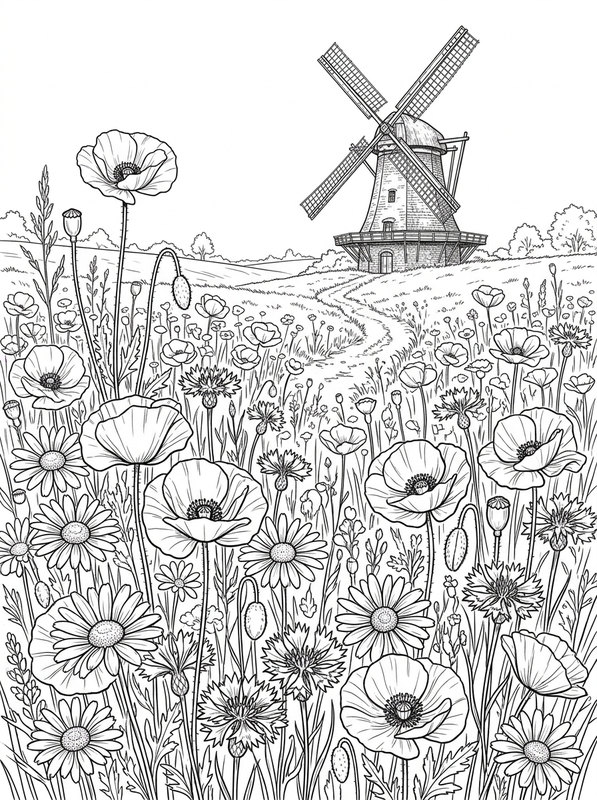
The pictures include meadow flowers growing along mountain paths, poppies and daisies near a windmill, bouquets being tied by hand, and flower-filled rooms and shops. You'll also find floral wreaths, hanging planters, decorated doorways, and children gathering or giving flowers. For a closer look at particular blooms, the themed collections below cover roses, tulips, lilies, daisies, and other favorites.
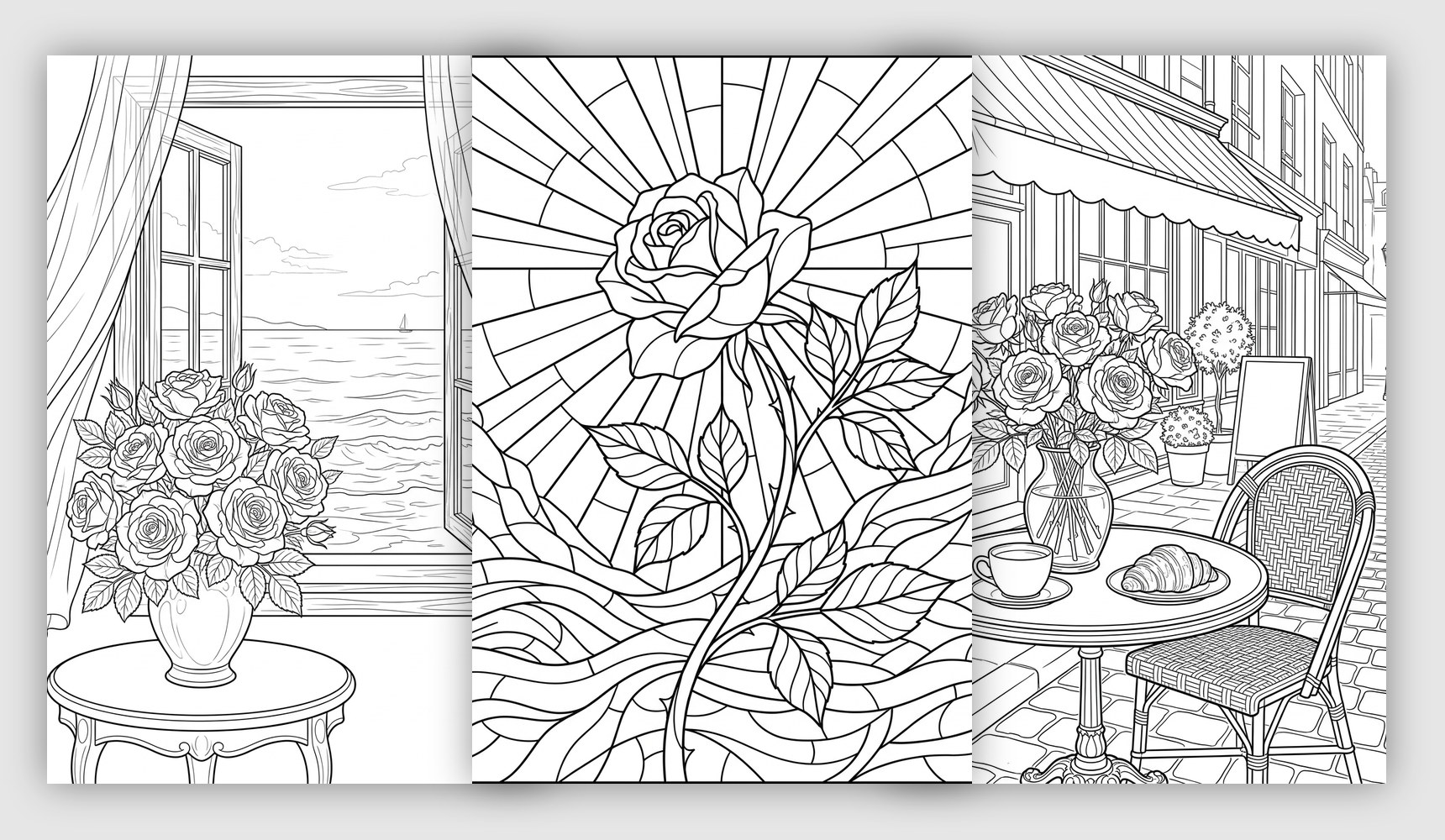
Rose Coloring Pages
Roses are shown as individual blooms, leafy branches, bouquets, and garden displays. Simple outlines focus on their recognizable petals, while more detailed pictures include layered flowers and larger floral scenes.
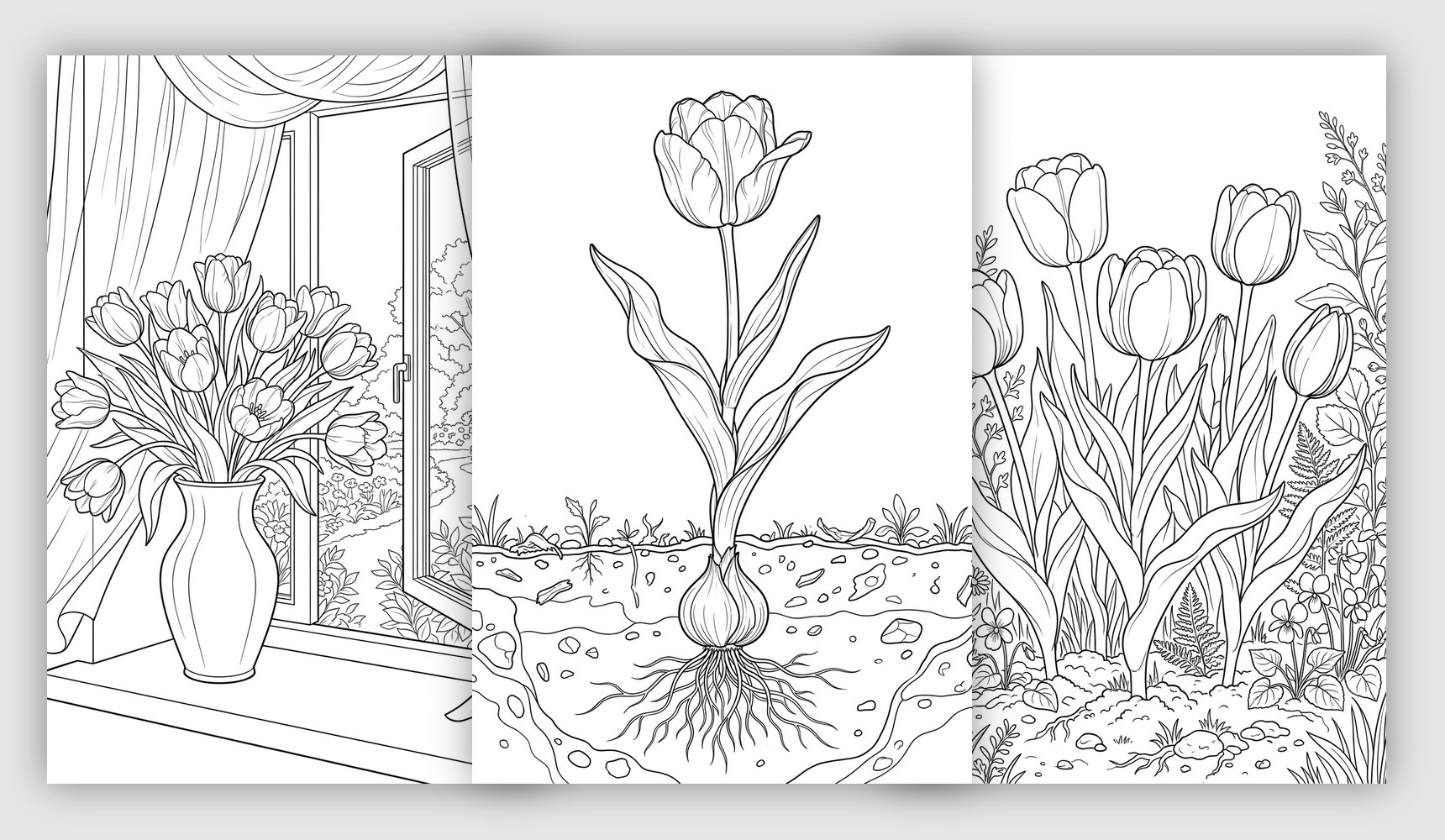
Tulip Coloring Pages
Dutch tulip fields, spring gardens, and bouquets feature alongside individual flowers. The designs range from simple tulip shapes to realistic arrangements and landscapes with rows of blooming tulips.
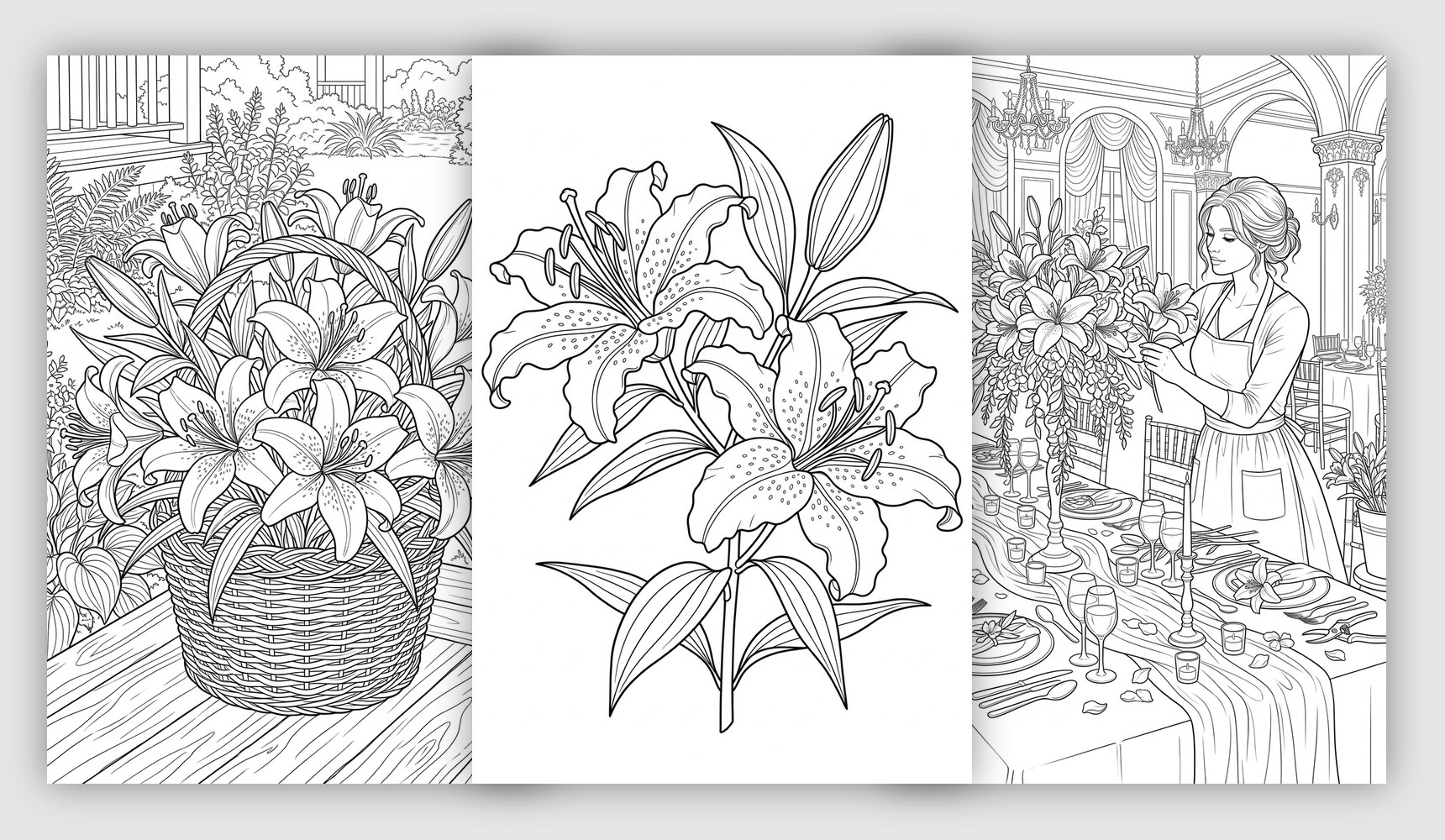
Lily Coloring Pages
Large lily petals, prominent stamens, and unopened buds provide distinctive botanical details. Lily bouquets, flowering plants, and decorative arrangements offer both straightforward pictures and more elaborate compositions.
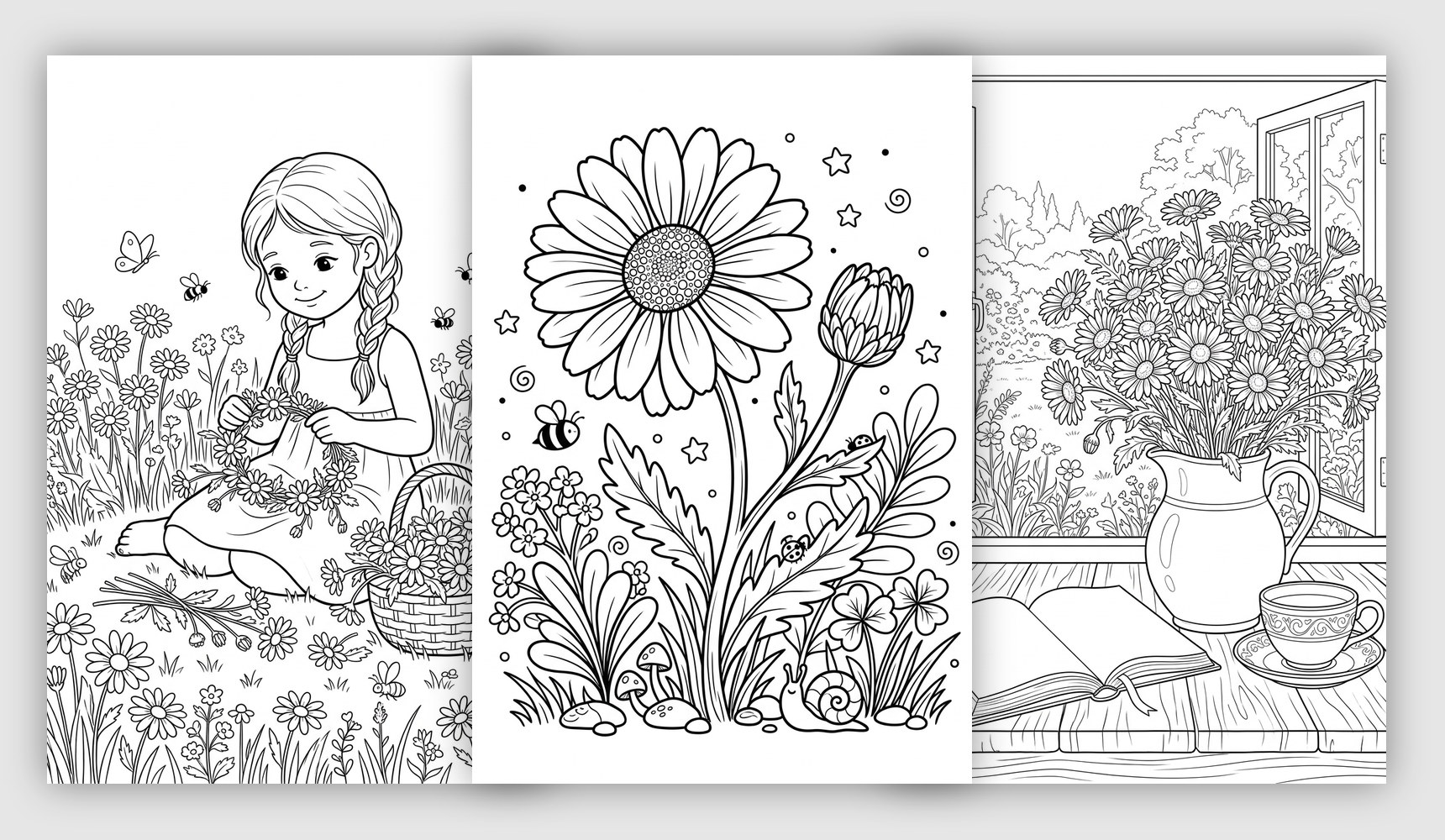
Daisy Coloring Pages
The familiar round centers and radiating petals of daisies make them suitable for simple flower pictures. Meadow scenes, garden arrangements, and fuller floral compositions provide additional detail.
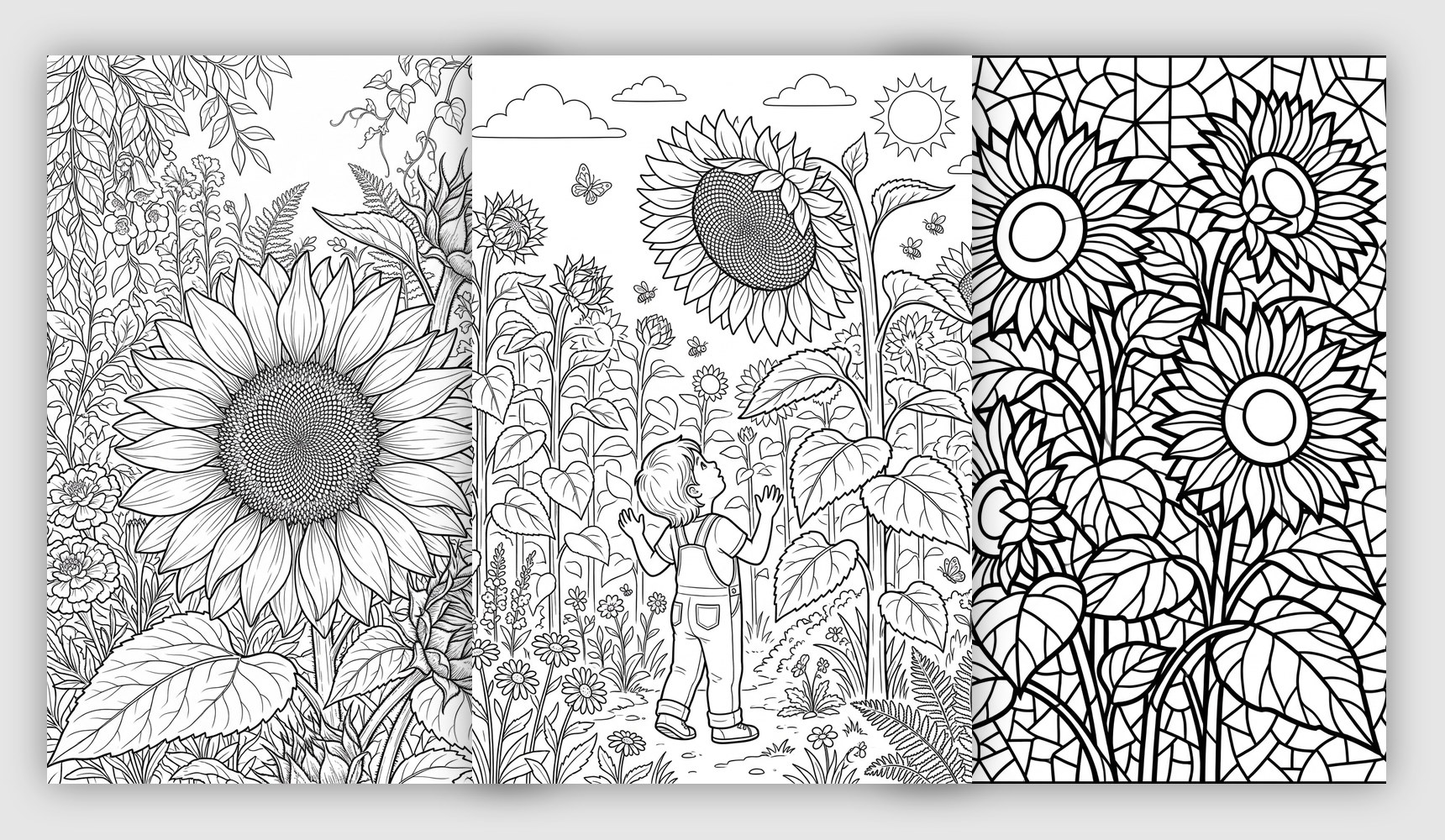
Sunflower Coloring Pages
Sunflowers appear in close-up drawings, garden scenes, country landscapes, and decorative designs. Their large flower heads, textured centers, and broad leaves create a different coloring experience from smaller garden blossoms.
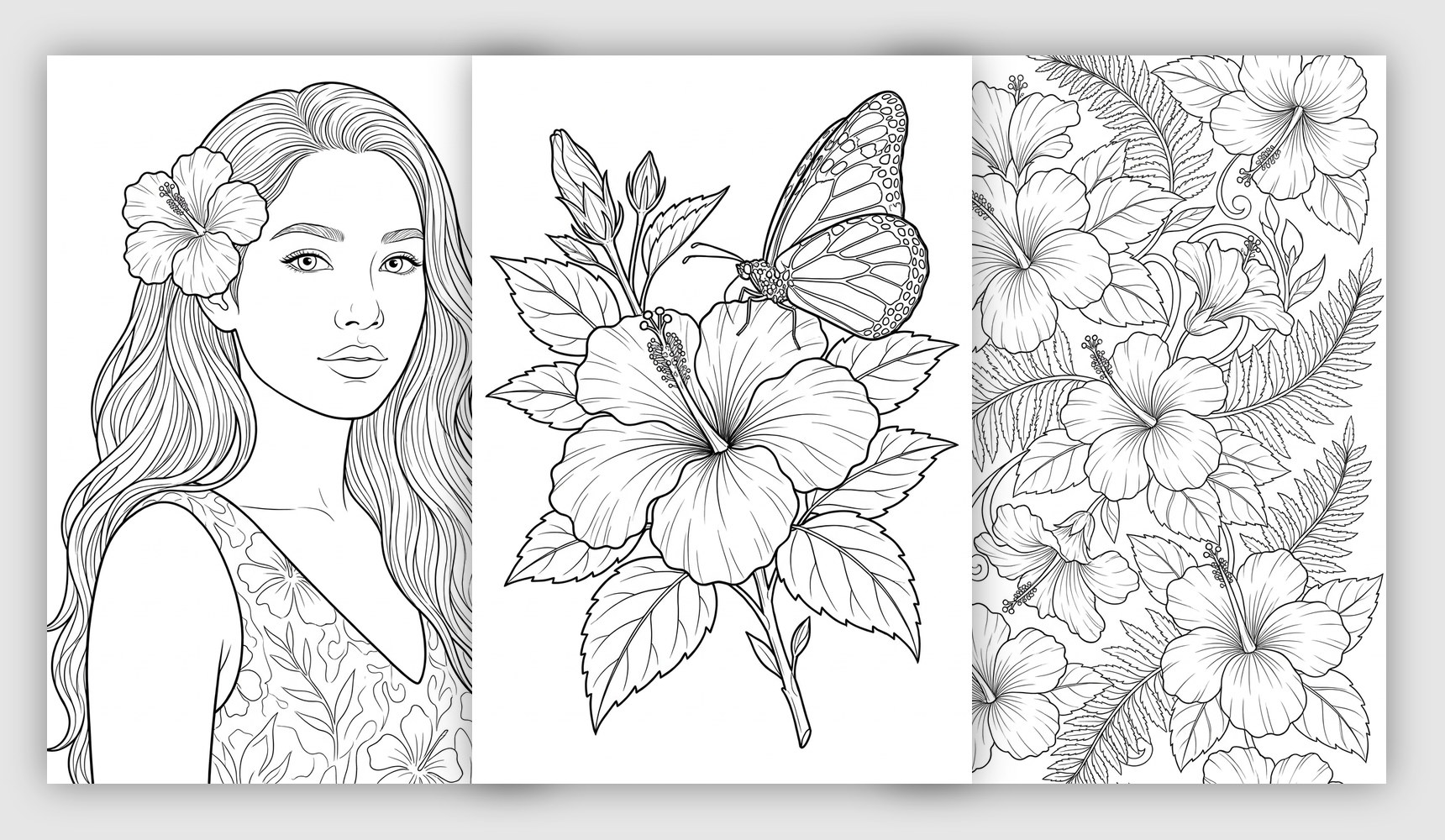
Hibiscus Coloring Pages
Hibiscus flowers have broad petals and long, projecting staminal columns. Tropical foliage, flowering branches, butterflies, and ornamental arrangements add variety to the botanical illustrations.
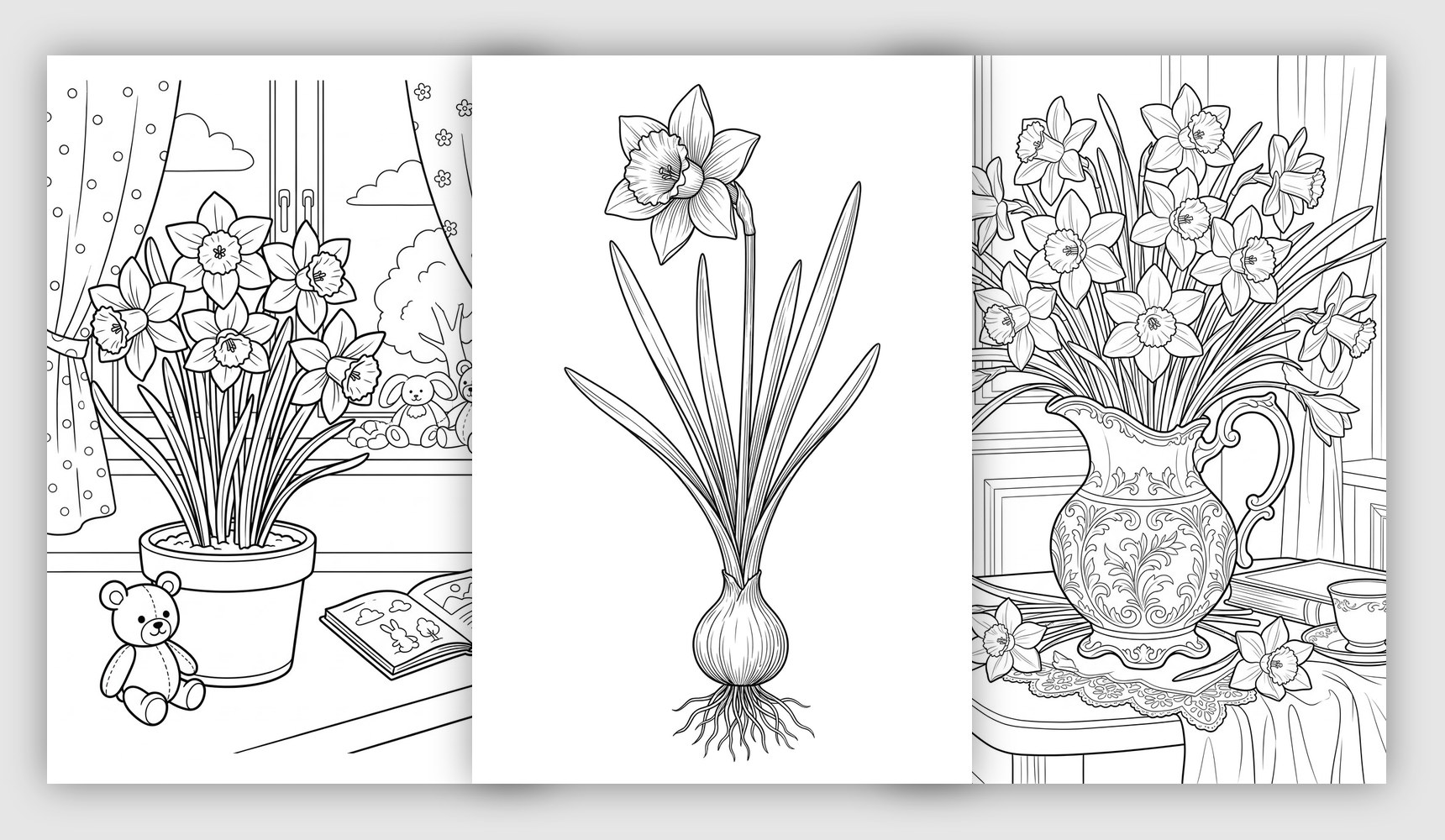
Daffodil Coloring Pages
Spring scenes with trumpet-shaped daffodils range from easy pictures with children and animals to detailed countryside landscapes. Botanical drawings also show their bulbs, roots, and narrow leaves.
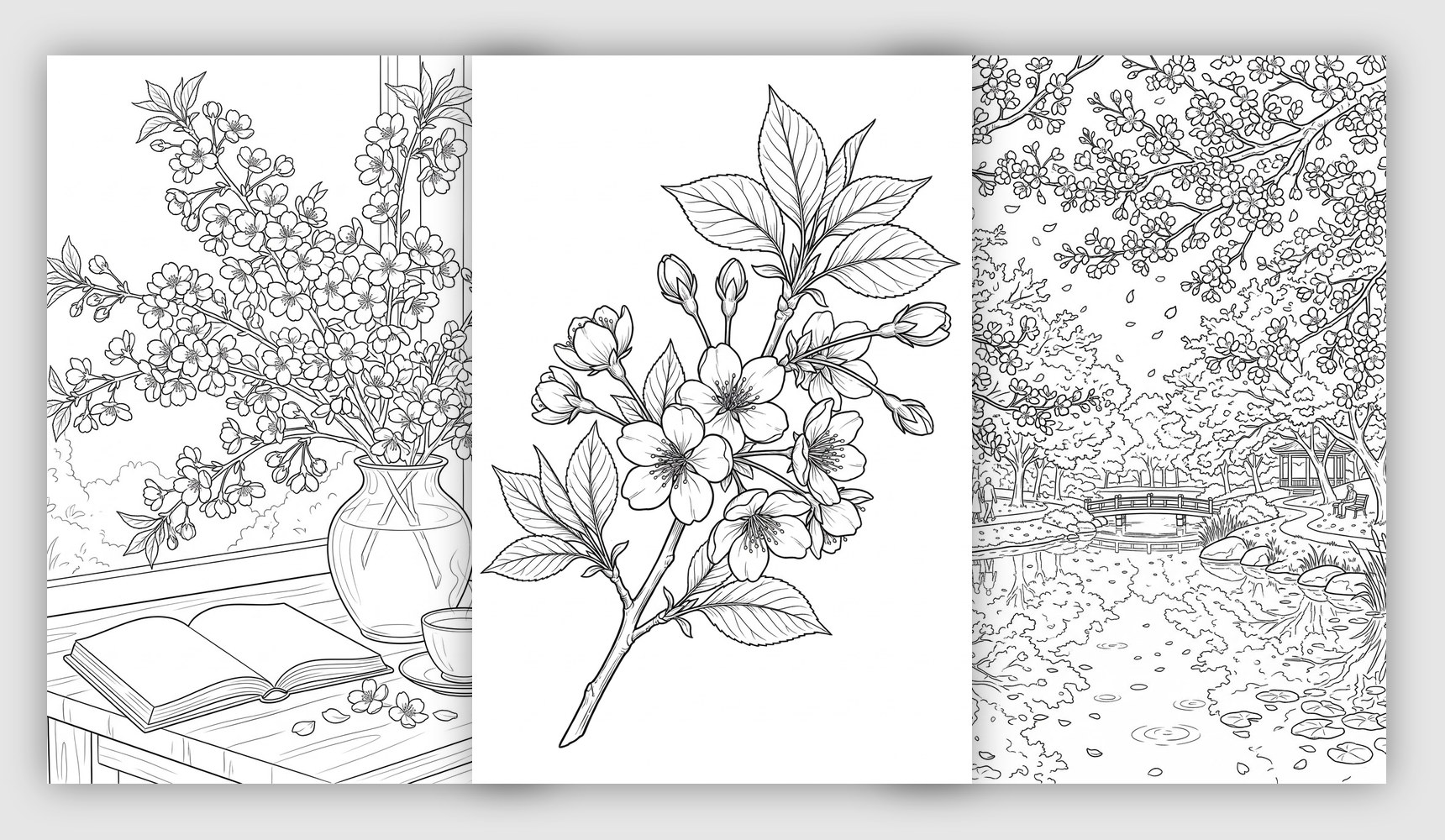
Cherry Blossom Coloring Pages
Flowering cherry trees appear along Japanese streets, near Mount Fuji, and beside Washington's Tidal Basin. Other pictures focus on blossom-covered branches, spring picnics, and children playing beneath the trees.
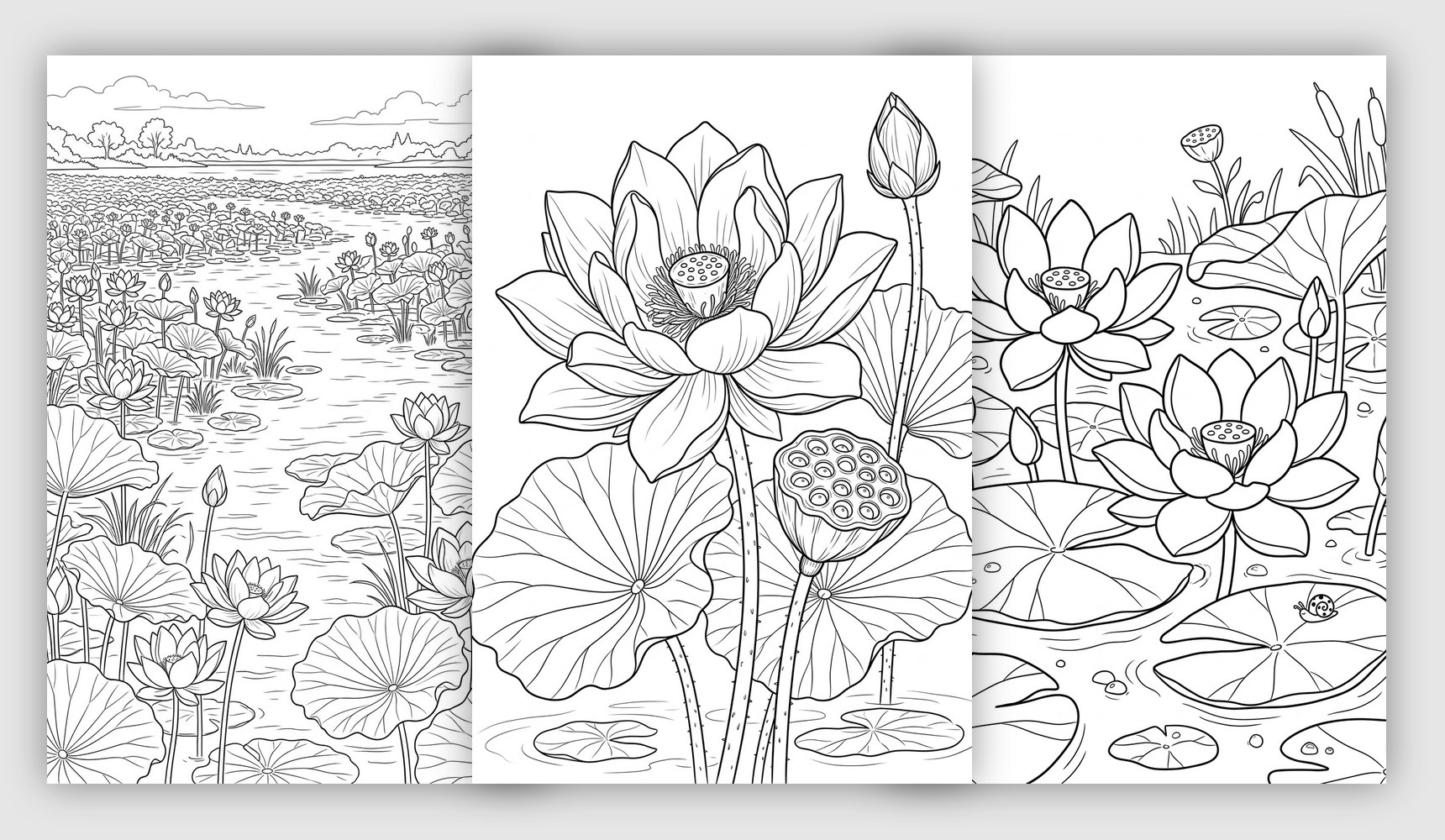
Lotus Flower Coloring Pages
Lotus flowers rise above broad leaves in pond and lake scenes. Botanical studies, Asian garden settings, traditional symbolism, and decorative panels show different aspects of this aquatic plant.
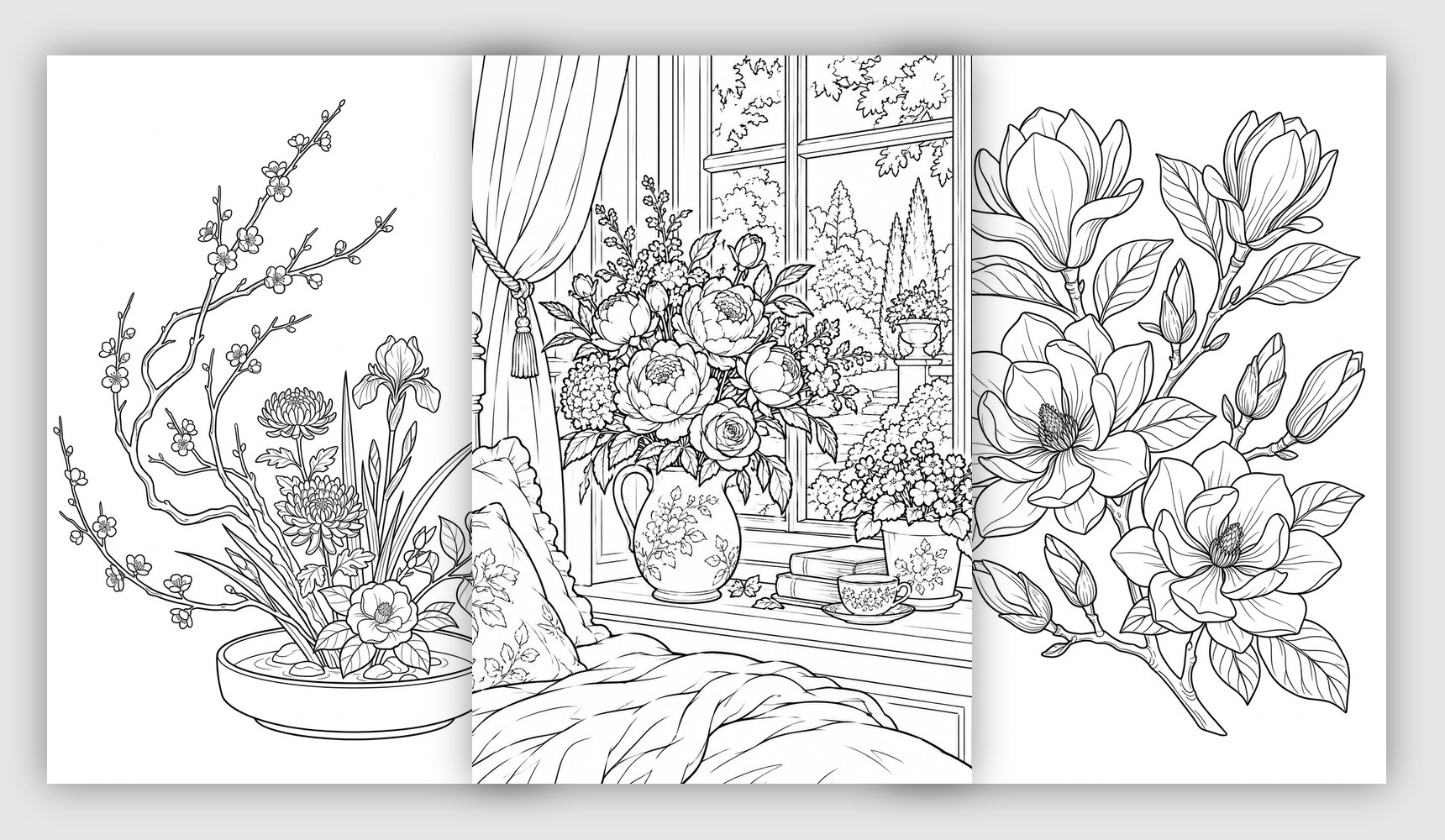
Flower Coloring Pages for Adults
More intricate floral illustrations feature layered blossoms, elaborate bouquets, detailed interiors, and botanical artwork. Art Nouveau panels, stained glass, and densely arranged flowers provide smaller spaces and decorative details to color.
🎨 How to Color Mixed Bouquets, Wildflowers, and Flower Gardens
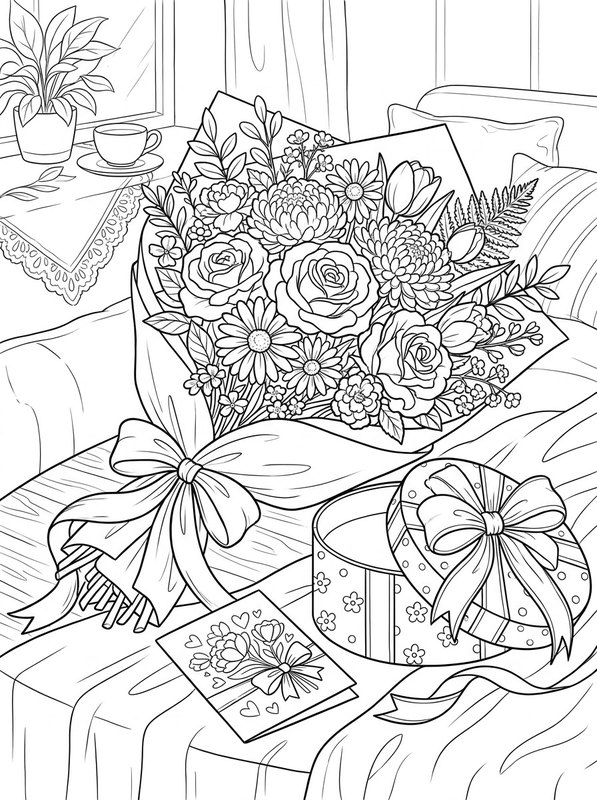
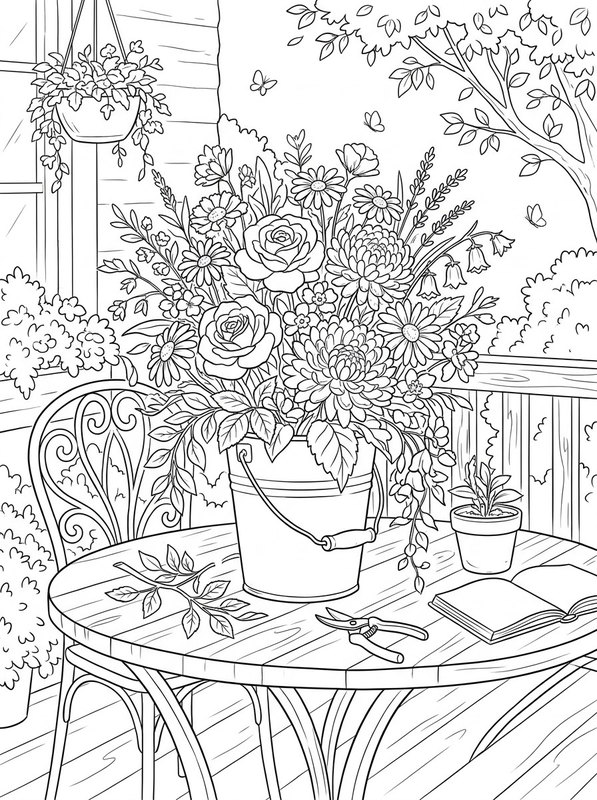
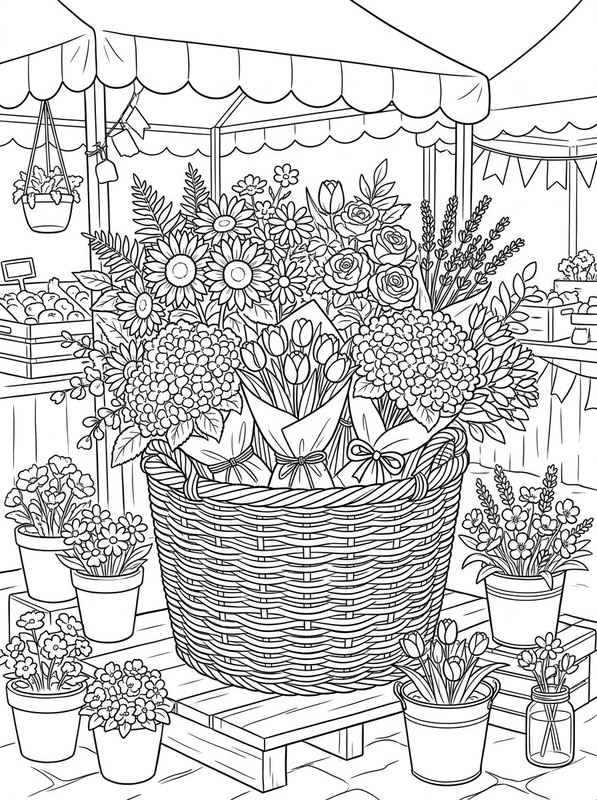
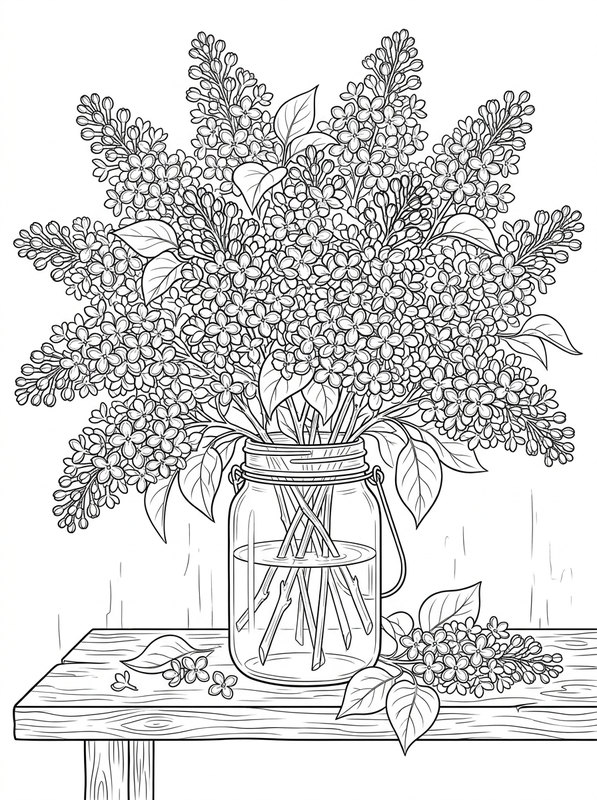
A mixed bouquet is easier to color when you decide which flowers should stand out first. Roses can have pink, red, peach, or cream petals, while daisies provide lighter areas around their yellow centers. Purple bellflowers or other small blossoms can fill the spaces between larger blooms. Instead of giving every flower a different color, repeat a few shades throughout the arrangement to make it look balanced.
Wildflower scenes offer a different approach. Red poppies, blue cornflowers, white daisies, and purple clover can grow together, but the surrounding grasses don't all need to be the same green. Use yellow-green for fresh growth and deeper olive tones for taller stems. In the alpine and coastal landscapes, keeping distant flowers lighter can help separate them from the larger blooms in front.
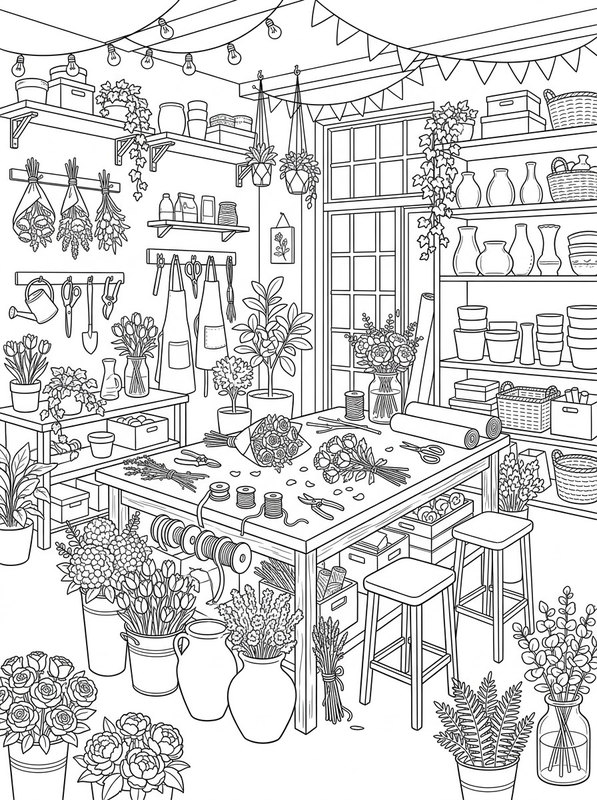
Flower shops and rooms with bouquets have plenty of surfaces beyond the petals. Clear glass vases can remain mostly uncolored, with pale blue or gray along their edges. Ceramic pitchers might have simple painted patterns, while wicker baskets work well with several shades of brown. In the florist's workshop, color the buckets, ribbons, shelves, and flowerpots separately so the arrangements remain easy to distinguish.
For the wreaths and densely arranged flowers, it can help to identify the largest blossoms before filling in smaller leaves and stems. Crayons suit the broad spaces in simpler pictures, while colored pencils give you more control around overlapping petals. Fine-tip markers can work for decorative details and containers, although they may bleed through ordinary printer paper. The A4 PDFs are best printed at 100% scale to preserve the original proportions and outlines.
When coloring a large mixed bouquet, repeat your three favorite flower colors in different parts of the arrangement before adding accents.
Tip: On realistic wings, keep the veins and outer markings darker than the main wing sections to preserve the butterfly’s structure.