Cutaway Houses Coloring Pages for Adults
🏠 Free Printable Cutaway Houses Coloring Pages for Adults
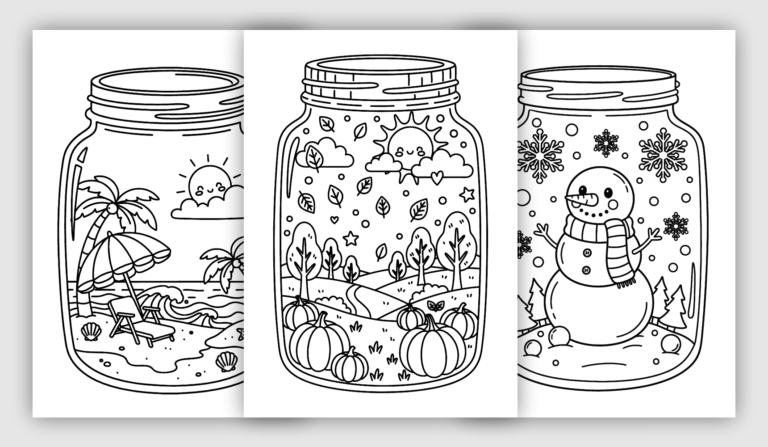
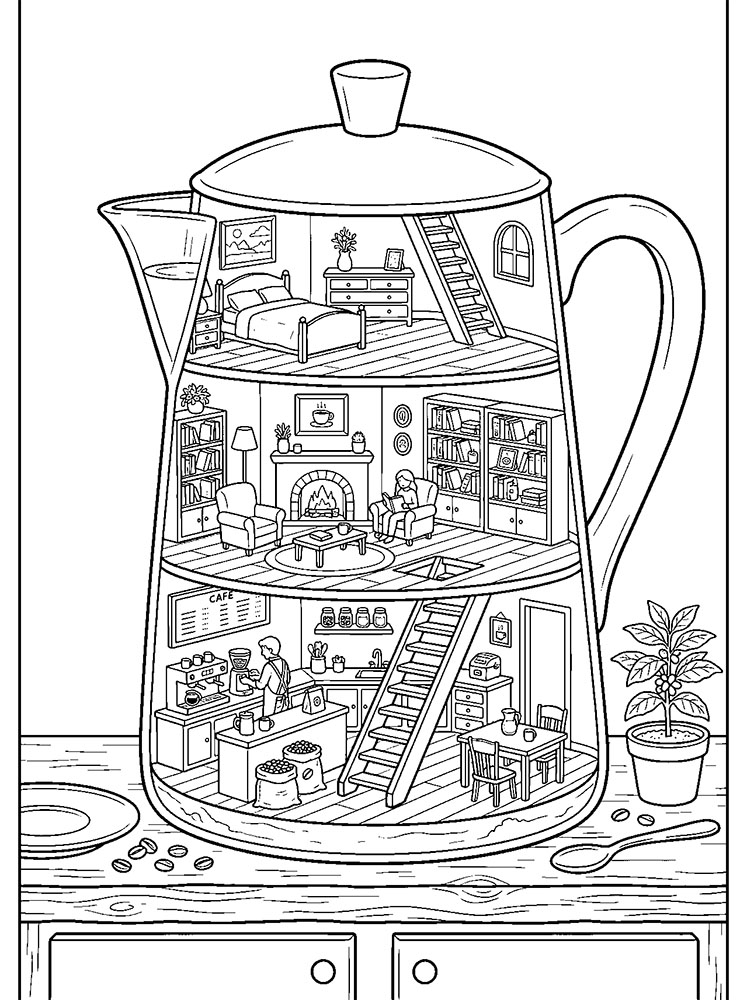
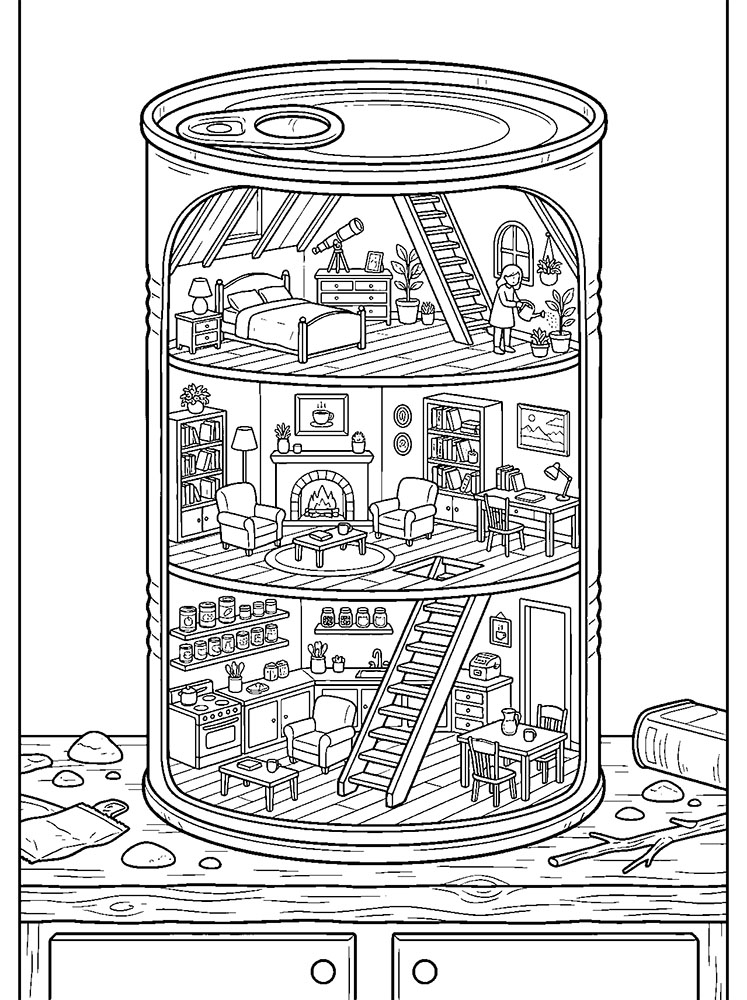
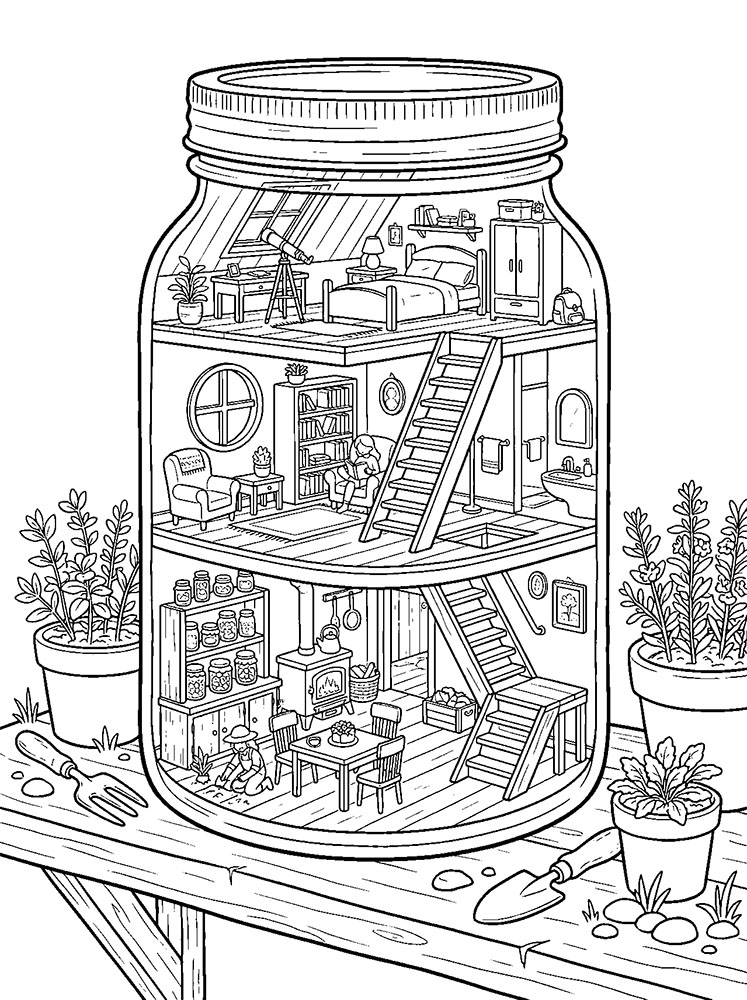
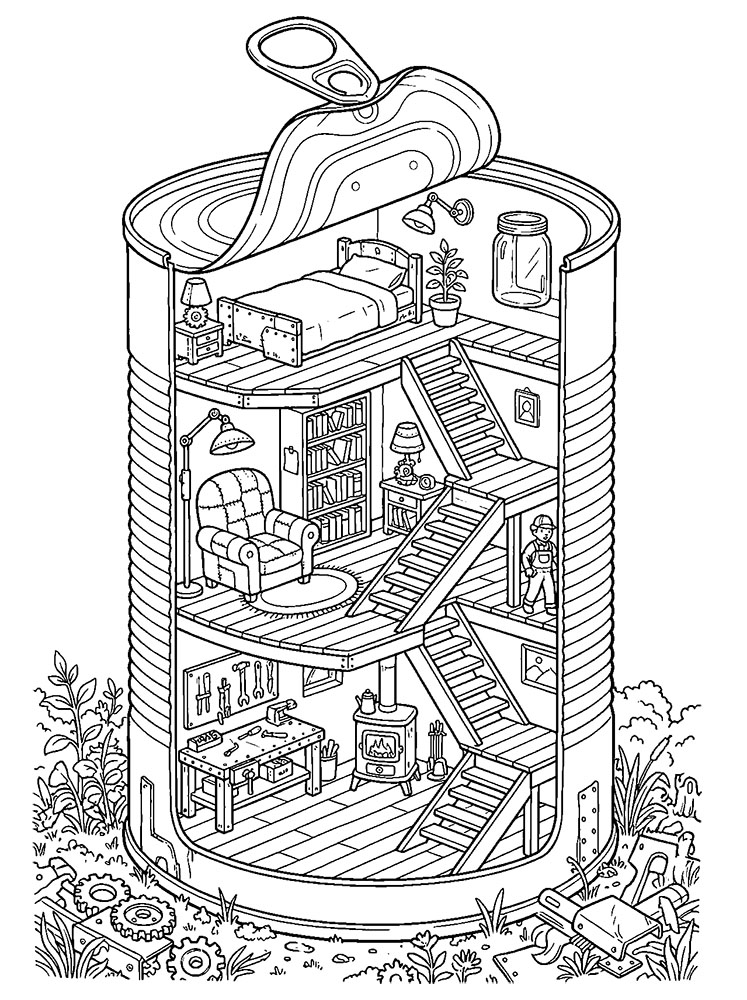
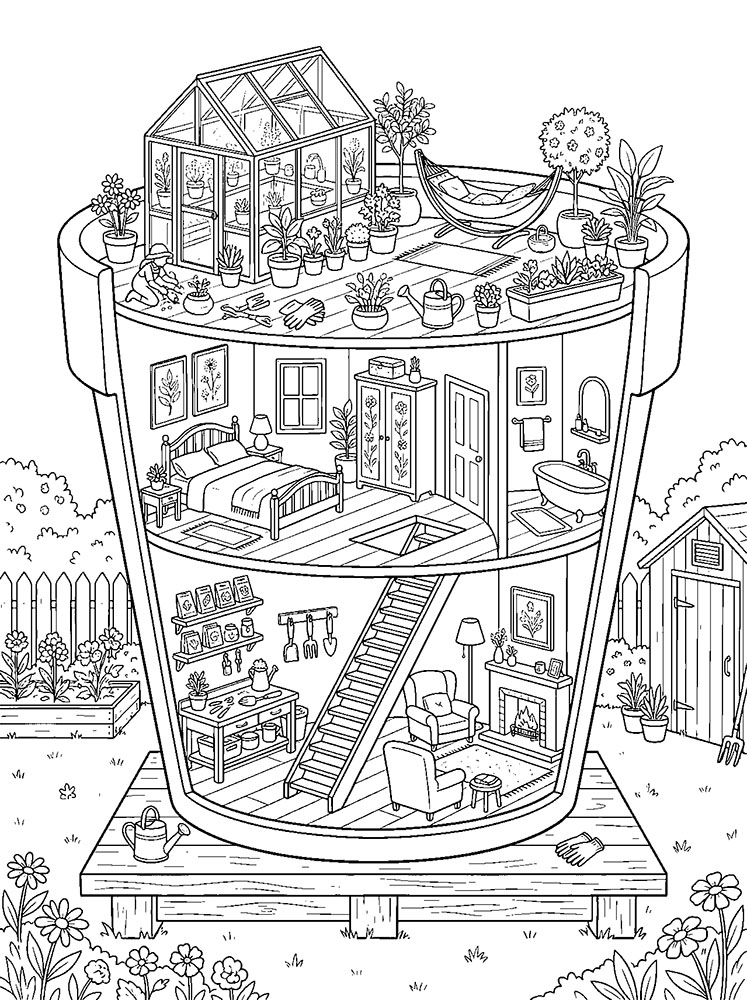
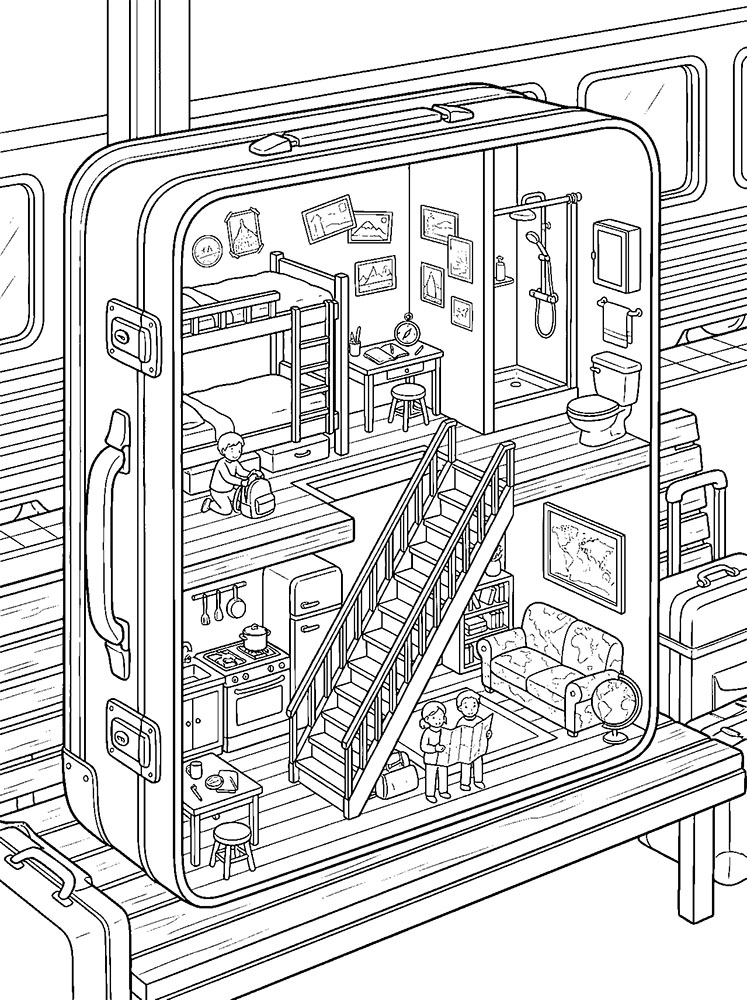
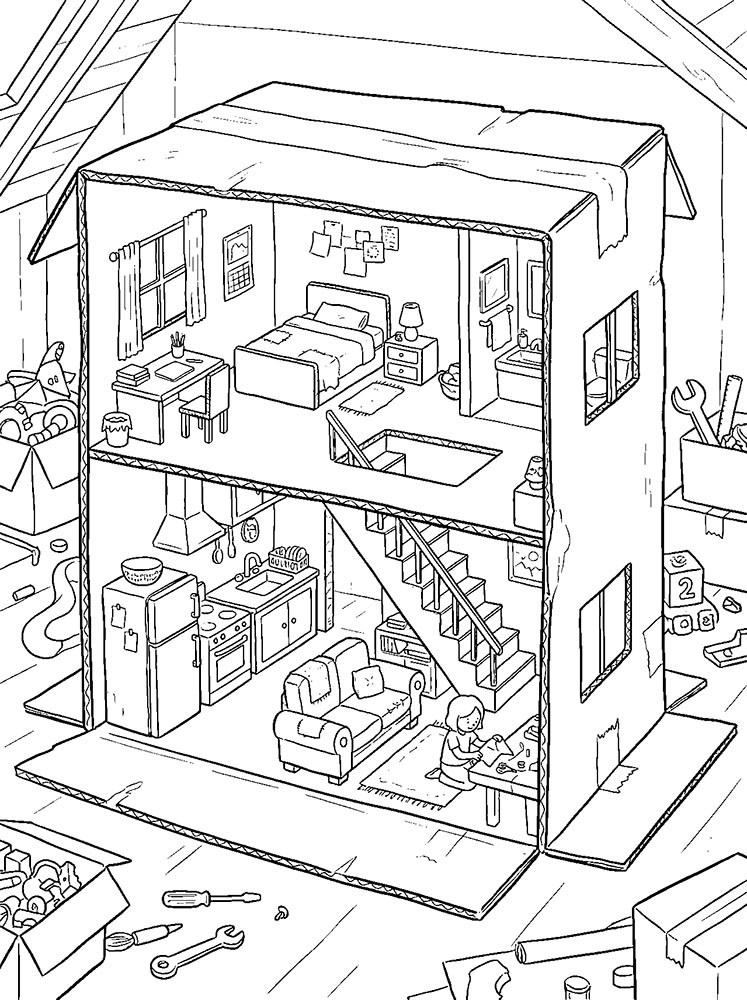
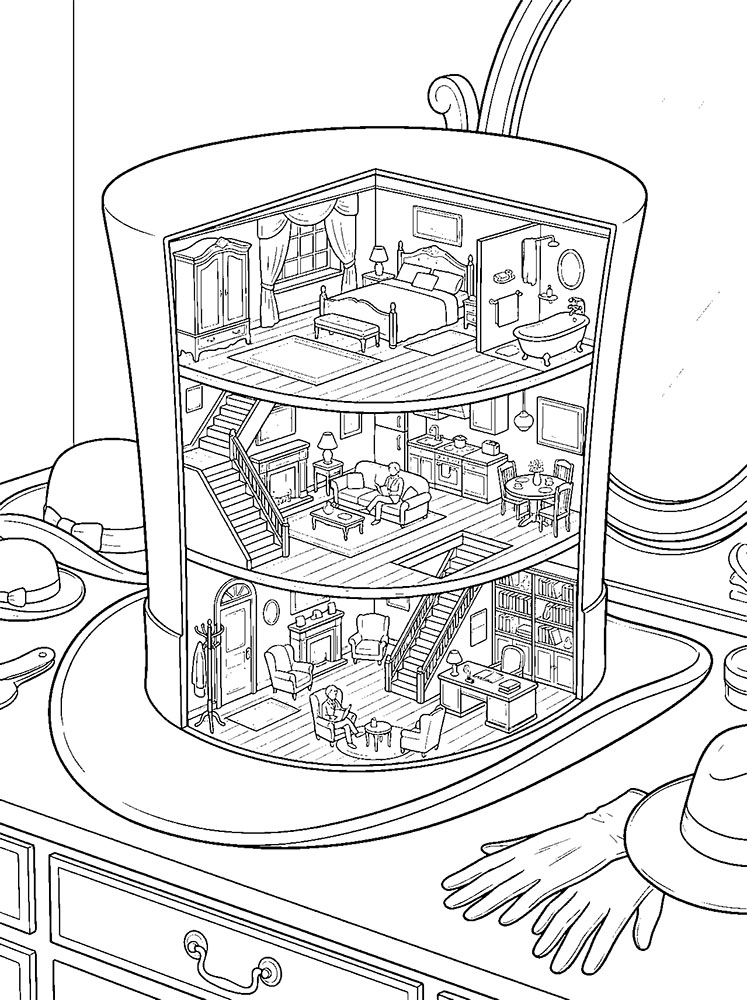
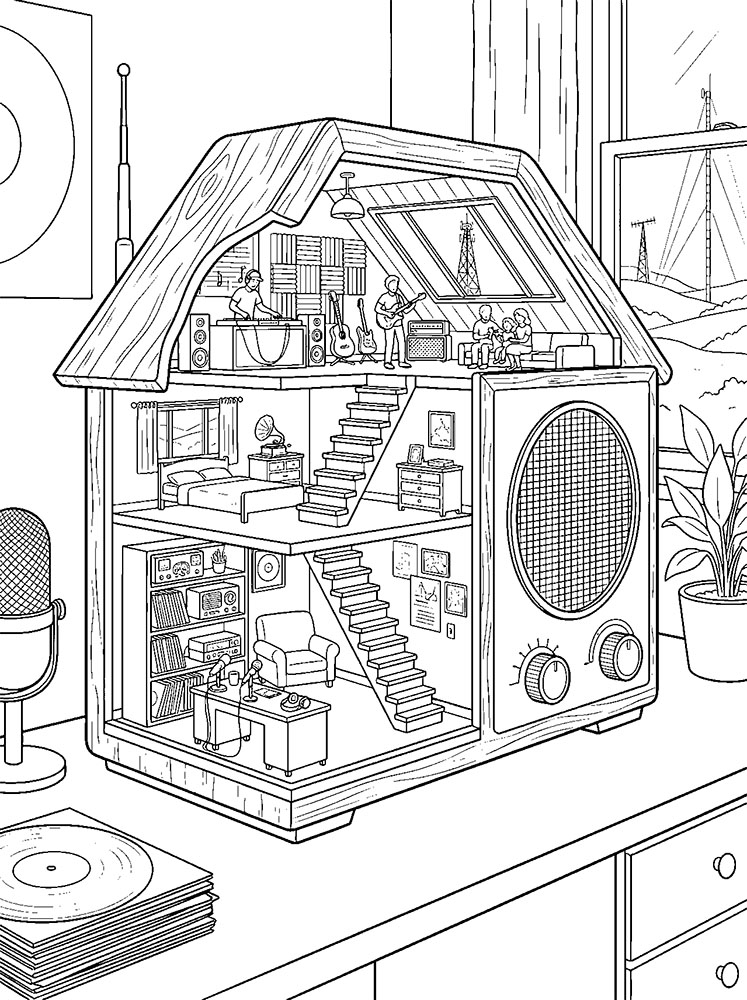
These free printable cutaway houses coloring pages for adults reveal miniature homes hidden inside everyday objects. Each illustration is available as an individual A4 PDF. The drawings show cross-section views of tiny living spaces, with bedrooms, kitchens, sitting rooms, staircases, and furniture visible through the open sides of the structures. Instead of conventional buildings, these imaginary houses occupy teapots, jars, old clocks, suitcases, and other unexpected containers. Their detailed interiors combine the appeal of dollhouse-style rooms with whimsical architecture, offering plenty of small objects and architectural features to color.
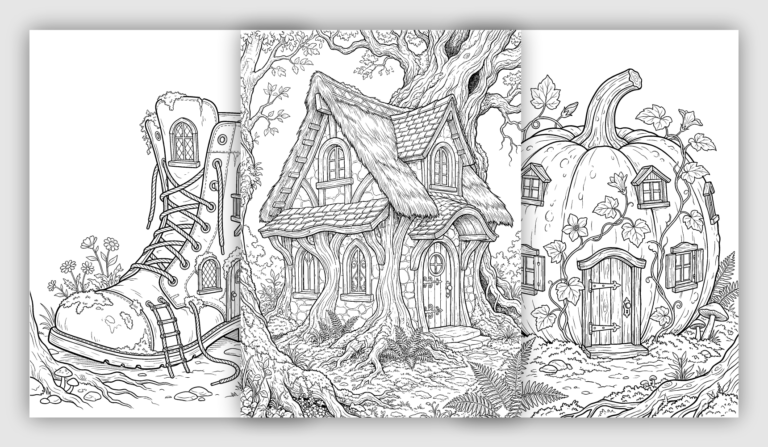
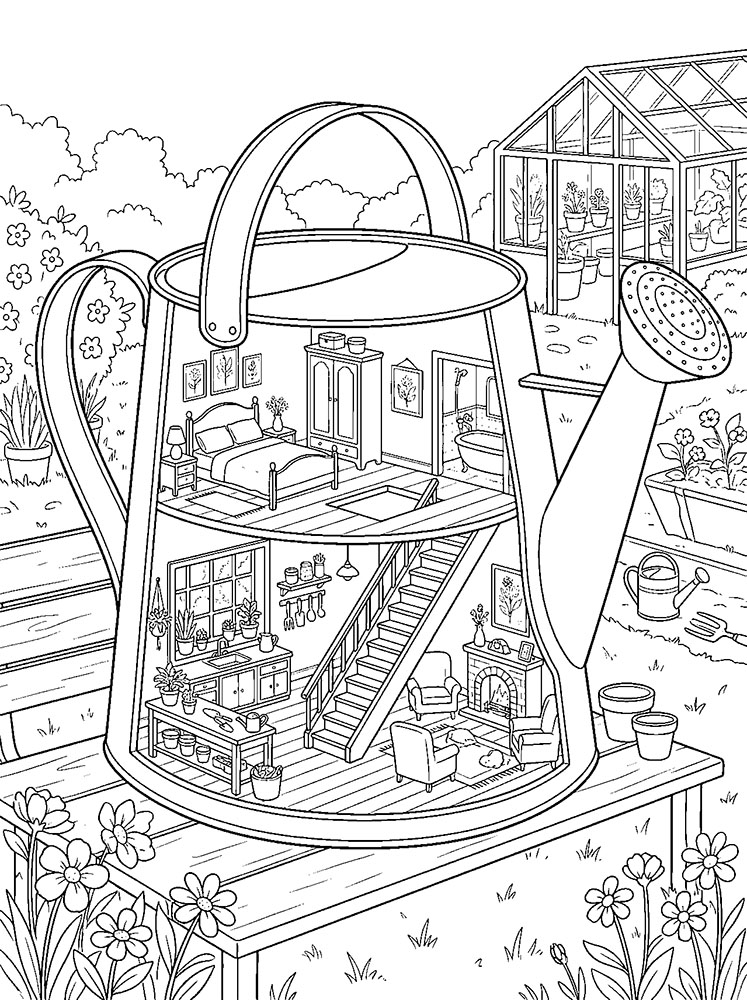
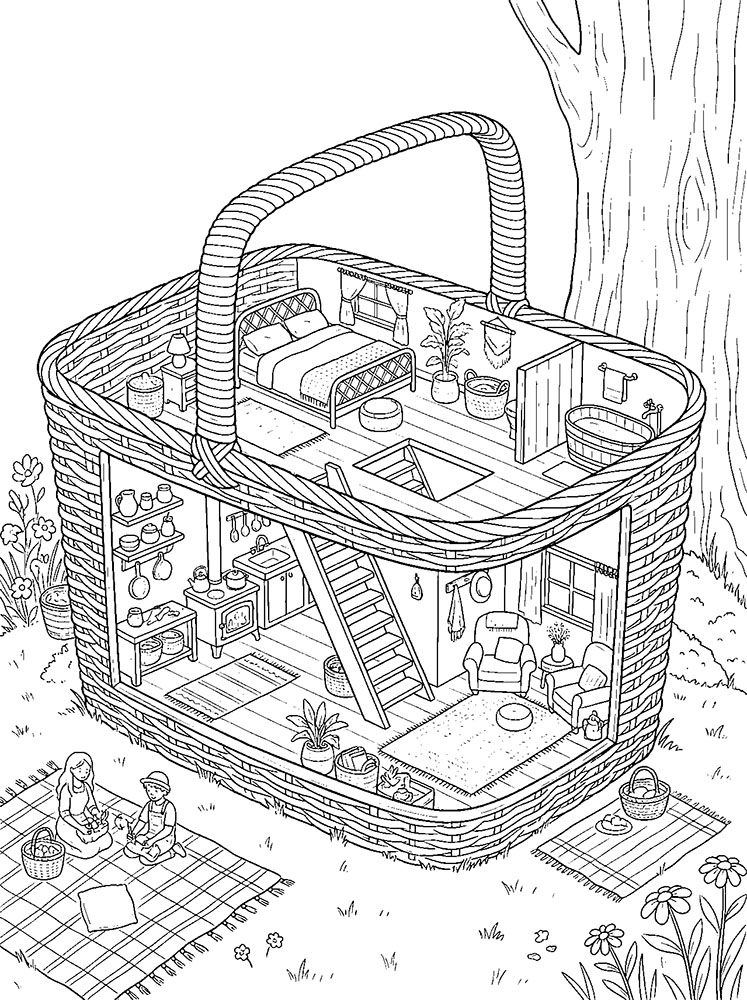
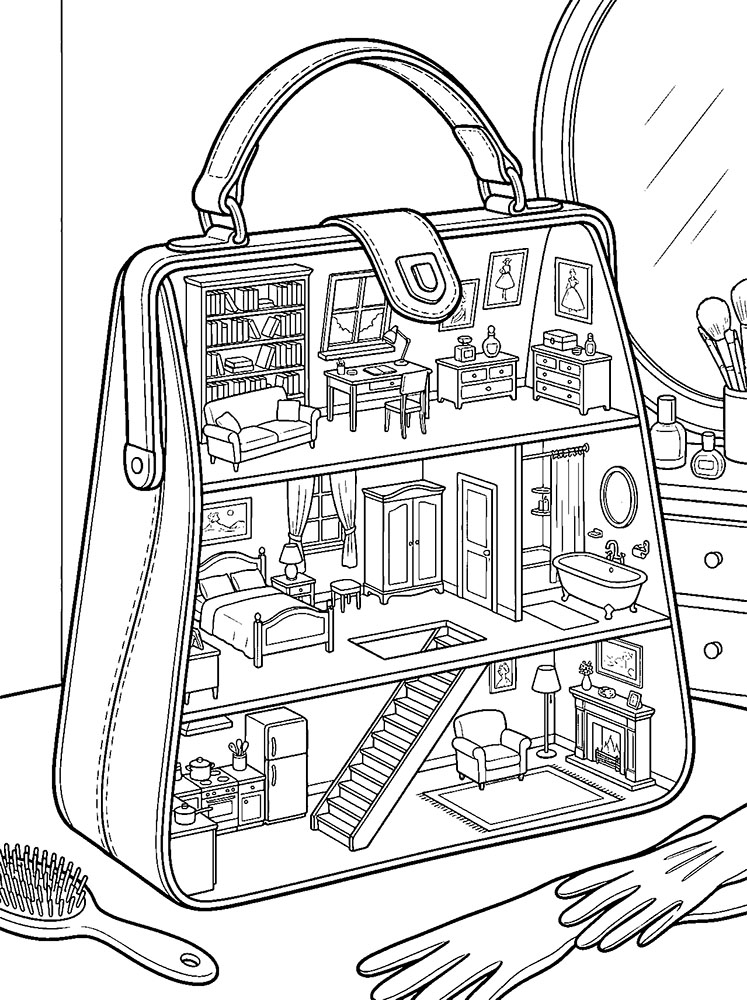
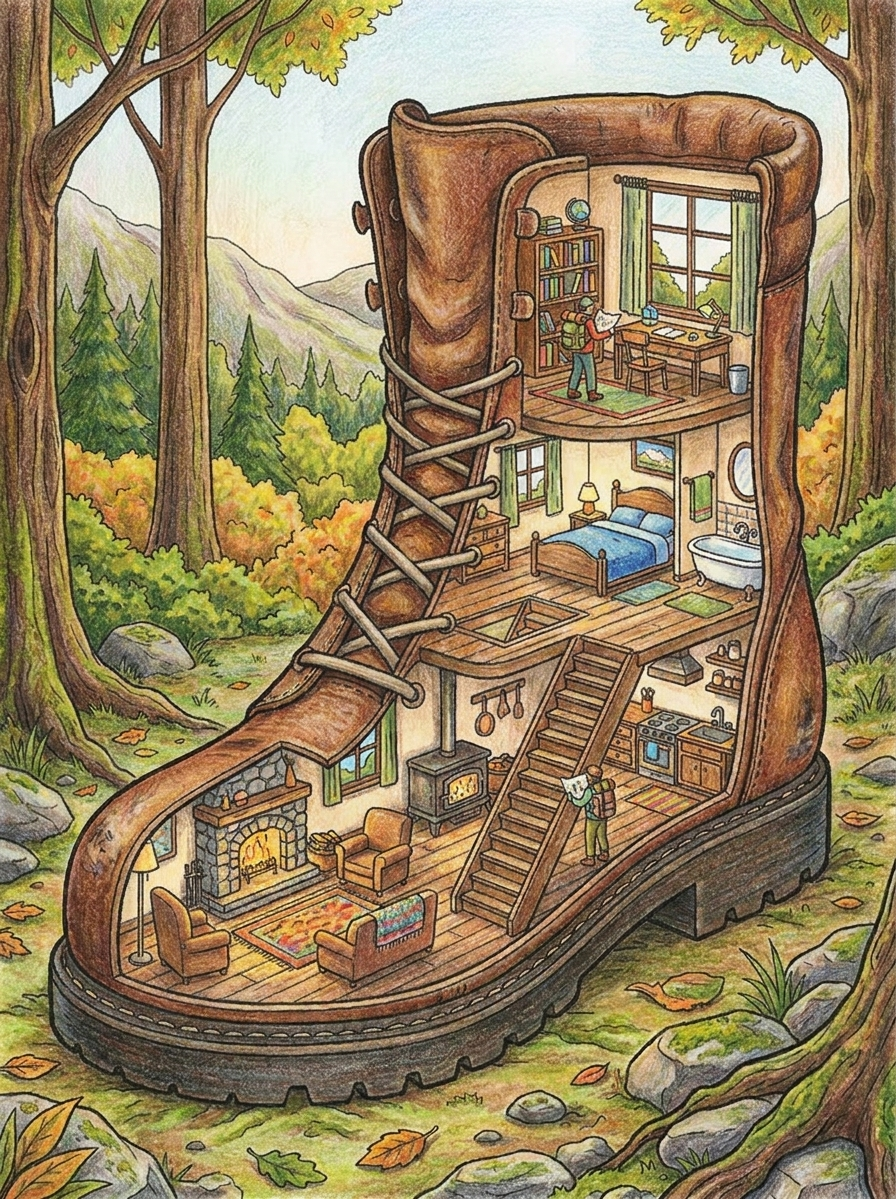
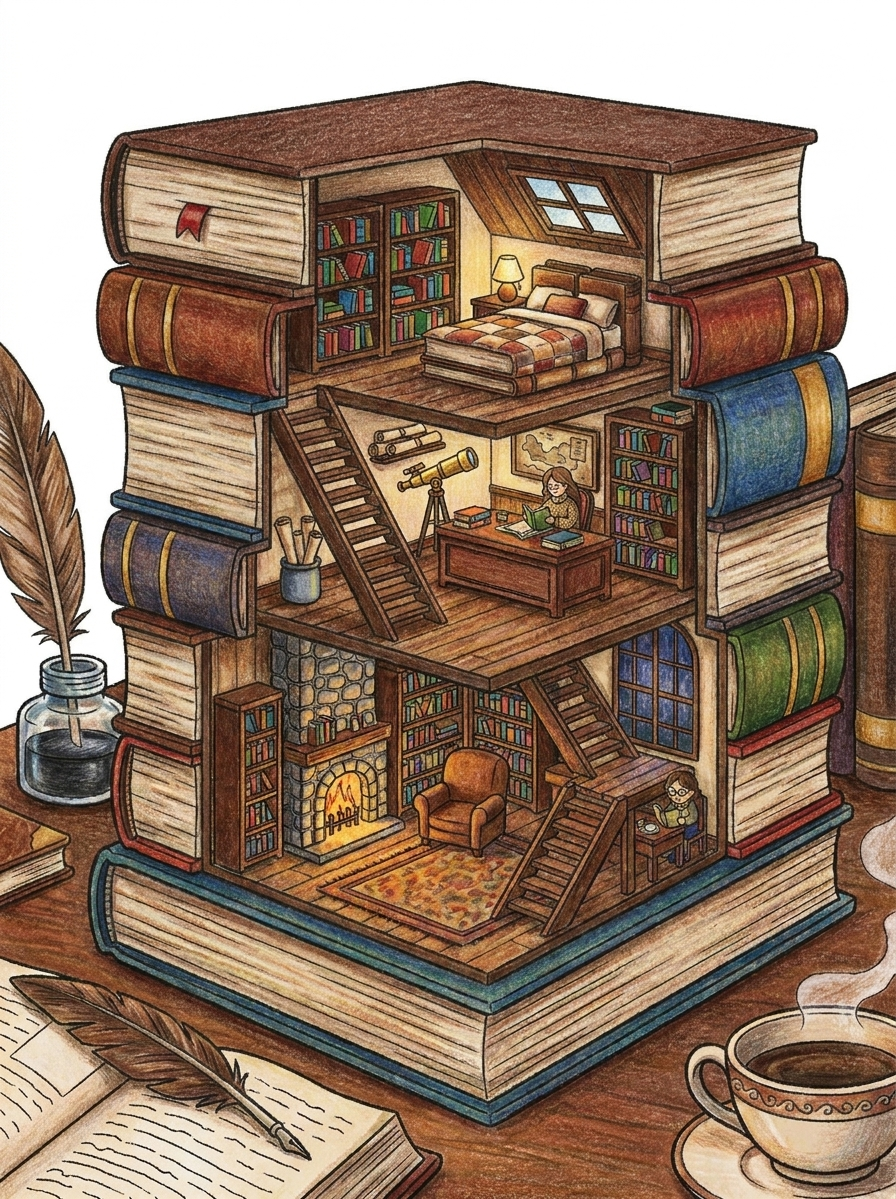
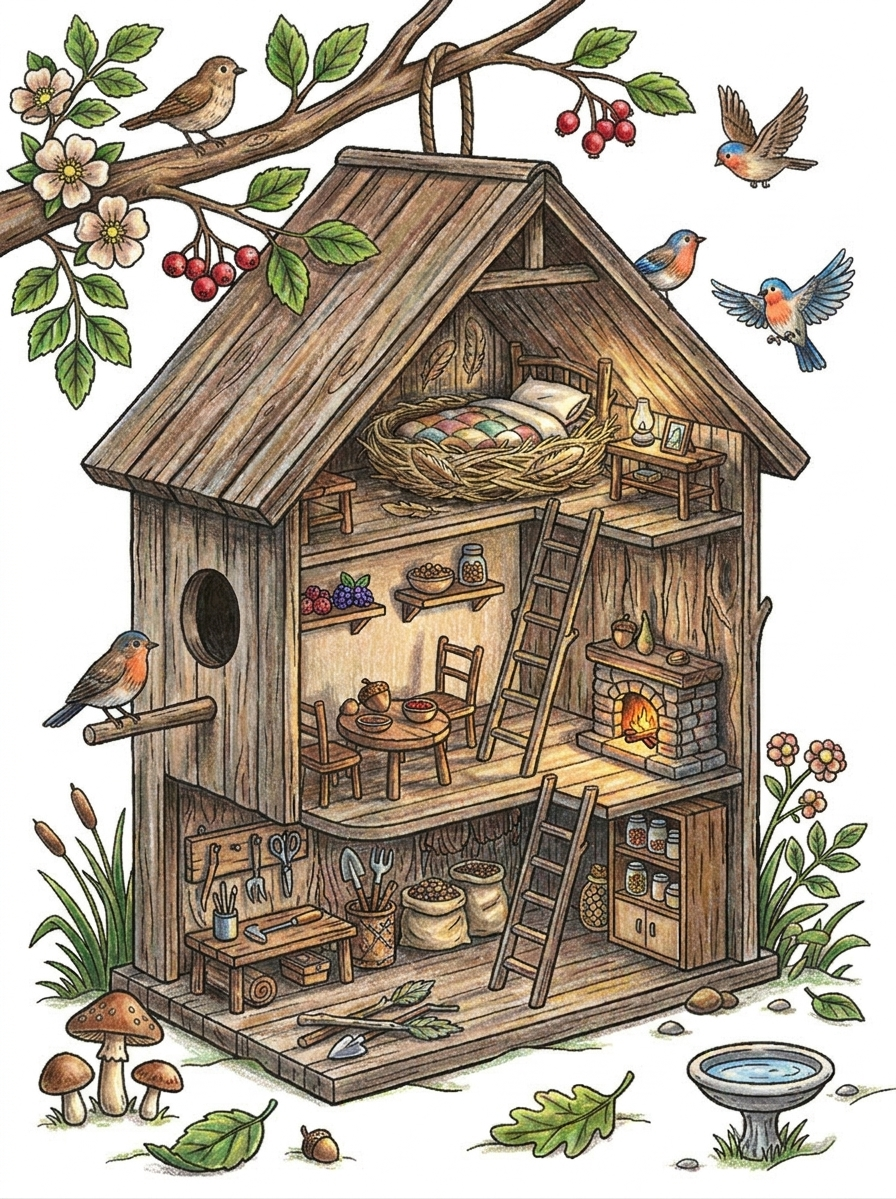
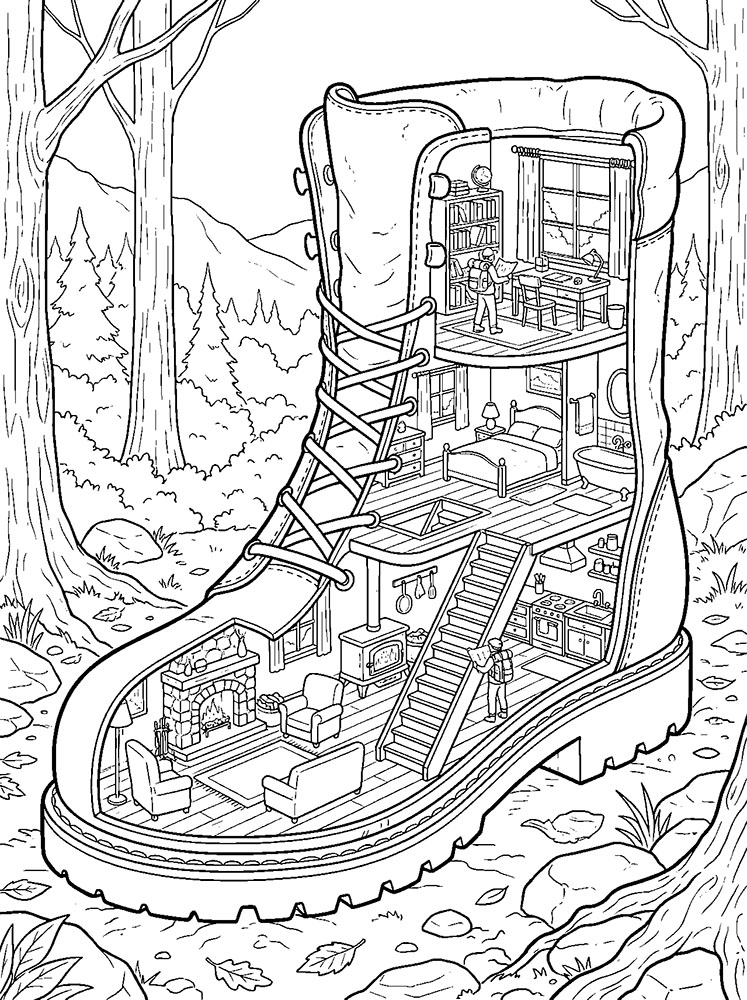
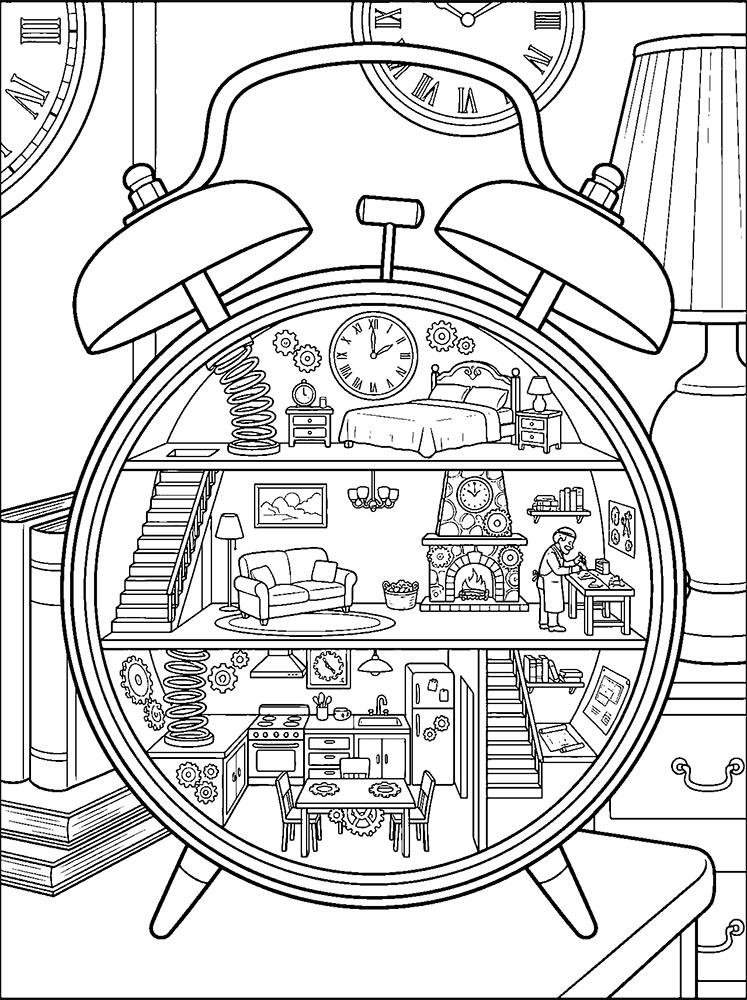
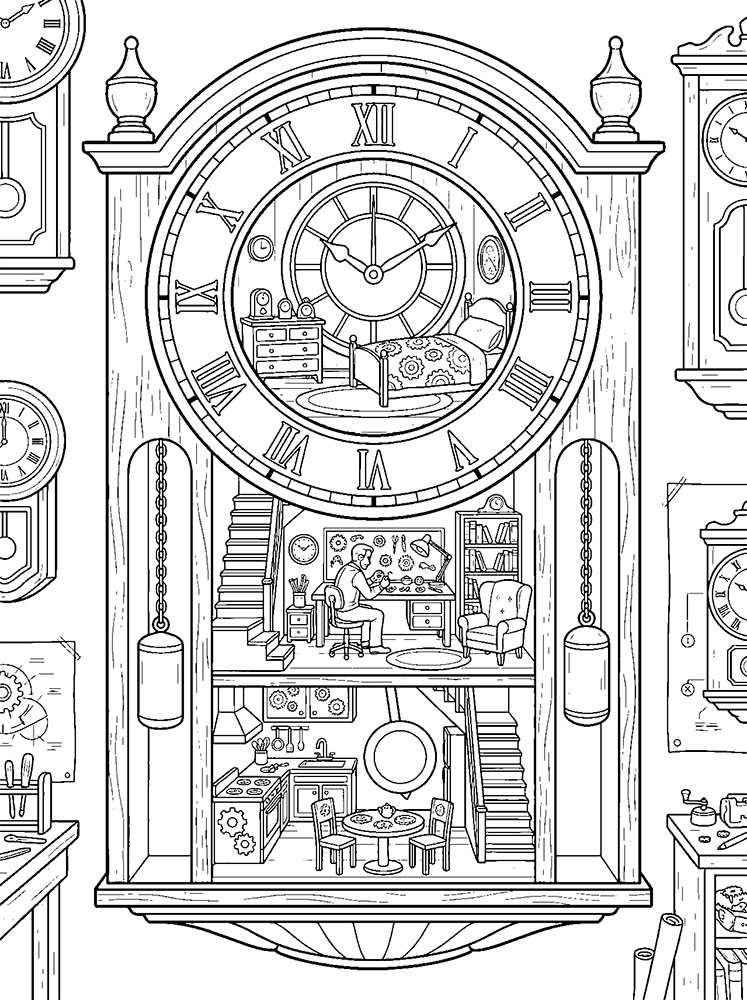
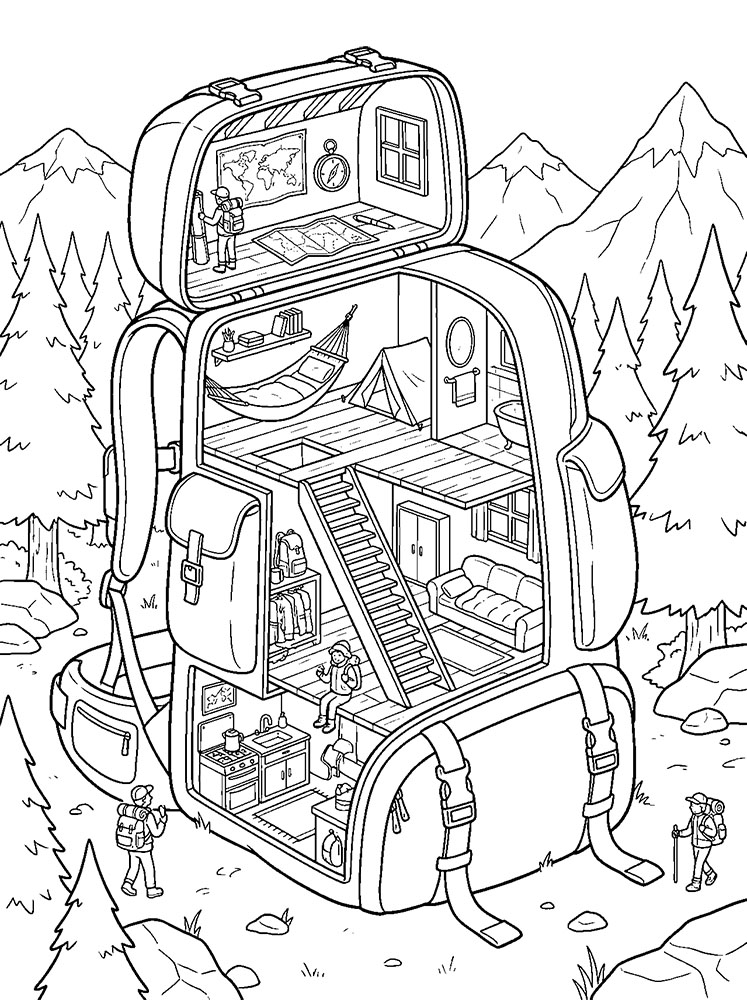
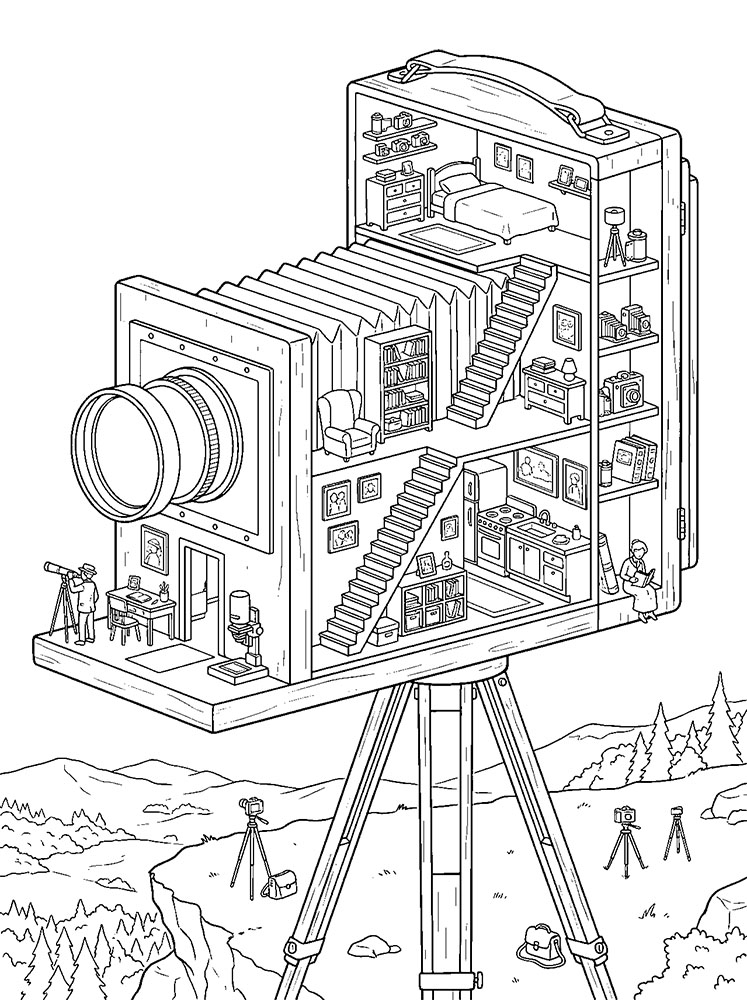
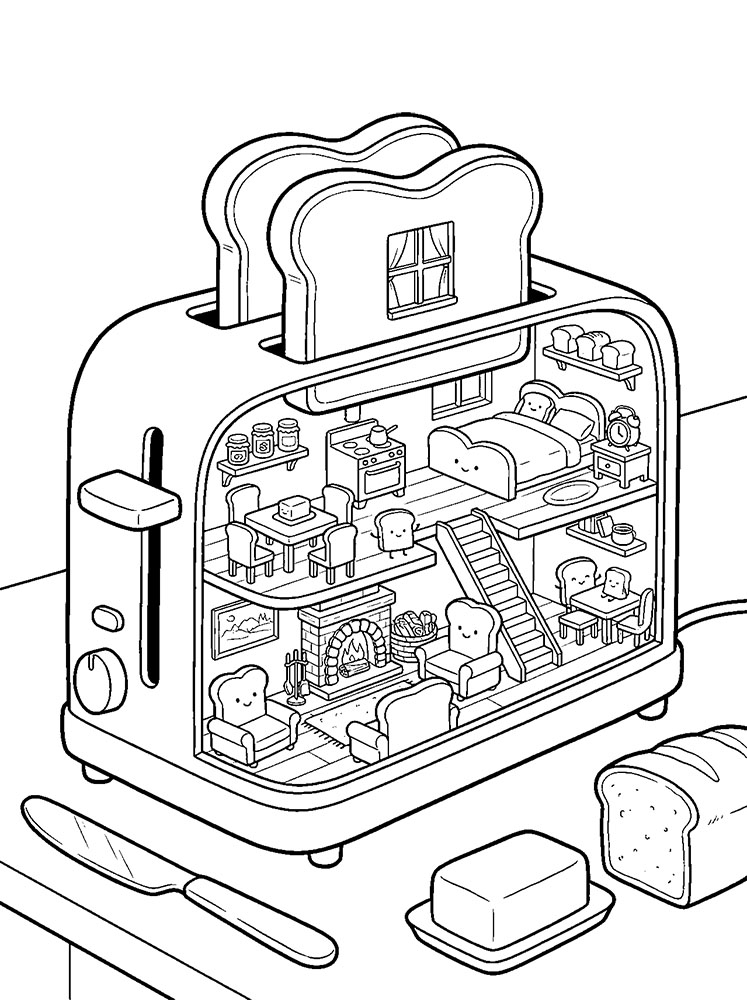
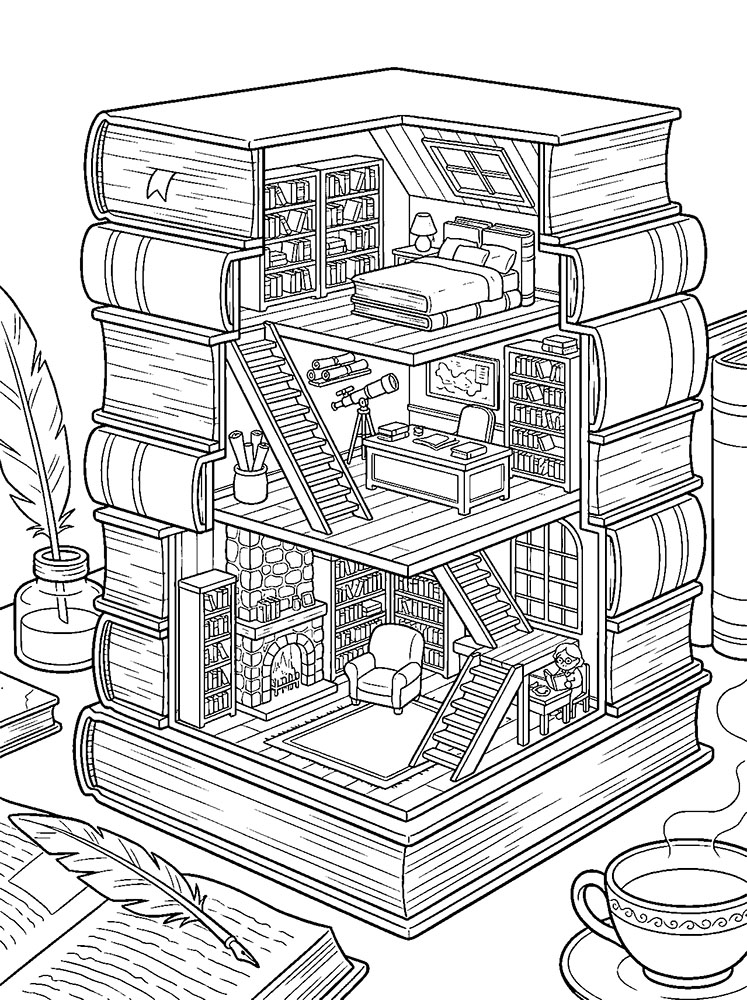
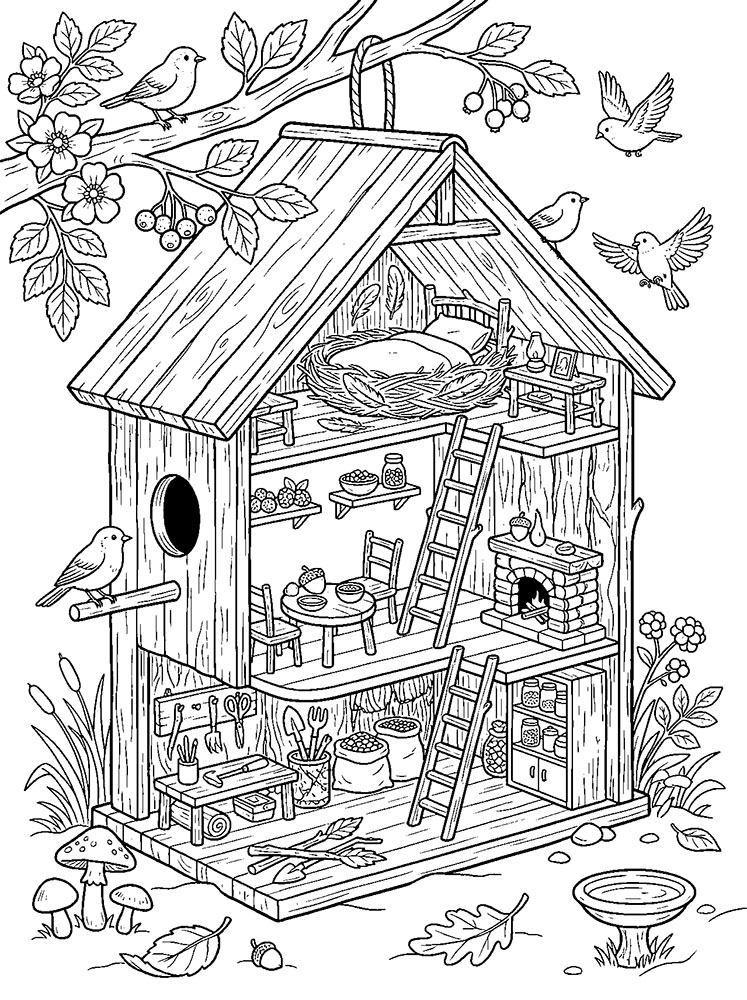
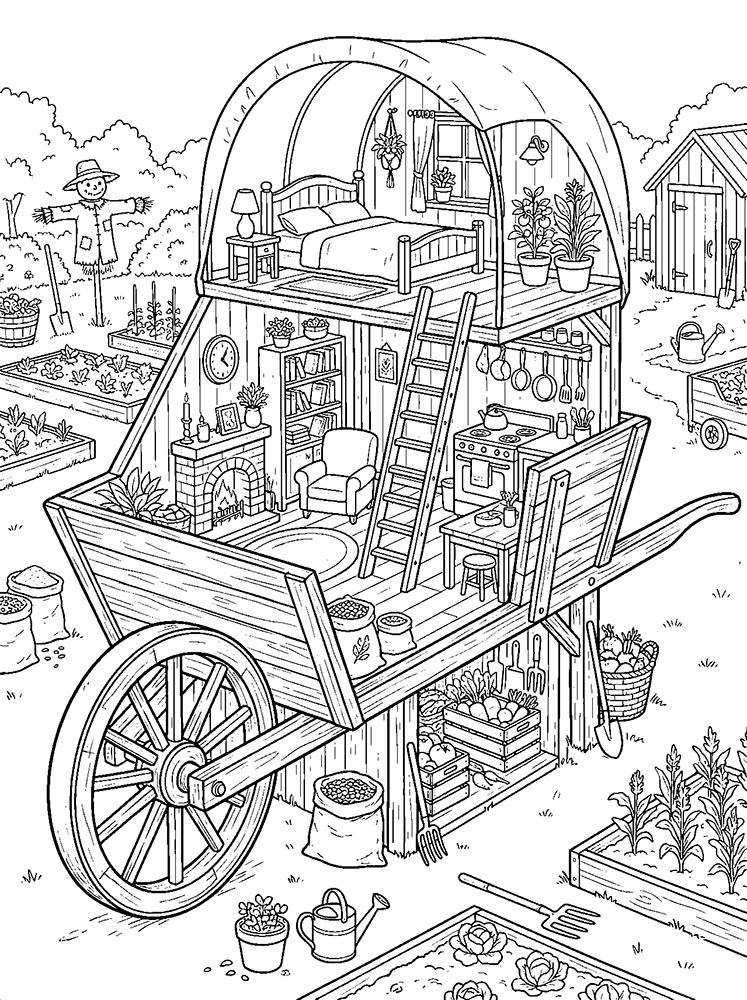
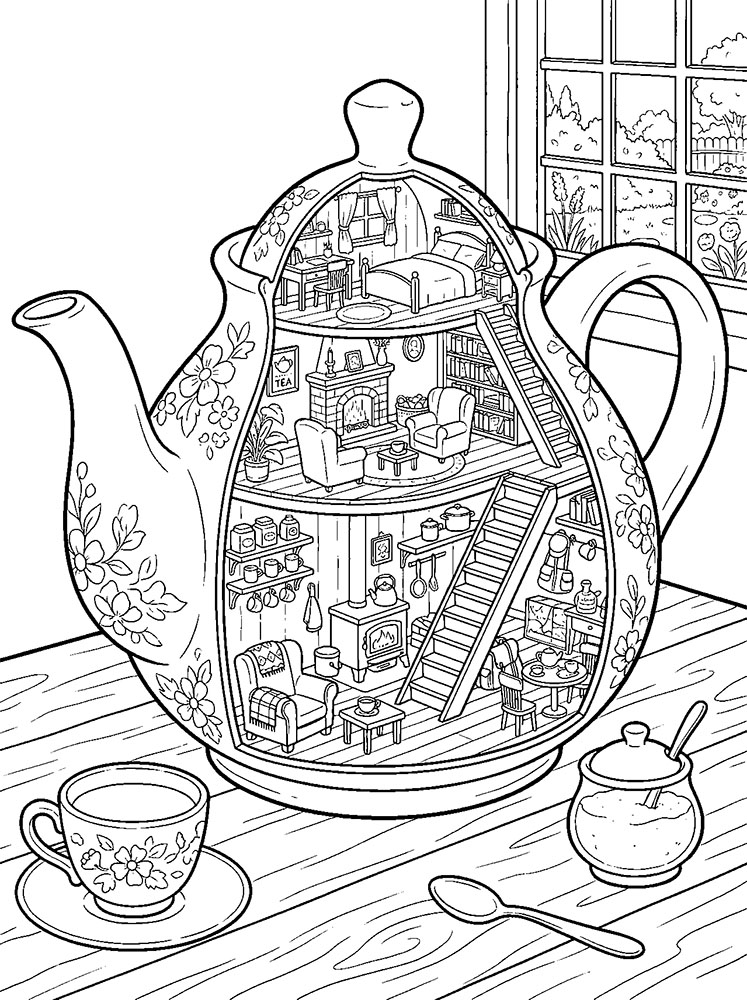
The collection includes a home arranged inside a glass jar, a teapot with furnished rooms, a miniature house built into a hiking boot, and a cozy interior hidden inside a vintage camera. Other designs transform a handbag, refrigerator, watering can, toaster, stack of books, and grandfather clock into multi-level dwellings. A birdhouse contains tiny rooms beneath its nesting area, while a wheelbarrow becomes a house surrounded by garden plants. Many pictures include recognizable household objects around the miniature buildings, emphasizing the difference in scale. Ladders, narrow staircases, bookshelves, fireplaces, beds, and kitchen counters make these imaginary homes surprisingly detailed.
🎨 Color Ideas for Miniature Houses and Cutaway Rooms
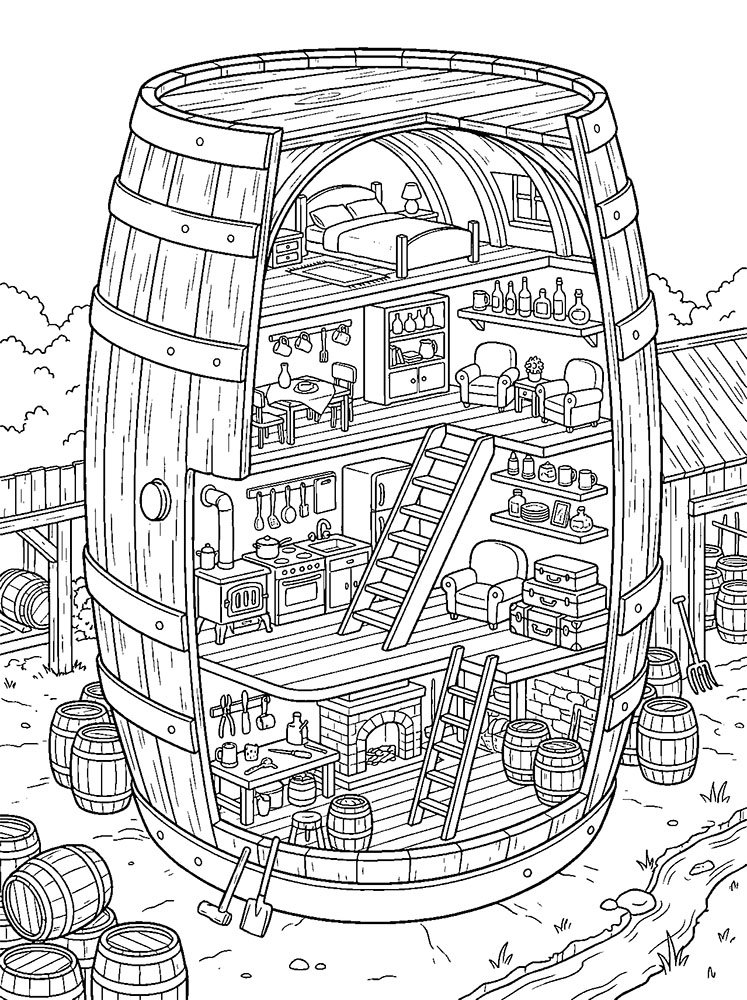
The outer object can provide a starting point for the color scheme. A ceramic teapot house might have a cream or pale blue exterior with delicate floral decorations, while its interior rooms use warmer wood and fabric tones. Glass jars can be suggested with very light blue or gray around their curved edges, leaving much of the container uncolored so the furnished rooms remain visible. A leather handbag could use chestnut brown or burgundy, while the small rooms inside contrast with softer shades. For wooden structures such as a birdhouse or barrel, varying the pressure of a brown pencil can help distinguish the outer surface from the furniture and flooring.
It can also help to give neighboring rooms slightly different palettes. A bedroom might use muted lavender and cream, a sitting room warm greens and browns, and a kitchen pale yellow with terracotta accents. Repeating a few colors across the floors can make the miniature house feel connected rather than divided into unrelated pictures. Fine details such as books, cushions, lamps, kitchen utensils, and plants offer opportunities for brighter accents. These are suggested combinations, not rules, and you can furnish each imaginary home with your own colors. Click on any image to enlarge and explore the details up close.
More Cutaway Homes and Object Houses in Print
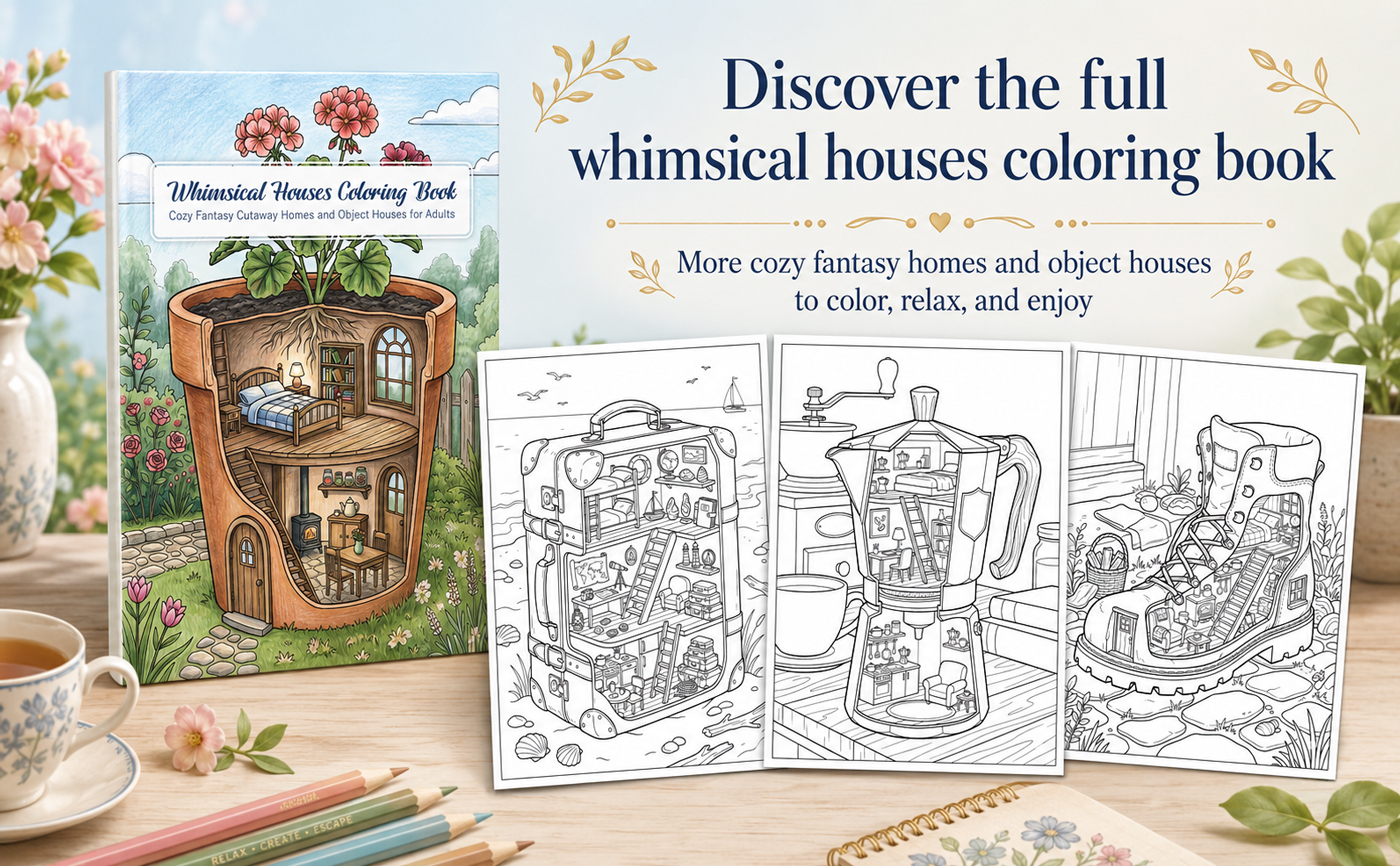
I also created Whimsical Houses Coloring Book: Cozy Fantasy Cutaway Homes and Object Houses for Adults, which continues the same idea with a larger collection of detailed fantasy houses.
Inside are cutaway homes built into unusual forms, including suitcase houses, teapot houses, boot houses, basket houses, flower houses, and other small dwellings filled with rooms, furniture, and miniature interior details.
The shapes change from design to design, so the rooms are not arranged the same way every time. Some interiors are stacked vertically, while others fit into rounded, narrow, or irregular outlines created by the object around them.
The paperback measures 8.5 × 11 inches, giving the drawings enough space for both the outer structure and the smaller architectural and decorative details inside.
The button below leads to Amazon, where you can look inside the book and see the full listing before deciding whether you would like a copy.
🔍 Inside the Miniature Worlds of Cutaway Houses
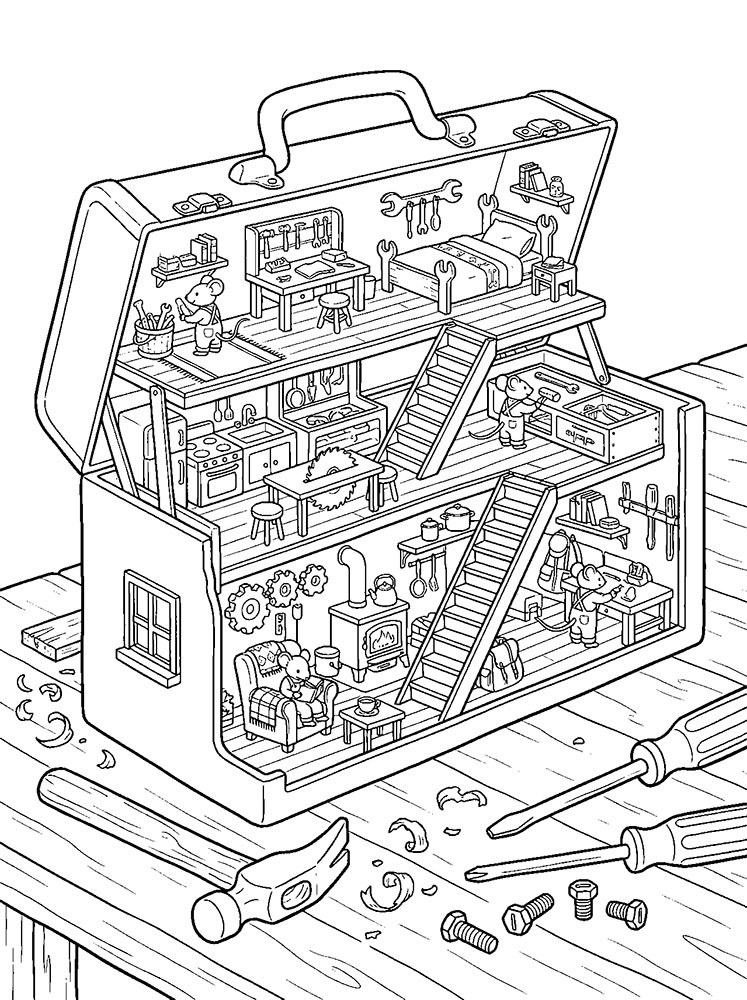
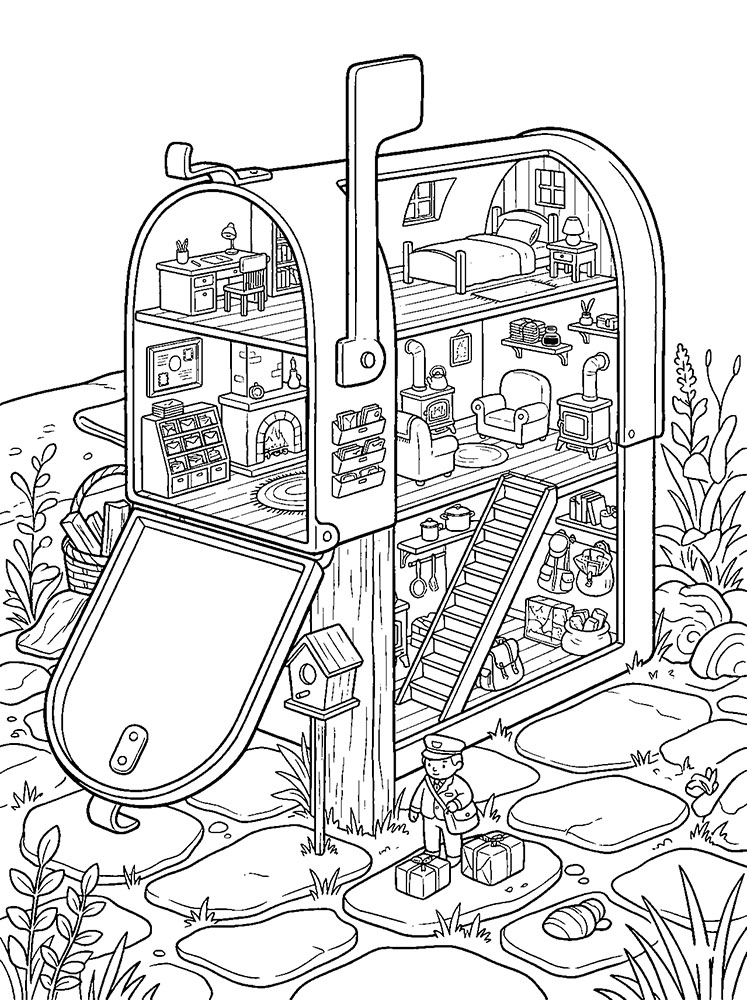
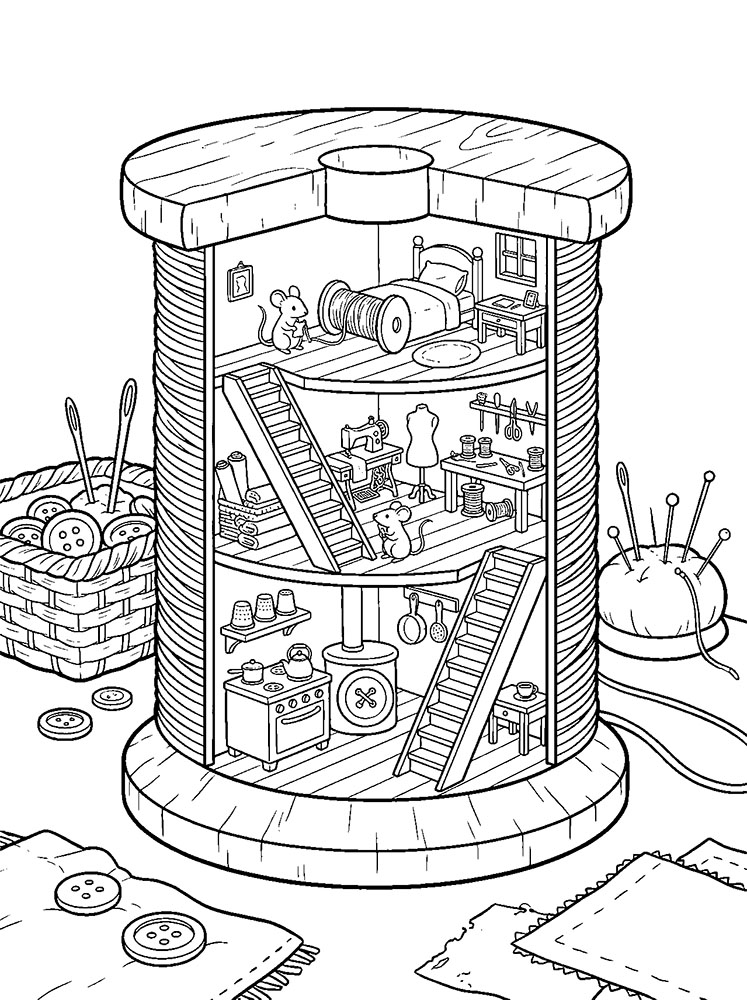
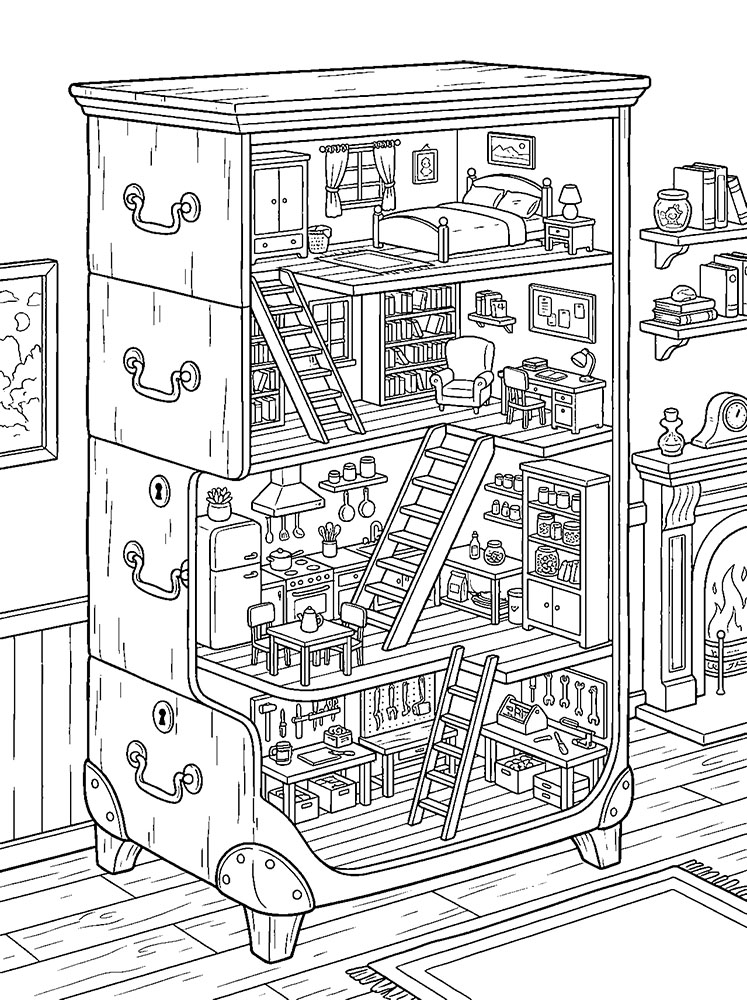
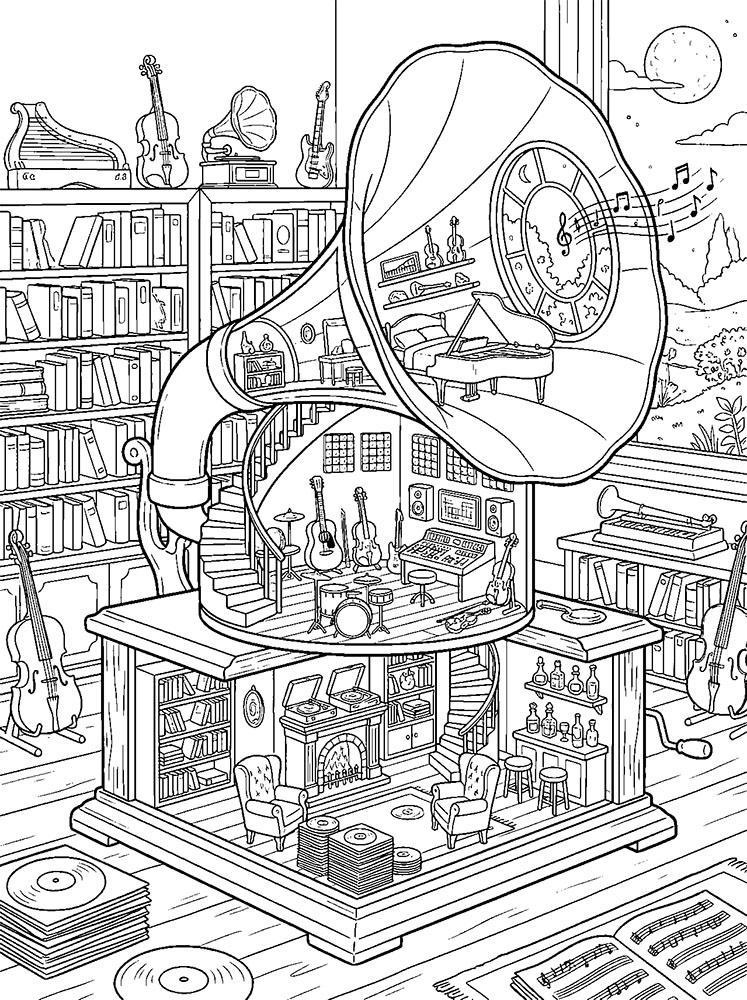
The cutaway format makes the interior of a building visible without separating it from its exterior. A single illustration can show a bedroom above a living room, with a kitchen or workshop occupying the lowest level. Staircases and ladders connect these spaces, allowing the viewer to understand how the miniature home is arranged. Unlike ordinary house coloring pages that show a building from the outside, these drawings reveal the furniture and layout at the same time. The unusual shape of the surrounding object creates an additional challenge: a room inside a rounded jar or teapot must fit within curved walls rather than a conventional rectangular floor plan.
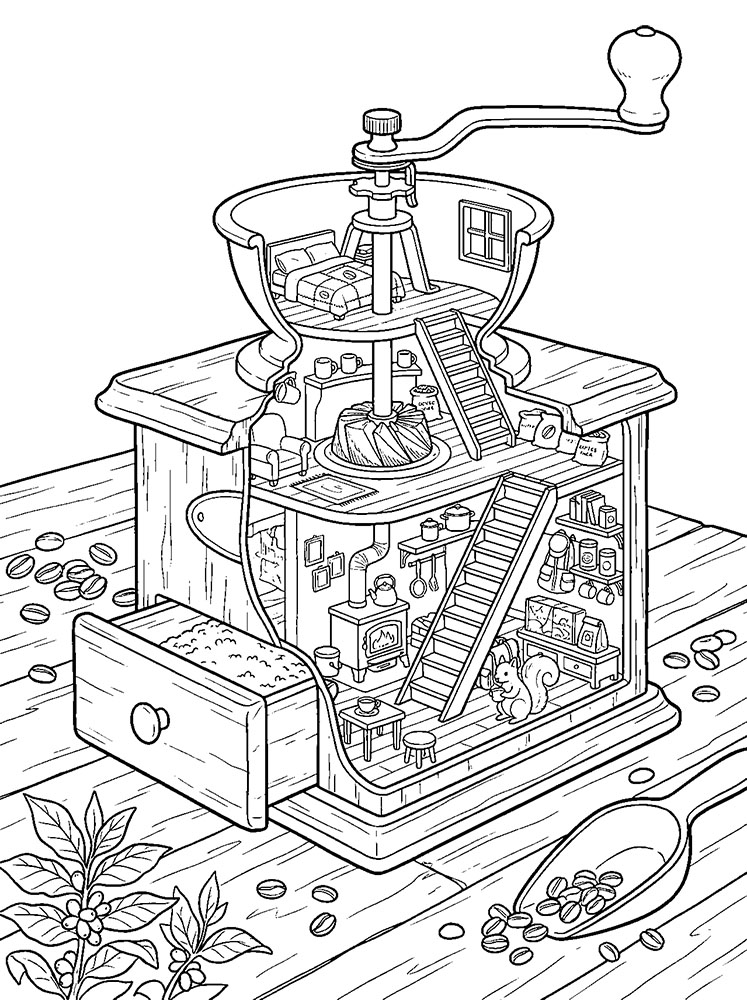
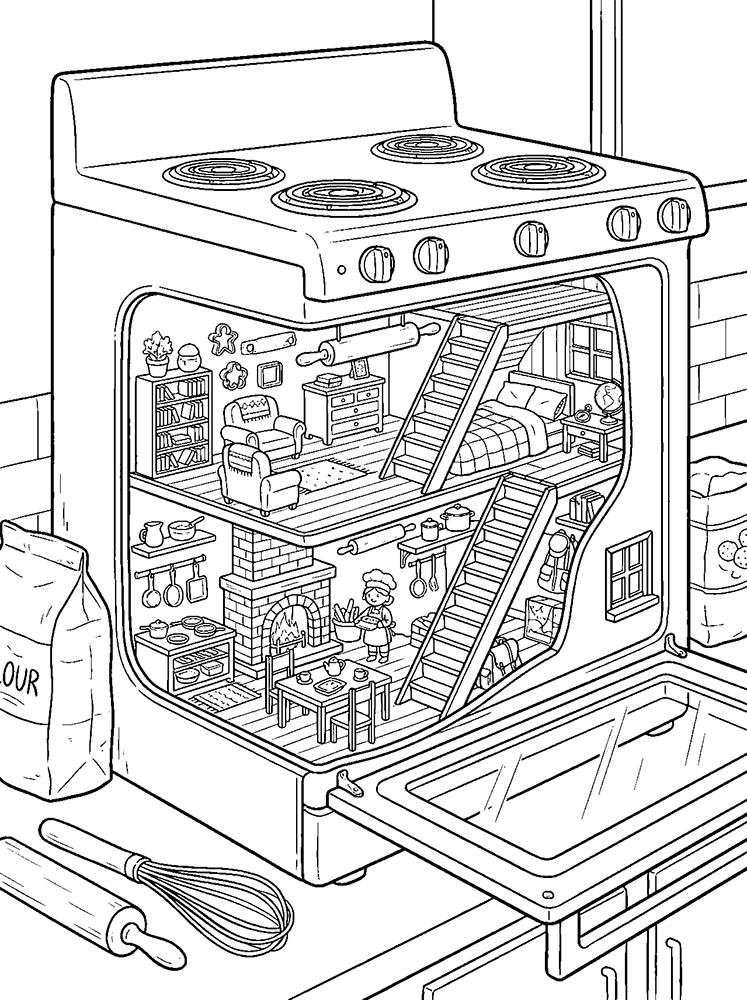
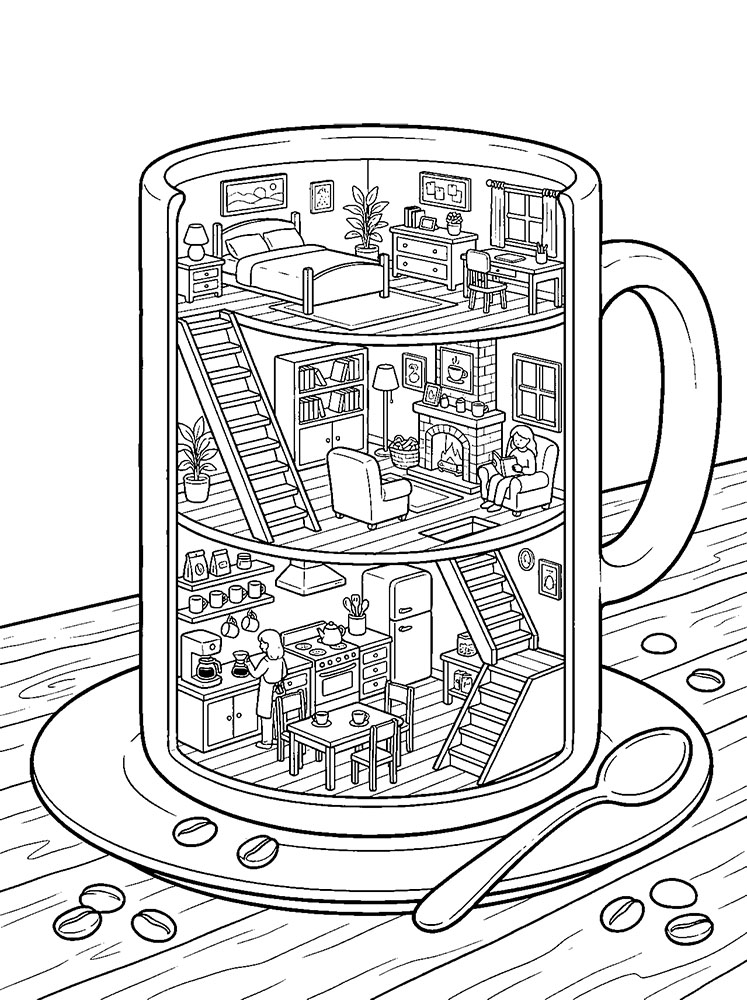
Many designs turn objects associated with a particular activity into miniature homes. A coffee mug contains furnished rooms above a tabletop scattered with coffee beans, while a hand-cranked grinder hides living spaces beneath its mechanism. A toaster and kitchen oven become homes with beds, chairs, shelves, and cooking areas. Books are stacked to form another house, with staircases connecting rooms between their oversized covers. The original purpose of each object remains recognizable, even when it contains an impossible interior. This combination of familiar household equipment and miniature architecture gives the illustrations their distinctive visual character.
Other pictures suggest a connection between the imaginary residents and their surroundings. A house inside a watering can stands among flowers and garden equipment, while the wheelbarrow home is positioned beside vegetable beds and gardening tools. A birdhouse has a nest beneath its roof and furnished spaces below, with birds resting on nearby branches. The boot and backpack houses sit in outdoor landscapes, surrounded by trees, mountains, or woodland paths. These settings make the miniature structures feel like parts of larger environments rather than isolated dollhouses. Their surrounding objects also provide clues about the scale of the tiny rooms.
The level of detail varies across the designs, but the interior furnishings are consistently important. Beds have pillows and blankets, kitchens contain miniature sinks and shelves, and sitting rooms include armchairs, fireplaces, rugs, and small tables. Some illustrations show tiny figures occupying the spaces, making the buildings appear even more like inhabited homes. The narrow staircases, railings, and repeated floorboards require more careful coloring than the broad exterior surfaces. A useful visual contrast can come from leaving the outer object relatively simple while adding varied colors to its furnishings, allowing the miniature rooms to attract the most attention.
The collection is available as individual printable A4 PDFs, with each design showing a complete cutaway house and its miniature interior. Print at 100% scale to preserve the original proportions and fine outlines, particularly around tiny windows, stair railings, furniture, and household accessories. Colored pencils are especially useful for the narrow spaces inside these detailed illustrations, while larger exterior areas can be colored with broader strokes. You can also choose a different palette for each floor, using repeated wood, stone, or fabric colors to make the rooms feel like parts of the same miniature home.